
Resilience at the Dead Sea: Why Global Investors See Jordan as a Haven of Stability
-
 The Arab Post
- . November 22, 2026
- . Update: November 22, 2026 1:26 pm

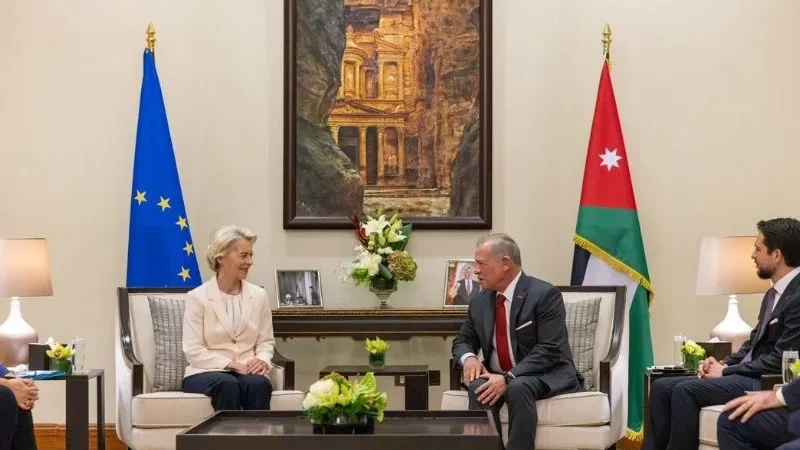
Even though the Hashemite Kingdom of Jordan is located in one of the most turbulent areas in the world, it continues to attract large amounts of foreign investment. Jordan Haven of Stability, At the recent Jordan-EU Investment Conference 2026 in the Dead Sea, global investors demonstrated their interest in the country not only as a geopolitical buffer zone, but also as a strategic place of peace and stability. Despite continued shocks in the Middle East, Jordan’s mix of economic reforms and sound government is proving to be very resilient, with more than $15 billion in projects pitched to European and regional financiers.
The Core Drivers of Jordan’s Economic Resilience
This investor confidence rests on Jordan’s pledge to structural economic reform.Jordan’s promise of structural economic reform is the bedrock of this investor confidence. The government’s Economic Modernisation Vision 2023-2033 is now starting to bear fruit that is enabling the country to move from depending on foreign aid to the sustainable inflow of foreign direct investment (FDI).
Jordan has continued to have solid GDP growth even in the face of significant turmoil in Gaza and Lebanon, according to the World Bank’s economic monitor for the country. The Central Bank of Jordan has been credited with much of this resilience for taking proactive measures to combat inflation, one of the Bank’s objectives, while keeping the currency stable and pegged to the USD.
With an international investment portfolio, setting a course for success is essential. At the Dead Sea conference, the European Investment Bank (EIB) representatives stated the importance of Jordan being a safe place for investing huge investments in the MENA region, due to its transparent legal systems and high compliance with international financial standards.
Strategic Sectors Attracting Foreign Capital – Jordan Haven of Stability
The $15 billion portfolio was rolled out in the Jordan-EU Investment Conference 2026 in a number of sectors that were carefully selected to achieve sustainable self-sufficiency and maximum returns:
- Green Energy and Desalination: Jordan is harnessing its huge solar energy potential to address the urgent water scarcity issue. The Aqaba-Amman Water Desalination and Conveyance Project continues to be the jewel in the crown of this project and is supported by huge European institutional assistance.
- Information Technology (IT) and Business Process Outsourcing (BPO): Jordan is quickly emerging as the center for tech outsourcing in the Levant thanks to its youthful, educated and bilingual workforce. Multinational tech companies have been attracted to the government’s policy of creating free-trade zones in each region with tax breaks.
- Mining and Minerals: Historically underutilized, Jordan’s potash, phosphate and newly found lithium reserves are experiencing a boom in the number of extraction licenses from mining conglomerates around the world.
Overcoming Regional Shocks
The most significant thing about the haven of stability is that it has proven itself to be a buffer-state country in terms of absorbency of regional crises without affecting its internal market operations. The tourism industry was negatively affected by the conflicts in the region in 2024 and 2025, but exports of pharmaceuticals, textiles and agricultural products ensured that the overall economy was shielded.
Moreover, Jordan’s geopolitical and geo-strategic relations with the Arab countries, neighbours, the European Union and the United States make it a perfect manufacturing and logistics hub. It is not only the local returns that make investing in Jordan attractive, as the European Commission states, it is a safe base from which to start operations within the Middle East and North Africa.
With the geopolitical environment being volatile and turbulent, Jordan’s deliberate efforts to adopt macroeconomic discipline and develop green infrastructure will result in it becoming a key investment destination in the coming 10 years and beyond.
FAQs
Why do global investors consider Jordan a haven of stability?
Even with various regional disputes affecting it, Jordan still manages to implement effective macroeconomic policies, keep its domestic currency stable, and have a clear framework of laws protecting foreign investments. Due to the government’s firm adherence to the country’s Economic Modernisation Vision, Jordan is considered to be a reliable place for foreign investments.
What was the focus of the Jordan-EU Investment Conference 2026?
The conference was held at the Dead Sea and was focused on attracting European and regional investments to realize projects worth $15 billion in total in the areas of green energy, water desalination, IT, and mining.
How has the Jordanian economy survived recent regional shocks?
The resilience of the economy can be attributed to a timely battle against inflation by the Central Bank of Jordan, the presence of diverse industries that produce goods for export (including pharmaceuticals and fabrics), and to the country having established special free-trade agreements that allow it to supply its products to any markets in the world while remaining stable, even when too many disturbances are happening around it.
Top Picks For You
Discover best tourist attractions in Jordan?
Explore iconic places every visitor should experience.
Explore Petra viewpoints and best spots?
Check where to capture the most stunning Petra views.
Discover desert adventures in Jordan?
Explore thrilling experiences across Jordan’s desert landscapes.
Check top things to do in Amman?
Discover must-visit spots for first-time visitors in the city.
Explore Dead Sea spa day trip?
Check relaxing mineral spa experiences near Amman.