
IMF Reaches Staff-Level Agreement With Jordan on 6th Economic Review and Sustainability Facility
-
The Arab Post
- . November 4, 2026
- . Update: November 4, 2026 3:25 pm
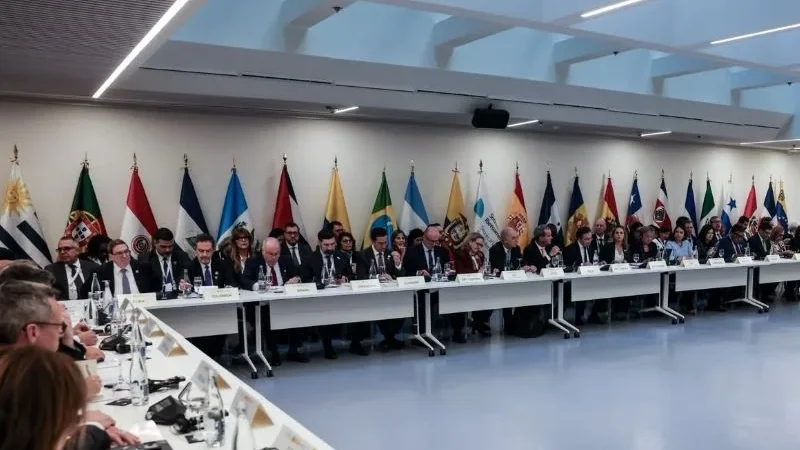
IMF staff-level agreement Jordan on today, 3 November 2026, is a significant step in the country’s macroeconomic resilience. IMF Jordan review, The IMF, which wrapped up a high-level assessment mission in Amman on Oct. 21 through Nov. 3, has validated Jordan’s economic reform program.
The comprehensive agreement is a successful completion of the 6th Extended Fund Facility (EFF) review Jordan, and the third review under Resilience and Sustainability Facility (RSF Jordan.
Subject to the formal approval of the IMF management and the Executive Board, completing both reviews will make a total of SDR 216.548 million available. This means a huge IMF shot in the arm for the nation’s financial buffers of $294 million for the Jordan economy.
The amount of funding allocated is optimally divided between the two separate assistance programs. The EFF review’s value is an estimated $133 million to help fulfill the broad fiscal goals, and the RSF review’s value is approximately $161 million that is specifically geared toward structural sustainability.
Strong Fiscal Performance Amid Regional Crisis – IMF Jordan review
The Jordan’s government has been able to satisfy all quantitative performance criteria and the majority of its structural benchmarks for the sixth review in line with the official International Monetary Fund (IMF) press release.
Cesar Serra, the head of the IMF’s mission to Jordan, gave the country public credit for its sound macroeconomic policies. He noted Jordan has shown great economic strength despite the heightened and prolonged uncertainty that has been caused by the ongoing war in the Middle East:
Jordan’s monetary policy has been successful in keeping the currency stable in the past year that has been stormy. The CBJ is currently sitting on a very comfortable level of foreign reserves, as highlighted by state-run Jordan News Agency (Petra), a factor notably that is quite positive. As of the end of October 2026, those reserves stood at about $27.5 billion – this is enough to pay for the Kingdom’s necessary imports for almost 8.8 months.
Moreover, the Jordanian Ministry of Finance was able to achieve the target of the central government in terms of the primary budget deficit. However, despite tax revenues being hit by severe regional developments, tax revenues remained well managed and fiscal efficiency was enhanced during the first half of the year.
Driving Middle East Economic Stability
The new round of IMF funding is going to be used to directly help Jordan’s long-term infrastructural and environmental goals. The Resilience and Sustainability Facility Jordan is particularly designed to help the Jordanian State better prepare for the possibility high-impact climate change shocks and public health crises while supporting the transition to green energy.
Jordan’s regional economic analysts at Jordan News argue that this financial stability is crucial to encourage domestic investment in order to hasten the creation of jobs on the broad level.
The government will protect the levels of priority social spending and ensure public debt will continue to be disciplined in a downward trend to encourage private sector driven sustainable growth.
Finally, the reaching of IMF agreed deal with Jordan demonstrates impressive fiscal discipline displayed by the country. The conclusion of Jordan’s $294 million IMF loan package increases the confidence in Jordan’s capabilities as a source of stability in unstable Middle East region.
Discover More Insights
Explore Cairo inflation middle class impact?
Discover how rising prices are affecting savings and daily life.
Check Algeria power plant deadline extension?
Explore updates on the 1.2GW energy project timeline.
Discover Turkey new electricity tariff changes?
Check how updated pricing will impact households and businesses.
Explore Qatar initiative boosting Syria power?
Discover efforts aimed at strengthening Syria’s electricity generation.
Check Beirut balcony lighting energy tips?
Explore efficient lighting ideas for Ramadan and beyond.