
Libya’s Turkey Maritime Agreement: What the Published Law Says About Mediterranean Claims
-
 The Arab Post
- . November 26, 2026
- . Update: November 26, 2026 7:42 pm

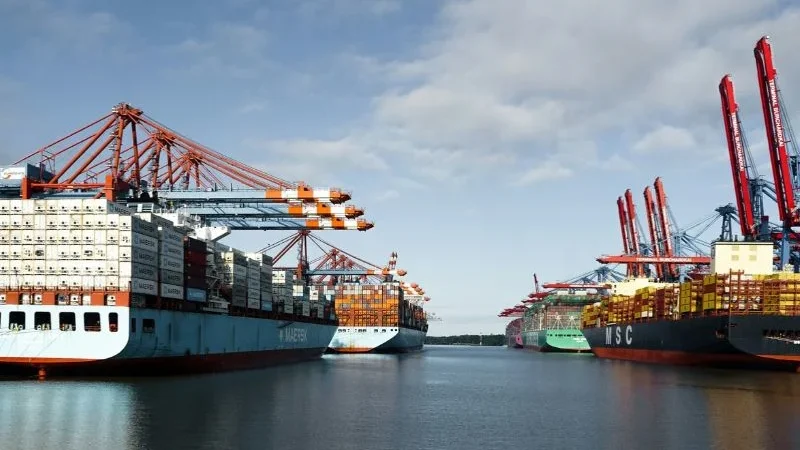
The Libyan House of Representatives has officially announced in the Official Gazette the maritime delimitation agreement signed with Türkiye in 2019, which is a significant change in the geopolitical situation in the Mediterranean. Libya Turkey maritime agreement, The publication will establish the demarcation of the continental shelf and exclusive economic zone (EEZ) between the two countries, as specified by the country’s Law No. 8 of 2026. The decision resolves years of legal uncertainty within Turkey, giving a boost to Ankara and Tripoli’s joint claims over the Mediterranean, and overturning what had been an eastern parliament’s refusal to ratify the pact.
What Law No. 8 of 2026 Actually Mandates – Libya Turkey maritime agreement
The law, which was published in the Libyan Official Gazette on page 152 of issue 17, is a formal endorsement of the memorandum, which was signed by former Government of National Accord (GNA) of Libya and Türkiye on November 27, 2019 in Tripoli.
This gazetted document comprises of six articles, two annexes and detailed maps. It defines clear maritime boundaries with 36 geographical coordinate points—33 on the coastlines of the two countries, with the remaining 3 in the transitional zone. The law clearly provides that the ratification would come into force as of the date of its issuance, thus putting the Libya Turkey maritime agreement on the country’s home soil and paving the way for its implementation.
A Major Policy Reversal in Eastern Libya
The publication is the first instance of the parliament that is based in the East making a policy turn. The maritime delimitation agreement was approved by the members in their meeting on October 20, 2026 and formally issued by them in Benghazi two days later.
The legislation completely overturns the vote by the chamber in 2020 to reject the memorandum. This abrupt change was greatly encouraged by a recent study of Libya’s land and maritime borders by the High National Committee for Libya’s Land and Maritime Borders. The committee, which was established earlier this year, strongly recommended its affirmation, and it had said that the agreement, which had been negotiated in Tunisia, had “utmost economic and strategic importance” in ensuring the capture of the Libyan state’s offshore riches.
Geopolitical and Economic Implications
With the gazetting of the law, Libya decisively declares its sovereign rights to jointly develop and utilize the hydrocarbon resources in the Mediterranean Sea with Türkiye. Gazetting the law, Libya takes a bold step towards asserting its sovereign rights in the development and utilization of the hydrocarbon resources of the Mediterranean Sea with Türkiye. The agreement was already under the UN record of articles of the UN Charter when it was signed, but the ratification at home is the last step towards the joint exploration of the offshore fields.
Formal adoption, however, has brought to a boil the complicated regional disputes. The deal has always been opposed by Greece, Cyprus, Egypt and the European Union. They say that the mapping of the coordinates omits to recognise the maritime rights of Greece according to the Greek law, and violates the sovereign jurisdictions of the third states, including the Greek islands and Crete. The positive outcome of the gazetting, however, indicates that both sides of the political divide are now working together to safeguard the Libyan state’s vast economic interests, in the face of this international outcry.Even with this international backlash, it’s a positive indication that both eastern and western factions of the Libyan political divide are now on the same page when it comes to protecting the country’s vast economic interests.
Law No. 8 of 2026 makes a highly contested memorandum of 2019 into a fully-fledged State law. This legislative step also paves the way for an indisputable legal basis for any future cooperation between Turkey and Libya in the Mediterranean and also unifies Libya’s internal position regarding its EEZ.
FAQs
What is the Libya-Turkey maritime agreement?
A bilateral Memorandum of Understanding was concluded between Libya and Türkiye that establishes the maritime delimitation line, the continental shelf and the exclusive economic zone (EEZ) in the central-eastern part of the Mediterranean.
When did Libya officially ratify the agreement?
Libya ratified the agreement in October 2026 via a vote of the House of Representatives and lawfully published it on 29 November 2026, via law 8/2026 of the year.
How does this impact the Mediterranean region?
The approval of the agreement will result in a secured joint venture with regard to exploration and development of the seabed between Türkiye and Libya while causing backlash and concerns from other Mediterranean states such as Greece and Cyprus and Egypt, which argue that the Turkish – Libyan claims overlap their maritime jurisdictions.
You May Also Like
Could These Arab Stars Dominate?
Explore the top Arab football stars expected to make a huge impact at the FIFA World Cup 2026.
Can These Broadcasters Change Coverage?
Discover how beIN SPORTS is transforming World Cup 2026 coverage with more than 80 football stars.
Want Free World Cup Streaming Options?
Check the best ways to watch the 2026 FIFA World Cup live for free across the Levant region.
Could Saudi Arabia Host History?
Explore how Saudi Arabia’s FIFA World Cup 2034 bid is shaping the future of global football.
Which Streaming Platform Is Better?
Discover whether TOD App or beIN Connect offers the best World Cup 2026 streaming experience.