

Aleppo’s Industrial Comeback: Syrian Factories Revive Production in Sheikh Najjar Despite Soaring Energy Costs
-
The Arab Post
- . November 16, 2026
- . Update: November 16, 2026 4:51 pm
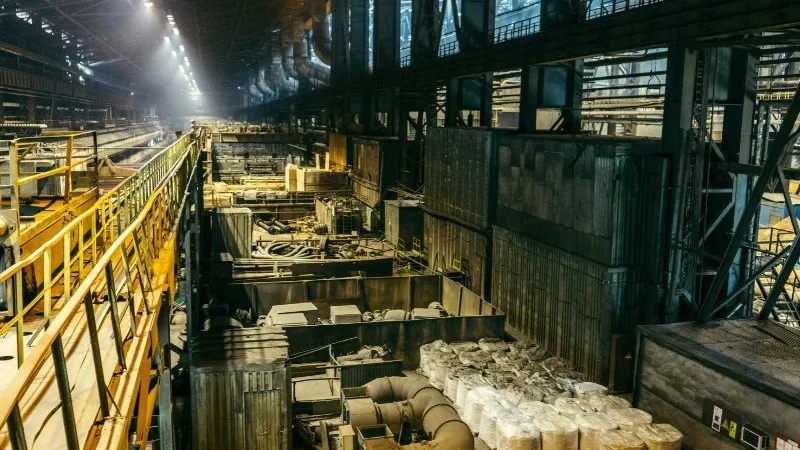
Regional economic reports on November 15, 2026, confirmed that 291 factories have been able to reopen within the Aleppo’s Sheikh Najjar Industrial city this year. Aleppo industrial comeback, This is an important step towards the recovery of the city’s industry, though local industrialists say energy prices are astronomical, they have severe labour shortages and travel expenses are prohibitively high to operate the industries before they can return to pre-war levels.
Sheikh Najjar Industrial City Leads Aleppo Industrial Comeback
The city of Aleppo, a historic industrial and manufacturing hub, is undergoing a slow, but steady economic comeback. The Sheikh Najjar Industrial City is showing signs of progressive recovery, with nearly 300 factories already producing, and another 515 factories having received building permits, reports Shafaq News on November 15. This revival is a testament to the resilience of entrepreneurs in their community and their resolve to restore their facilities, having been ravaged by conflict over the years.
At the same time, the widespread regional changes, including the significant expansion of Al-Bab Industrial City as outlined in Rebuilding Syria, illustrates a concerted effort to boost industrial activity throughout the governorate.
But what’s going on in the factory is very difficult. Owners of industry point out that it’s like building a house from the ground up since warehouses have been destroyed and heavy machinery has been looted over the years. Sheikh Najjar now shelters more than 960 producing establishments but the rate of recovery is largely dependent on the availability of power and raw materials, according to recent industrial analysis carried out by Oxford Business Group. As a result, the majority of current plants are only producing at 30-50 percent of their actual capacity.
Operational Challenges and Soaring Energy Costs
The biggest issue affecting the full Aleppo factories recovery is the high prices of utilities. Industrialists in Aleppo say tariff increases and frequent power cuts have made it essential for them to use very costly diesel generators to ensure their production lines continue to run.
These energy-consuming industries, including textiles, iron smelting and cloth dyeing, are particularly hit. Data from SP Today revealed that the electricity tariff for industrial electricity supply rose sharply this year and many business owners had to temporarily close some of their production lines to avoid unacceptable fixed costs.
Aleppo industries begin revival after years of war
Export Market Barriers and Labor Shortages
Syrian factories production is also severely limited due to a shortage of skilled labour, in addition to other problems using the factories at home. Furniture companies and textile producers have been pointing out that there is a huge shortage of skilled craftsmen in the industry due to their mass departure. Factory prices are also pushed up as they have to pay high wages to draw the small number of qualified technicians.
There are also a number of export challenges. The traditional textiles, clothing and furniture of Aleppo continue to be the most important export market in Iraq. But restrictions on transport, high border tariffs and heavy competition from lower-priced imports from the region have limited export levels. The Syrian Arab News Agency (SANA) reports that the government is aware of the lack of infrastructure as it continues to rehabilitate the Thermal Power Plant in Aleppo. However, the manufacturers still urgently call for the intervention of the State to dismantle the barriers to imports and provide long-term loans at low rates.
The sure opening of 291 factories in Sheikh Najjar in 2026 marks a real progress in Aleppo’s path of order after the catastrophe. However, the continuation and development of these processes depend primarily on considerable structural actions. In the absence of a timely governmental response providing subsides for energy prices, creating steadiness of the supply of electric power, and establishing better export transportation routes, the production capacities of Syrian factories will remain limited to survival mode in face of the growing competitiveness of the regional markets.
Discover More Insights
Explore Cairo inflation middle class impact?
Discover how rising prices are affecting savings and daily life.
Check Algeria power plant deadline extension?
Explore updates on the 1.2GW energy project timeline.
Discover Turkey new electricity tariff changes?
Check how updated pricing will impact households and businesses.
Explore Qatar initiative boosting Syria power?
Discover efforts aimed at strengthening Syria’s electricity generation.
Check Beirut balcony lighting energy tips?
Explore efficient lighting ideas for Ramadan and beyond.