
Iraqi Finance Ministry and World Bank Agree on Sweeping Financial Transparency Mechanisms
-
The Arab Post
- . September 18, 2026
- . Update: September 18, 2026 4:46 pm
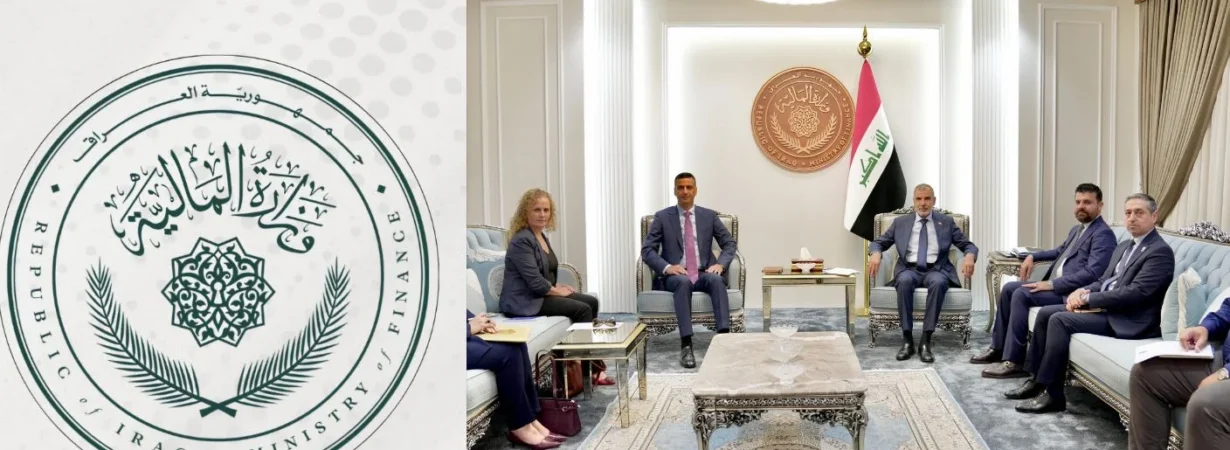
In September 2026, the Iraqi Ministry of Finance and the World Bank signed a historic pact to establish far-reaching mechanisms for financial transparency in all state institutions. financial transparency mechanisms, While actively modernizing its economy, this strategic partnership is designed to transform public financial management, reduce systemic corruption, and rigorously implement e-governance procedures. The Iraqi government is working to ensure a resilient, transparent, and sustainable economic trajectory for Iraq by implementing domestic fiscal policy measures in line with international accountability parameters.
A Strategic Partnership for Institutional Reform
A high-profile meeting took place on September 17, 2026, when Dahlia Khalifa, the World Bank Division Director for the Middle East Department, and Finance Minister of Iraq Faleh Al Sari met in Baghdad. The objective of this meeting was to enhance the macroeconomic structures of Iraq as well as to ensure that the country’s funds were spent effectively.
The two parties signed an agreement to speed up projects being implemented by the Iraqi Finance Ministry in a hasty manner, according to regional news agency Qatar News Agency (QNA). These will be tailored to build more advanced work mechanisms, improve the effectiveness of national resource management, and enhance the monitoring of financial markets.
Key Pillars of the Financial Transparency Mechanisms
The new financial transparency mechanisms agreed are heavily dependent on robust digital transformation and institutional strengthening to ensure smooth and secure capital flow through the system.
Automating Public Financial Management
One of the key thrusts of the national economic reform program is to shift to a completely Integrated Financial Management Information System (IFMIS) from the prevailing paper-based accounting system. A single centralized digital infrastructure to monitor budget execution in real time for the federal government. The ministry can now monitor public funds effectively in all state institutions, which will significantly minimize the risk of any administrative embezzlement and allow the proper use of funds in accordance with the Federal budget.
Enhancing Data Management and Accountability
The World Bank is offering essential technical support to restore public confidence and renew the banking industry. This includes training financial regulators and completely digitizing payroll and public procurement data. These technical protections, as repeatedly described by the World Bank Group, are imperative to support private sector development. Through this ongoing support, local ministries work within strict international standards of compliance that are a key prerequisite to accessing future funding from the international community and bilateral trade deals.
Building on Recent Governance Milestones
These broad financial transparency mechanisms are not being carried out in isolation: they are following on from significant and large scale improvements in Iraqi governance and the strengthening of policies.
In January 2026, the Ministry of Finance announced with pride that Iraq is the second country in the world in its improvement in the annual index of Worldwide Governance Indicators (WGI). The country achieved tangible improvements across several points in government effectiveness, regulatory quality and direct control of corruption, as a result of the implementation of the national economic reform program.
The Iraqi Prime Minister’s Office will strive to maintain this unprecedented momentum by continuing to work closely with the World Bank. Moreover, international bodies such as the International Monetary Fund (IMF) have several times emphasised it is important for this governance improvement trend to continue, as it is necessary to control the volatility of oil revenue and demonstrate to foreign investors that the country’s financial environment is quickly on the road to normalisation.
The Iraqi Finance Ministry’s and the World Bank’s pledge to use comprehensive financial transparency mechanisms is a landmark development for the country. In Baghdad, the financial opacity that has been entrenched for decades is being successfully broken through by taking a strong stance on the digitization of data management and imposing strict accountability measures in all state institutions. As these essential pillars of economic reform become established, they will unleash vast amounts of foreign investment, stimulate lasting private sector development and help the Iraqi people build long-term prosperity.
FAQs – financial transparency mechanisms
Q1: What did the Iraqi Finance Ministry and the World Bank agree on?
A: In September 2026, the two sides agreed to implement a range of financial transparency systems and launch public finance management instruments in all public institutions.
Q2: Who led the discussions in Baghdad?
A: The high-level discussions were led by Faleh Al Sari, the Iraqi Minister of Finance, and Dahlia Khalifa, the World Bank’s Middle East Department Head.
Q3: How do these reforms help the Iraqi economy?
A: Due to the automation of financial information and vigorous enforcement of e-governance to curb corruption, the reforms help improve resource management and foster confidence of foreign investors to the Iraqi market.
Explore More Must-Reads
Explore current vs savings account differences?
Discover how choosing between current and savings accounts can impact your daily banking and long-term financial planning.
Explore Cairo living costs 2025–2026 trends?
Check how rising expenses and inflation are shaping everyday life and budgeting in Cairo for residents.
Explore Amman jobs and living reality?
Discover real salaries, job opportunities, and actual living costs in Amman before making a move.
Explore best countries for Arabs 2026?
Check top destinations, visa options, and opportunities for Arabs planning to relocate in 2026.
Explore Morocco gig economy earnings and taxes?
Discover platforms, income potential, and tax rules shaping Morocco’s growing gig economy.