
Al-Qaradaghi Says October 7 Shaped New Political Trends in the US and Europe
-
The Arab Post
- . September 18, 2026
- . Update: September 18, 2026 2:59 pm
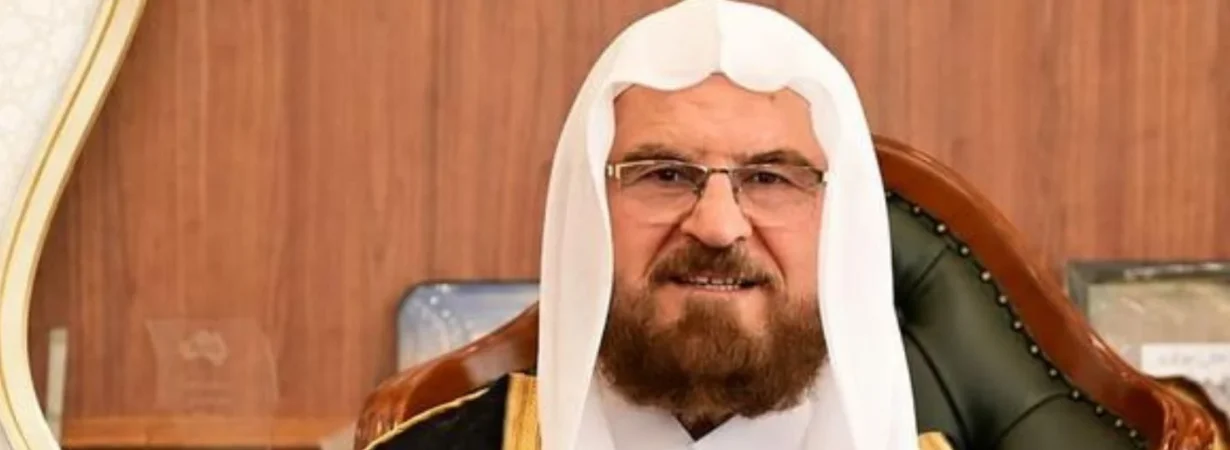
Sheikh Ali Mohiuddin Al-Qaradhi’s comments have reignited debate on the impact of the October 7, 2023 attack and the ongoing Gaza war on political issues beyond the Middle East.
Ali Al-Qaradaghi, president of the International Union of Muslim Scholars (IUMS), is thought to have linked the political ascendancy of New York City Mayor Zohran Mamdani and Michigan Democratic Senate nominee Abdulrahman El-Sayed to Hamas’s euphemism for the October 7 operation, “Al-Aqsa Flood.” The New York Post reported the comments, which were leaked from monitoring by the Middle East Media Research Institute (MEMRI).
The comments are important because they give a first-hand account of the political ramifications of the attack. They alone do not prove the election results of either American politician on October 7.
What Al-Qaradaghi Reportedly Said
According to the report, the statements were made during an event on August 22, 2026, around the launch of the annual report of the institution, which was to be made in Jerusalem, as well as the opening of its office in Turkey. Al-Qaradaghi has confirmed his involvement in the event in Istanbul by the IUMS itself.
The reports said Al-Qaradaghi presented a view that was that if there had not been the “Al-Aqsa Flood,” the developments in Europe and the United States would not have been as they are. He then pointed to Mamdani and El-Sayed as “blessings” that go with the “October 7 attack.”
The wording is not just about the Gaza conflict but its “political impact” in the West. It does not mean an independently-proven explanation of why certain candidates succeeded, but rather Al-Qaradaghi’s interpretation of events.
Ali Al-Qaradaghi Current Role at the IUMS
Al-Qaradaghi is currently identified by the International Union of Muslim Scholars as its The Indonesian Muslim scholar, Al-Qaradaghi, is currently known as the president of the IHT. His presidential tenure began in January 2024, replacing the previous leadership in the union’s structure.He took over the presidency in January 2024, following the previous leadership within the union’s structure.
This is a correction to the initial reports which referred to him as the union’s secretary-general. As per current IUMS material, Ali Muhammad Al-Sallabi is the secretary-general of the organization while Al-Qaradaghi is the president.
The late Yusuf al-Qaradawi founded the IUMS. The Counter Extremism Project has made mention of connections between IUMS leadership and the Muslim Brotherhood and researchers at George Washington University’s Program on Extremism have characterized the organization as ideologically associated with the Muslim Brotherhood. These are characterisations by the researchers and not by the role definition of the organisation.
Why Zohran Mamdani Is Central to the Claim
Zohran Mamdani is the current Mayor of New York, NY. He is now sworn in as the city’s official website says on January 1, 2026, following his representation of New York state’s 36th State Assembly District.
His rise to prominence in New York politics has gotten him international attention because the Gaza war and U.S. policy toward Israel has entered the broader politics of the United States. Al-Qaradaghi’s comments fit into the larger political context of October 7 and beyond.
The problem with this reported speech, however, is that there is a factual correction: Some reports cite Al-Qaradaghi as calling Mamdani the “governor” of New York State. Mamdani is not the governor of New York State, he is the mayor of New York City.
Abdulrahman El-Sayed and the Michigan Senate Race
The second example Al-Qaradaghi provides of the way toward a political career is that of El-Sayed.
Combating the competition from U.S. Rep. Haley Stevens, El-Sayed went on to pick up the Democratic nomination in August 2026 to represent Michigan in the U.S. Senate. The Associated Press said that El-Sayed had fewer than 15,000 votes from more than 1.5 million counted and outside groups that supported Stevens ended up spending over $60 million.
When discussing El-Sayed’s victory, Al-Qaradaghi was quoted as talking about a $73 million campaign. The number should be included in Al-Qaradaghi’s quote, instead of being a standout figure on its own because the AP had a different number for the total amount of outside spending.
Now the Democratic nominee, El-Sayed will be competing with Republican Mike Rogers in November. His campaign has seen him fill positions on healthcare, campaign finance and U.S. military assistance to Israel, all of which put the Middle East conflict in his political spotlight.
October 7 and the Wider Political Debate
The Council on Foreign Relations estimates that the attack on October 7 resulted in the deaths of some 1,200 Israelis, and the capture of about 250 hostages. Israel’s ensuing Gaza war turned the situation into a big international diplomatic and humanitarian issue.
Ever since, discussions that have emerged from the Gaza debate have spread to the West, to questions about military aid to Israel, Palestinian rights, demonstrations, political representation and the future of U.S. and European policy towards the Middle East.
Al-Qaradaghi’s comments take it a step further, blaming the developments as a result of the Oct. 7 attack itself. The central question the speech poses is whether the attack can only be seen in the light of the direct military and humanitarian impact of the attack, or whether the attack can also be seen in a political context, namely the changes that took place afterwards in other parts of the world.
A Political Interpretation, Not an Established Causal Finding
Political interpretation and actual causation is a distinction to make.
Mamdani’s victory was in a different city, a different electoral system, and an environment of different politics than that of El-Sayed’s primary victory. Their campaigns also included issues other than those related to the Middle East. Reporting, therefore, in the public domain, does not make it a fact that October 7 was the decisive factor in either.
The remarks reflect the way one of the big Muslim scholars views the political environment after October 7. Al-Qaradaghi explicitly ties the attack back to the political trends in the United States and, more generally, to changes that he claims are happening in Europe, by referring to the rise of Mamdani and El-Sayed as “blessings” at Al-Aqsa Flood.
For Arabs observing the consequences of the Gaza conflict, this event is yet another demonstration of the political consequences of war going beyond the borders of the region and tapping into a wider international conversation about the implications of this understanding.
Discover more Insights
Explore Iran War Lessons Globally?
Explore how the 2026 Iran war reshapes global power and strategy.
Discover Iran Delay Strategy Tactics?
Discover how Iran uses delay, repression, and proxy influence.
Check Trump Iran Strategy Importance?
Check why Trump’s Iran strategy depends on Gulf allies.
Explore Iran Military Warning Signals?
Explore rising warnings from Iran alarming global powers.
Discover Sudan Iran Axis Threat?
Discover how the Sudan-Iran axis raises serious regional concerns.