
Building Collapses in Gaza and Kills Palestinians Almost a Year Since the End of the Conflict: Why Are the Damaged Buildings Still a Threat?
-
The Arab Post
- . September 23, 2026
- . Update: September 24, 2026 3:17 pm
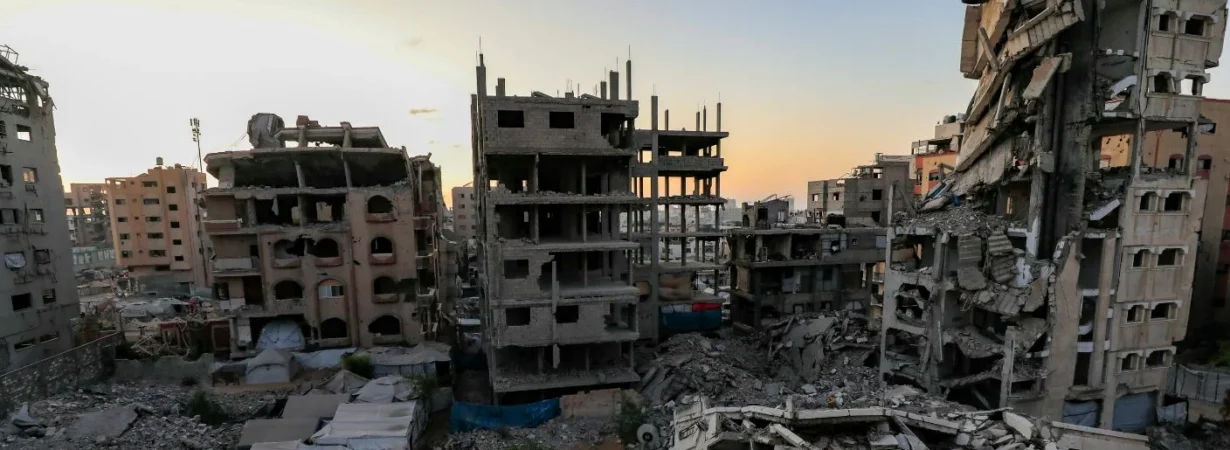
Wintertime poses an increasing threat of collapse for the damaged buildings in Gaza due to the vulnerability of the structures to collapse during rain, gaza building collapse risk, while the displaced Palestinians can’t leave the buildings due to a lack of shelter and housing options.
This issue was recently emphasized by the collapse of a multi-story building in Gaza City that caused the deaths of 21 people in September. Another building’s roof collapsed following the rain and injured four children, according to reports from Palestinian civil defense cited in the Associated Press.
What Makes the Buildings With Damage in Gaza Dangerous?
A series of wars over many years has caused many residential buildings to develop cracks in concrete, damaged foundations, unstable walls, and damaged reinforcements.
Professional engineers and humanitarian organizations claim that these buildings are particularly dangerous, especially when there is bad weather, because water from the rain can cause further damage to the already damaged buildings, thus posing the risk of total collapse of the buildings.
The extent of the problem is great as well. According to a survey by humanitarian organizations, over 320,000 houses have been damaged, which has affected around 1.7 million people. Surveys carried out by the Norwegian Refugee Council show that 72% of the surveyed people were living in damaged buildings. In one neighborhood in Gaza City, 22% of the surveyed buildings were at risk of imminent collapse.
Why Can’t Families Simply Leave? – gaza building collapse risk
There is no way out for many families because the choice is not between a damaged building and a safe place.
The situation with tents and other supplies for emergency shelter in Gaza has been critical. According to humanitarian aid workers, many of the people who have been displaced either go back to their damaged homes or stay where they are, since there is no other option available to them.
According to The Washington Post, displaced families living in damaged buildings mentioned there being no affordable options, while humanitarian aid workers pointed out that there were very few tents available.
According to the Norwegian Refugee Council, people face the dilemma of either living in a building that is potentially unsafe or a tent that does not protect them well enough from flooding, bad weather conditions, and sanitation problems.
Why It Is Difficult to Rebuild and Provide Assistance
In order to rebuild Gaza, construction materials, machines, fuel, and infrastructure are needed. According to humanitarian aid organisations, access to some of these materials and machines has been restricted.
According to Israel, restrictions are needed because some goods listed under the category of “dual use” might end up being used for military purposes. The Israeli government also denies allegations that the restrictions constitute an absolute blockade, adding that humanitarian goods keep entering Gaza.
This lack of equipment also poses a problem during rescue operations. After the collapse in Gaza City, civil defense forces supposedly had no machinery and had to operate manually. UN officials and humanitarian organizations are seeking more excavators, cranes, trucks, and other rescue equipment.
What Happens When Winter Comes Around the Corner?
With more rain and flooding becoming an issue, this will further highlight the flaws in already damaged buildings.
Surveys conducted by humanitarians showed that 71% of respondents suffered from floods during the last winter. Thus, more tents, tarpaulins, reconstruction materials, drain systems, fuel, and machinery are needed before winter arrives.
For Gaza’s internally displaced people, therefore, the question of shelter goes beyond merely having a roof over their heads.
Discover more Insights
Explore Iran War Lessons Globally?
Explore how the 2026 Iran war reshapes global power and strategy.
Discover Iran Delay Strategy Tactics?
Discover how Iran uses delay, repression, and proxy influence.
Check Trump Iran Strategy Importance?
Check why Trump’s Iran strategy depends on Gulf allies.
Explore Iran Military Warning Signals?
Explore rising warnings from Iran alarming global powers.
Discover Sudan Iran Axis Threat?
Discover how the Sudan-Iran axis raises serious regional concerns.