
Beyond Political Rhetoric: How the U.S. Terrorist Designation of Mahmoud El-Ebiary Signals a Strategic Offensive Against the Muslim Brotherhood
-
Dhivyanshu
- . July 30, 2026
- . Update: July 30, 2026 2:12 pm
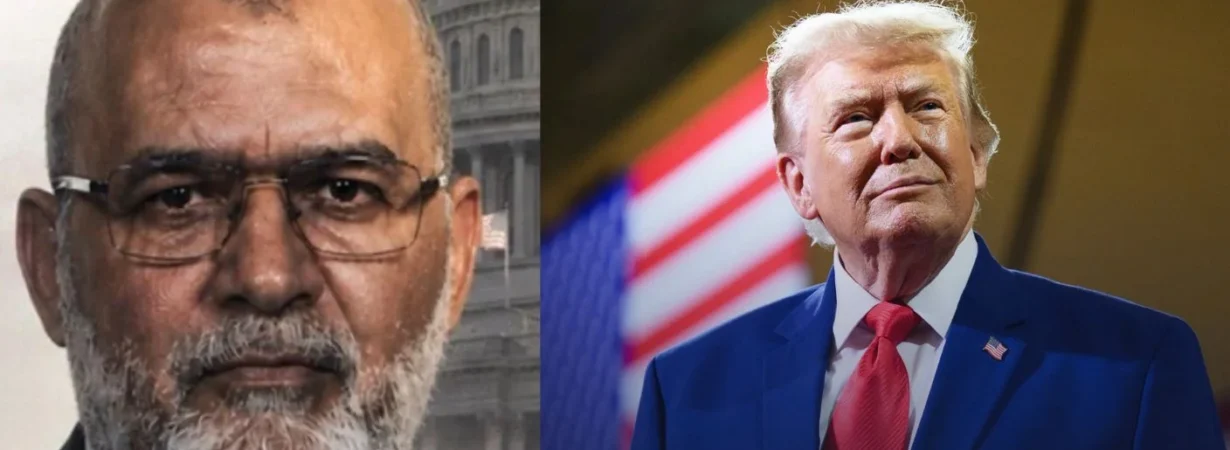
The new counterterrorism actions against Mahmoud El-Ebiary and organizations affiliated with the international Muslim Brotherhood have followed in a new direction of Washington’s counterterrorism strategy against transnational extremist groups. Mahmoud El-Ebiary US sanctions, The action does not target any one person but rather a scheme to break up the Brotherhood’s finances and organizational structure that enables its worldwide activities.
Washington has taken its criticism of political Islamists a step further by designating senior Egyptian Muslim Brotherhood leader Mahmoud El-Ebiary and entities associated with him under U.S. counterterrorism authorities. It is now seeking to develop what it believes is the integrated financial architecture that provides an international network that is tied to financing terrorists.
With its attack on the senior leadership and financial structure of the Brotherhood, the decision also puts into question the Brotherhood’s longstanding self-image as a moderate political, religious, and charitable organization.
From Political Rhetoric to Dismantling a Transnational Financial Network
The American decision’s significance lies in the fact that it is not just an individual that it seeks to aim for. That is designed in an attempt to “dislodge” an interrelated, multi-country financing network used by the U.S. authorities.
Mahmoud El-Ebiary, also known as Al-Ebiary or Al-Ibiary, has long been known to be secretary general of the General Secretariat of the Muslim Brotherhood organization, and one of the most influential figures in the organization’s administration. In addition to his internal management duties, his task involved the management of certain financial coordination and international organization functions, according to the U.S. Treasury.
The attack on El-Ebiary is thus of greater strategic importance. Instead of targeting one senior official, however, Washington is letting it be known it will seek the financial mechanisms, institutional networks and operational infrastructure that support the international organization.
Targeting Both Financial and Media Networks
El-Ebiary has also been called a “central coordinator” of the Brotherhood’s international organizational and media activities apart from the financial aspects. His job, it’s said, was to help coordinate fundraising, organizational communication, and public relations for the movement around various parts of the country.
Washington is trying to take aim at financial arrangements as well as the strategic communications, which underpin the activities of international fundraising and organizational unity. This demonstrates an appreciation that contemporary transnational organizations are not working in isolation but interconnected in terms of the financial, administrative and media structures.
Redefining the Brotherhood as a Terrorism-Financing Network
The Muslim Brotherhood has been claiming to be a non-hierarchical political, religious and charitable organization, dedicated to peaceful civic engagement, for decades.
The new U.S. move is a new legal manifestation. Washington is designating parts of the hierarchy of its senior leaders and affiliated entities as part of the list of Specifically Designate Global Terrorists (SDGTs) under Executive Order 13224, essentially branding them as part of a network used to promote terrorism financing.
This is an active critique of the Brotherhood’s dominant representation of its international leadership as engaged in religious, educational or charitable activities. It indicates, however, that key parts of the organization’s top leadership are considered an integral part of a larger financial network involved in extremist activities, rather than a standalone entity.
Importantly, this legal framework could literally provide a blueprint for future activities that go beyond the level of any one official or isolated regional branch to larger segments of the international organization if U.S. authorities believe there have been further legal thresholds crossed.
The Hamas Connection as a Dual-Pressure Strategy
The other major factor in the designation is the supposed financial connections of the international Muslim Brotherhood network with Hamas.
The U.S. Treasury has discovered that support networks linked to Hamas do not “operate just in Gaza, or in the Middle East in general. Rather, investigators outline financial pipelines that ran through furthering organized fundraising and support structures throughout Europe, Africa, and other jurisdictions in other countries.
Washington is putting pressure on two fronts: first, with the documentation of these connections, and second, by the fact that these connections are documented. It aims to limit the flow of funds to Hamas, and strengthen the case that certain parts of the broader Islamic Brotherhood movement are involved in other aspects of fund raising outside the local or regional context.
Treasury Focus on Financial Facilitators and Front Organizations
The Treasury’s action does not stop there of sanctioning a number of people. It also seeks out entities and facilitators that the U.S. authorities allege to have engaged in financial activities involving sanctioned entities.
This would be part of a broader counter-terrorism push to expose commercial agents, money-lenders, money-raising groups and charities and financial facilitators that allegedly allow money to flow through borders and remain hidden behind the facade of the ultimate recipient.
Washington’s approach highlights an emerging trend by which counterterrorism enforcement efforts are shifting toward attacking the institutional landscape in which extremist financing takes place, instead of just reacting to the individuals.
Deterring Affiliated Entities and “Fake Charities”
The designation also has a wider message for those with whom it is affiliated, who function in Europe, Africa and elsewhere.
The stance of being a humanitarian charity, educational institution or business may endanger organizations if intelligence agencies suspect they are helping to move money around for sanctioned networks.
The action message indicates that such groups are no longer considered to be “above the law. However, U.S. authorities are focusing on increased monitoring of cross-border financial and charitable organizations and businesses that may be used to funnel money illegally.
The First Step in a Broader Sanctions Strategy
The designation isn’t meant to be a one-time move, but could be an indication of an upcoming round of sanctions against other financial facilitators and related entities.
Washington has helped to set a precedent and delineate organizational connections that could have implications for future measures against other people, charitable groups, commercial firms and financial networks around the world that are allegedly linked to the international Brotherhood.
If further sanctions are imposed, this may be considered the first step in an extended campaign to attack a U.S. government-sanctioned “integrated transnational financial infrastructure.”
A Growing Legislative Alliance with Regional Partners
The decision also has some geopolitical significance.
Washington’s decision to act against high-ranking individuals associated with the international organization is also intended to bolster regional partners such as Egypt, Jordan, Saudi Arabia and the United Arab Emirates that have long implemented such policies regarding the Muslim Brotherhood.
The maneuver highlights more convergence of American counterterrorism policy with the tactics of some Middle East governments in the House. At the same time, it could give a boost to those European countries that have not yet gone so far as to liberalize the legal status of Brotherhood-affiliated groups within their borders.
Unveiling “The Mysterious Man” and Challenging the Narrative of Transparency
Mahmoud El-Ebiary is widely rumored to have been called “The Mysterious Man” among Brotherhood members because he prefers to work behind the scenes, but rules the roost in one of the organization’s key posts. He has also been called the movement’s “third man” by observers, who describe him as being influential behind the scenes, rather than front of the scene.
The role of El-Ebiary is not just being highlighted for his own sake, but for a strategic reason. It helps to show that much of the organization’s decision-making has occurred at a level that is not in the public eye; they have used funds and organizations in a way that is not widely advertised.
By doing so, Washington’s designation aims to question the Brotherhood’s historical image of transparency. The United States is portraying a picture of an organization whose most influential structures function outside its political messaging in the public sphere, and it targets the senior administrators who coordinate international operations and finances.
Conclusion – Mahmoud El-Ebiary US sanctions
The naming of Mahmoud El-Ebiary is a condemnation not just of one senior member of the Brotherhood, but of many. It is part of a trend in the United States counterterrorism policy toward shifting the debate over the organization’s political identity to its financial, administrative, and organizational infrastructure linked to its overseas efforts. ‘
It is uncertain whether this action will ultimately result in more sanctions. But by examining the institutional processes behind transnational financing and not the individual cases, Washington has put in place a system that could influence the trajectory of future legal and counterterrorism actions against the international Muslim Brotherhood. If further measures are taken as a result, it may not only be remembered as an attack on one official, but also as the start of a more comprehensive strategy to deal with the world financial network of the organization.
Discover more Insights
Explore Iran War Lessons Globally?
Explore how the 2026 Iran war reshapes global power and strategy.
Discover Iran Delay Strategy Tactics?
Discover how Iran uses delay, repression, and proxy influence.
Check Trump Iran Strategy Importance?
Check why Trump’s Iran strategy depends on Gulf allies.
Explore Iran Military Warning Signals?
Explore rising warnings from Iran alarming global powers.
Discover Sudan Iran Axis Threat?
Discover how the Sudan-Iran axis raises serious regional concerns.