Dutch Parliament Backs Muslim Brotherhood Ban, Signaling Wider European Shift
-
 Khalid Al Mansoor
- . March 21, 2026
- . Update: March 21, 2026 7:28 pm

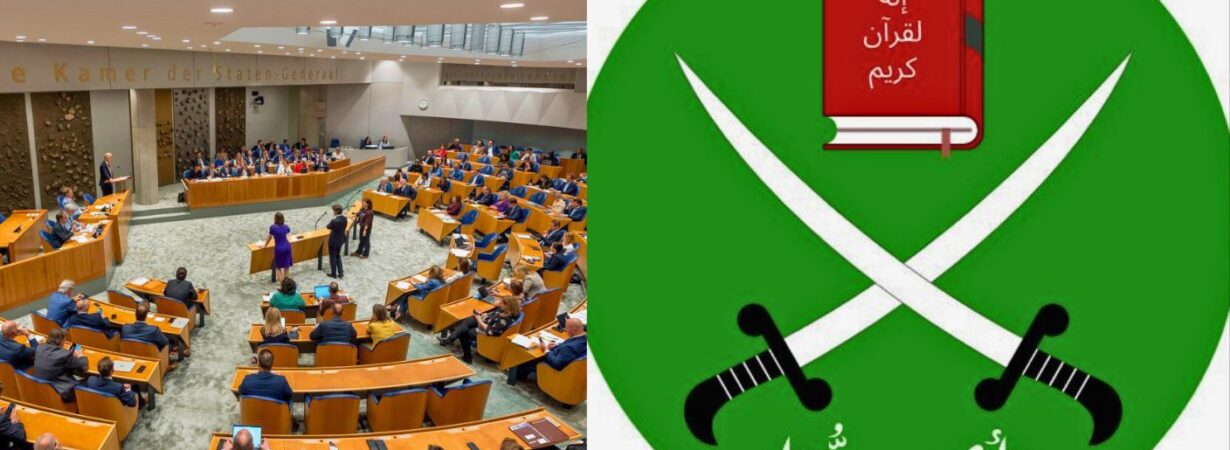
The Dutch House of Representatives has passed a motion requesting the prohibition of the Muslim Brotherhood and its affiliated groups in the Netherlands in a major political move. It was proposed by the members of the Party for Freedom (PVV) and received a majority, though very slim, on March 17, 2026, which constituted a significant change in the attitude of the country towards Islamist networks.
The vote is amidst rising debates in Europe over the issue of security, influence of ideology and toleration boundaries in liberal democracies.
A Policy Shift Reflecting Broader European Trends
The ruling by the Dutch parliament is being considered as one of the broader reevaluations of Islamist groups in Europe. Over the past few months, policymakers on the continent have paid more attention to the role and impact of groups like the Muslim Brotherhood.
One of the main landmarks of the Dutch debate has been a report in France that had criticised long-term ideological influence and organisational linkages to the group. This document has been extensively referred to in the arguments supporting the view that the governments of Europe are starting to synchronise their policies on the matter.
The action of the Netherlands implies that the currently divided debate has developed into a more coordinated European reaction.
Security Concerns Take Priority in Political Debate
Those who are in support of the motion claim that the move is being fueled by considerations of national security. What they highlight is the importance of being on guard to possible long-term risks even at a time when the dangers are not that obvious.
Even the very movement is a part of the matters of ideological influence, such as the possibility of parallel networks functioning in democratic systems. The advocates argue that it is important to do it early in order to avoid instability in future.
The decision has not been taken without controversy, however. Other legislators wondered whether there is enough evidence to warrant a ban, citing that the group is not specifically enumerated in the recent national threat assessments. Others also brought up issues of legal and definitional concerns, especially with the decentralisation of the organisation.
Irrespective of these concerns, the passage of the motion underscores an increasing tendency of policymakers to focus more on precautionary action.
The Netherlands as a Potential Policy Trendsetter
This vote could make the Netherlands a trendsetter of policy in Europe. The same has been said in other countries, and the fact that the Dutch parliament approved it is a deliberate move that may lead to legislative action.
In Europe, states are also looking into ways of dealing with organisations that are considered to be ideologically or politically threatening. The decision of the Dutch may have an impact on the policy discussion in the future, not only on the national level but also on the European Union level.
Here, the decision is not only being construed as a domestic development but also as a larger trend in the way European states are looking at the issue of security and the way they handle governance in a changing geopolitical environment.
Renewed Scrutiny on Islamist Networks
The movement is also indicative of new questioning with regard to the Muslim Brotherhood around the world. The organisation has been restricted differently in some countries, such as Egypt and Saudi Arabia, whereas the European reaction has been more conservative.
The Dutch vote points towards what may be the shift in this strategy. In requesting a ban, legislators are, in a way, launching a broader discourse into the reaction of democratic forms to ideologically oriented cross-border movements.
Meanwhile, the controversy highlights another issue in the politics of Europe, namely, the question of finding a way to reconcile civil liberties and the security issue. Policies such as those filed in the Netherlands are likely to keep on the centre stage of discussions both in society and politics as governments strive to find this balance.
FAQs
1. What was the decision of the Dutch parliament?
The decision in the Dutch House of Representatives to have the government proscribe the Muslim Brotherhood and its affiliates in the Netherlands was passed.
2. What is the reason why the Netherlands is thinking about this ban?
The ruling is connected with the enlargement of security concerns and the mention of the European reports, and especially that of France, which speaks of the risks of the group.
3. Does it imply that the Muslim Brotherhood is already outlawed?
No, the movement requests the government to act. More legal and policy measures would be needed to enforce the official ban.