
Why Europe Is Revisiting Calls to Ban the Muslim Brotherhood: Italy and France in Focus
-
The Arab Post
- . November 3, 2026
- . Update: November 3, 2026 2:19 pm
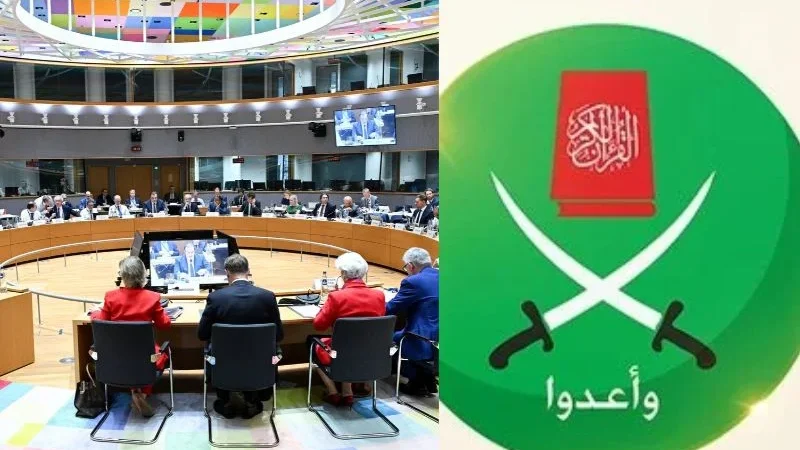
The controversy over the Muslim Brotherhood and its political reach in Europe has come back to the fore since it happened in Italy and France. Muslim Brotherhood ban, The debate about political Islam and extremist networks and the role of institutions and public security has returned the focus to the question of tougher legislation.
In an opinion piece he wrote for the Italian newspaper Il Tempo, on 26 October 2026, Alessandro Bertoldi says that the Muslim Brotherhood should be proscribed, noting that its ideology can penetrate beyond the organization into educational institutions, political circles, media outlets and civil society.
In his article, Bertoldi reviews the recent events in Italy and France to make the case that the European governments should be more interested in Islamist networks. His comment also highlights general issues around the definition of extremist influence and the preservation of democratic freedoms and legitimate political engagement.
Il Tempo Raises Concerns Over the Muslim Brotherhood’s Alleged Influence in Europe
One of Bertoldi’s main points in commenting on the Muslim Brotherhood is that its influence can’t be analysed as if it was solely through its formal organisation. He says the ideology and ways of mobilisation it has can be carried out by people and networks who are not directly affiliated with the organisation.
The author explains one approach to infiltration that he believes to be through educational institutions, universities, political organisations, media platforms and community networks. He also points to the use of different messages for different audiences, suggesting this is a way in which extremist ideological views might be hidden, but remain influential in the broader society.
The allegations are part of a larger argument made by the author for a ban. They are considered claims of an opinion article and not facts for each institution or person that is discussed in the broader discussion.
Bertoldi also has questions regarding the linkage between political activism, pro-Palestinian mobilisation and Islamist networks. He believes the dissatisfaction and grievances of the populace and society could be used to increase the power of extremists.
Importantly, any criticism of government policies or involvement in pro-Palestinian demonstrations does not, on its own, mean that people support the Muslim Brotherhood or extremist activity. Specifically and verifiably needs evidence of such connection.
Italy’s October Demonstrations Bring Security Concerns Into Focus
For Bertoldi the context that is provided by recent demonstrations and incidents of public order in Italy.
The events happened in the context of protests in the city of Bologna on 17 October 2026. Some 500 people were initially in Piazza Minghetti, and the number of participants increased to some 2,000. The number of people who arrived in Piazza Minghetti was initially estimated at around 500, before rising to an estimated 2,000.
Police were able to report violent incidents, damage of commercial property and vehicles and throwing of objects at the police. Five arrests were effected and nine preventive measures resulted from the further investigations.
The police statement blamed it on local activist and antagonistic groups such as CUA and PLAT. It didn’t link the disturbances to the Muslim Brotherhood.
Yet another aspect of the larger discussion is the use of the social-media profiles of the Movimento 17 ottobre by its alleged operator, Youssef Siher.
But the next step in Judicial development is significant. Rai News’ report of 29 October 2026 found that the judge of preliminary investigations in Milan did not confirm his detention, but ordered him to be released without any precautions. The judge has said there was no serious evidence of guilt and that his posting of messages didn’t call for violence.
This is not the conclusion of the investigation of all matters. However, it is significant that this has been a development and that this needs to be taken into account when discussing the case.
The events emphasise for Bertoldi the relevance of analyzing the political and the ideological networks of mobilisation. The information available from the police and judicial authorities, nevertheless, should not be viewed as a conclusive indication of the presence of Muslim Brotherhood members.
France’s Parliamentary Debate Adds a European Dimension
But the debate on the Muslim Brotherhood is no new phenomenon in Italy. France is also an emerging hub of the European debate on imposing greater legal restrictions on the movement.
On 22nd January 2026, the European Union adopted a resolution in the Assembly of France for the Muslim Brotherhood to be placed on the European Union’s terrorist list.
According to the official parliamentary roll the resolution was voted on, 157 voted for, 101 voted against, and one abstained.
The development is a response to worries of French legislators about the alleged political influence, transnational connections and impact of the movement on democratic systems.
But the parliamentary resolution is not to be confused, however, with an EU-wide terrorist designation. It is not an autonomous legal decision to place the organisation on the European list, but is a political call to action. The voting information is on the French National Assembly’s official record.
What Would an EU-Level Ban Mean?
There are important questions of law and institutions involved in the possibility of placing the Muslim Brotherhood on the EU list of terrorists.
Previously, the European Union (EU) counterterrorism regulations allowed for measures such as freezing financial assets, curbing the availability of economic resources and enhanced police and judicial cooperation if an organisation is listed.
The EU’s counterterrorism framework, the Council of the European Union, also has a list of requirements for listing. A competent authority of a member state or third country must have already made a decision on the commission of terrorist activity, e.g. a decision to launch an investigation or prosecution or a conviction. The Council then thinks about the listing within the appropriate framework.
This implies that requirements for a ban should be ultimately evaluated in accordance with existing legal processes and based on evidence based on the requirements.
It is also important for governments to be able to distinguish between an organization that engages in illegal activities and a person exercising his or her rights to religious practice, political participation or peaceful protest.
Balancing National Security With Democratic Freedoms
Lack of balance between the objectives of national security and democratic freedoms.
Bertoldi’s commentary urges European governments to better take seriously the alleged influence of the Muslim Brotherhood on its countries’ ideologies and organisations. The argument he advanced is part of a broader discussion on the actions democratic states should take in the face of networks that are suspected of being extremist or those that try to destabilize democratic systems.
His statement was released by the Interior Ministry of Italy.
This differentiation is integral to the discussion occurring in Europe. Tackling extremist organizations entails thorough investigations, visible proofs, and correct legal means. Nevertheless, peaceful political activity, belonging to some religion, and partaking in civil society cannot be seen as symptoms of extremism.
Why the Debate Over a Muslim Brotherhood Ban Matters
Alessandro Bertoldi in his article for Il Tempo puts forward the idea very relevant for European politicians – how should states react to suspected extremist networks that exist in different countries and different areas of life?
The situation in Italy, as well as the parliamentary initiative from France, proves that the discussion has political and legal implications that go beyond the boundaries of national discussions.
Advocates of the prohibition point out that the implementation of sufficient measures would prevent extremism from using democracy and social problems (the argument about how effective and lawful those measures can be is based on the availability of evidence as well as useful criteria).
Therefore, the current issue is not about whether or not the Muslim Brotherhood must be restricted. Rather, it is the question of how European governments can maintain public safety, democracy, and social stability without violating human rights.
To read the whole argument visit Alessandro Bertoldi’s article on Il Tempo – Muslim Brotherhood: Why Ban is Important.
Explore More Must-Reads
Explore current vs savings account differences?
Discover how choosing between current and savings accounts can impact your daily banking and long-term financial planning.
Explore Cairo living costs 2025–2026 trends?
Check how rising expenses and inflation are shaping everyday life and budgeting in Cairo for residents.
Explore Amman jobs and living reality?
Discover real salaries, job opportunities, and actual living costs in Amman before making a move.
Explore best countries for Arabs 2026?
Check top destinations, visa options, and opportunities for Arabs planning to relocate in 2026.
Explore Morocco gig economy earnings and taxes?
Discover platforms, income potential, and tax rules shaping Morocco’s growing gig economy.