
Lebanon Moves to Ratify 2010 Turkey Free Trade Agreement: Why the Long Delay?
-
 The Arab Post
- . November 24, 2026
- . Update: November 24, 2026 2:22 pm

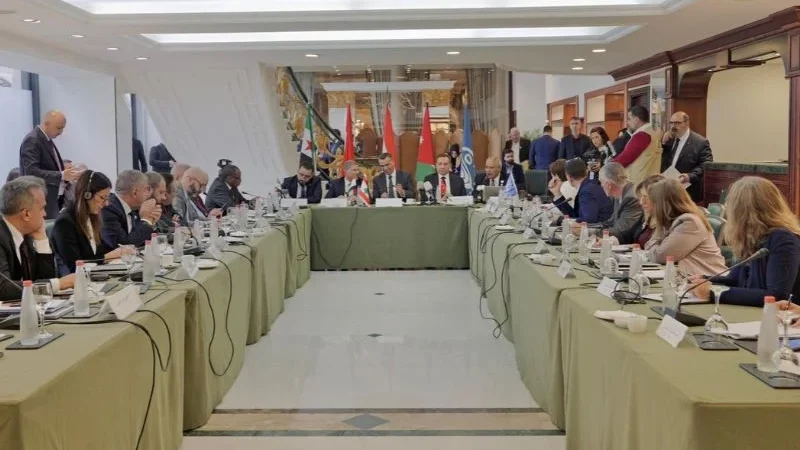
The Lebanon Turkey Free Trade Agreement was launched in 2006 and has been stalled for a long time, but in late November 2026, Lebanese Economy Minister Amer Bsat announced serious governmental efforts to revive and ratify the agreement. The bilateral accord was originally signed in Beirut in November 2010, and marked an important step towards regional economic integration, but it was not formally activated. Records of the Treaty of the Turkish Ministry of Trade show that it has been indefinitely under ‘domestic ratification’. The pact has languished in legislative purgatory for 16 years, due to domestic opposition and alarmingly bad economic imbalances. Lebanon, in its urgent search for economic recovery routes, is championing the implementation of protocols from 2010 which revive the debate on local production and importation from abroad.
Understanding the 16-Year Delay
Though there was diplomatic excitement at the time of drafting the agreement, Lebanon’s Parliament repeatedly balked at finishing the ratification procedures. There were two main reasons for this. First, the country had a huge structural trade deficit and second, local manufacturers were very vocal in lobbying.
The Threat to Lebanese Industrialists
The open-market terms met with strong opposition by Lebanese industrialists from the time of their ink drying in 2010. Turkey has a very subsidised, very industrialised economy which is able to produce consumer goods, textiles and agricultural products at a lot cheaper than Lebanon.
Local companies’ representatives stated that the elimination of the protective tariff would lead to an invasion of the already fragile Lebanese market by imports from Turkey at low prices. Local industries were worried that without government subsidies on the electricity and operating prices—which are exorbitant for Lebanese factories—then the deal would lead to a big number of bankruptcies of industries at the national level.
An Asymmetrical Trade Deficit
The numbers have historically been propping up the industrialists’ fears. The Observatory of Economic Complexity (OEC) data reveals that trade with the world has been heavily skewed in favour of the United States. In recent years, the exports from Turkey to Lebanon regularly exceeded $1.2 billion per year, such as refined petroleum, seed oils and textiles. Lebanese exports to Turkey, on the other hand, were around $200 million, mainly in the form of raw scrap metal and gold. Lawmakers were concerned that if the free trade zone were left in its original form, it would only fuel this dollar drain in the wake of the severe dollar shortage that Lebanon was already experiencing.
What Has Changed in 2026?
The Lebanese Economy Minister has decided to reinvigorate the deal, because of the urgent need to jump-start the Lebanese economy and reduce prices of consumer goods. However, the evaluation of the bilateral treaty conducted recently by the UN ESCWA pointed out that a new version of the agreement could be useful to Lebanon provided that certain protective clauses are put in place.
This proposed reactivation plan is not a blind carbon copy of the 2010 text. The Ministry of Economy is currently developing a gradual strategy that would protect sensitive sectors and create opportunities for the Lebanese export of agricultural products and specialized services to the Turkish market, according to recent announcements made by Daily Beirut. Now, with inflation coming under control and structural reforms being implemented as part of the demands from international financial institutions, securing good foreign trade corridors is perceived as a strategic priority for the future of Lebanon’s survival.
FAQs
When was the Lebanon Turkey Free Trade Agreement signed?
The original agreement was signed in Beirut on November 24, 2010, but was not ratified by the Lebanese parliament.
Why did Lebanese industrialists oppose the agreement?
The local industry was afraid that zero-tariff imports from Turkey could ruin their industry. Turkey supports its manufacturing sector, which makes its products much cheaper than Lebanese ones.
What is the current status of the agreement in 2026?
In late November 2026, the Lebanese Minister of Economy announced the launch of the new negotiation process to revive the 2010 agreement. The state aims to modify the agreement’s provisions to ensure the protection of local industry while expanding an opportunity for local companies to export goods.
Discover More Insights
Explore Cairo inflation middle class impact?
Discover how rising prices are affecting savings and daily life.
Check Algeria power plant deadline extension?
Explore updates on the 1.2GW energy project timeline.
Discover Turkey new electricity tariff changes?
Check how updated pricing will impact households and businesses.
Explore Qatar initiative boosting Syria power?
Discover efforts aimed at strengthening Syria’s electricity generation.
Check Beirut balcony lighting energy tips?
Explore efficient lighting ideas for Ramadan and beyond.