
Turkey, Qatar: How Regional Powers Shape Sudan’s Conflict
-
The Arab Post
- . August 14, 2026
- . Update: August 14, 2026 2:13 pm
The Sudan Conflict between the Sudanese Armed Forces (SAF) and the Rapid Support Forces (RSF) has been a conflict that started as a power struggle in Sudan, but has been influenced by ties with neighboring countries. The Turkish, Qatari governments have all grown to have distinct diplomatic, economic, and security agendas in Sudan. They have been engaged in various political and economic ties, mediation activities, security relations, etc., for long.
Rather than asking who is “responsible” for the war in Sudan, for Western and international audiences, it is more important to ask the following questions: How might documented relations and regional priorities impact the dynamics of the conflict and humanitarian issues in Sudan; and how might they affect the region’s stability and possibilities for a political solution? The four should not be considered as a unit either. They share some common interests, but have other differences.
Turkey: Diplomacy, Economic Interests and Security
Turkey has longstanding political and economic ties with Sudan, especially since the onset of the expansion under the former President of Sudan, Omar al-Bashir. Agriculture, trade, investment and infrastructure development, as well as the general interest of the Republic of Turkey in the Red Sea and Horn of Africa, have been among these ties.
Ankara has been actively engaging with Sudanese authorities since the onset of the war in April 2023, and has expressed a strong commitment to Sudan’s sovereignty and territorial integrity. In December of 2024, President Recep Tayyip Erdoğan proposed his mediation efforts between Sudan and the United Arab Emirates, after Sudan claimed that the UAE was supporting the RSF. Sudanese army chief Abdel Fattah al-Burhan said he had welcomed the proposed mediation and that he was looking to increase the amount of investment coming from Turkey.
The security dimension of the relationship between Turkey and Sudan is also under the spotlight, especially in regard to the reports of SAF using Turkish-made defence equipment. These reports fit into the broader picture of the security relationship, but are not proof that Turkey was directly involved in the conflict. The available evidence suggests, therefore, two competing perspectives: Turkey can be seen in terms of its strategic and economic interests, and, on the other, Ankara sees its interaction mainly in the light of diplomacy and bilateral relations, and its efforts to ensure Sudan’s stability.
Qatar: Mediation and Historical Political Relationships
Qatar has been more positively documented than any other in its role in Sudan, so far as diplomacy is concerned. Doha was a key player in the Darfur peace process that ultimately led to the establishment of the 2011 Doha Document for Peace in Darfur. Political, economic and justice and reconciliation, compensation, and return of displaced populations were all covered by the agreement.
Qatar’s history provided the country with established relations with political actors in Sudan and established Doha as having an important diplomatic connection. The Bashir government also had a relationship with Qatar, which has led to discussion of its historic links with Sudanese political and Islamist groups.
But they should not necessarily be assumed to be examples of direct Qatari involvement in the current conflict. There is a crucial difference between documented diplomatic activity and perceptions of ‘political influence’ in the case of Qatar.
External Influence, Humanitarian Consequences and Mediation – Sudan Conflict
These relationships help to show that the conflict in Sudan is a part of a wider network in the region. Sudanese actors’ incentives can be impacted by economic concerns, diplomatic relations, and security ties, and regional powers can serve as a forum for negotiations. Agriculture, mineral resources, the Red Sea coastline, and strategic location are factors that make Sudan important in the region, but not economic interests as such should be used to justify continued conflict.
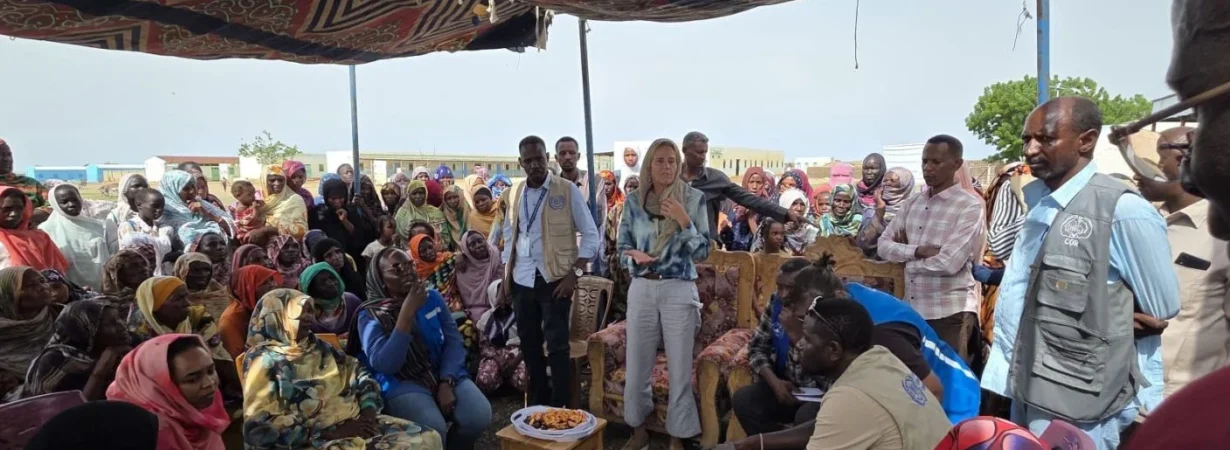
These dynamics are very important in view of the humanitarian implications. In April 2026, the United Nations reported that almost 34 million people in Sudan were in need of humanitarian assistance and over four million people were suffering from acute malnutrition. Almost 9 million people were displaced, and Sudan was the largest displacement situation in the world.
The conflict has also caused significant refugee flows to neighbouring countries and put a strain on humanitarian systems in the region. The threats of continued fighting, limited humanitarian access, and instability in Sudan’s neighbouring regions in the Red Sea and Horn of Africa can have consequences beyond Sudan’s borders, as actions of regional powers can affect it.
Various mediation efforts have thus since appeared; both the United States, the African Union, IGAD, the United Nations have been active in this regard, as well as other diplomatic initiatives. They have not shared the same objectives: some have focused on ceasefires and humanitarian access; others have focused on an African-led political process; Sudanese sovereignty or longer-term political negotiations. More effective collaboration of these efforts is still a key priority.
Sudan’s political trajectory will more likely continue to be one of division, a negotiated resolution, or greater integration in the region. There are no guarantees of these results. The key question is whether the ties between Turkey, Qatar, and other stakeholders are being leveraged for diplomacy, humanitarian access, or for other purposes.
For international audiences, the most useful approach is therefore evidence-led: document what regional actors have done, try to distinguish established facts from competing interpretations, and then assess how external relationships affect Sudan’s conflict, without kind of assigning predetermined motives.
Discover more Insights
Explore Iran War Lessons Globally?
Explore how the 2026 Iran war reshapes global power and strategy.
Discover Iran Delay Strategy Tactics?
Discover how Iran uses delay, repression, and proxy influence.
Check Trump Iran Strategy Importance?
Check why Trump’s Iran strategy depends on Gulf allies.
Explore Iran Military Warning Signals?
Explore rising warnings from Iran alarming global powers.
Discover Sudan Iran Axis Threat?
Discover how the Sudan-Iran axis raises serious regional concerns.