

‘Arriving Too Late for Care’: Global Funding Cuts Leave Millions Without Medical Lifelines in Sudan
-
The Arab Post
- . September 9, 2026
- . Update: September 9, 2026 7:02 pm
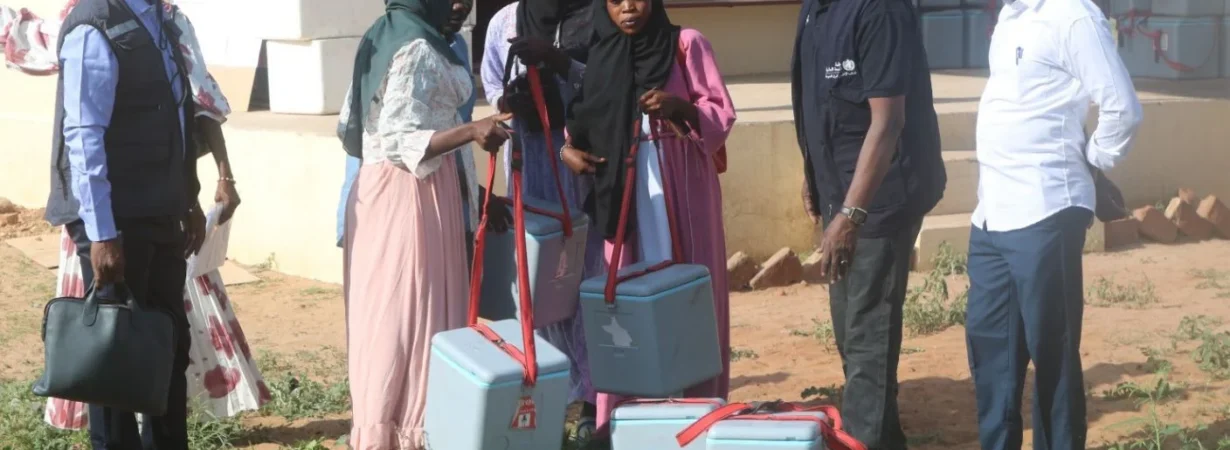
Sudan healthcare crisis, Doctors Without Borders, widely known by its French acronym MSF, has issued an urgent warning that Sudan’s healthcare system is buckling under the weight of global funding cuts, even as the war-driven need for medical care continues to climb.
In a report released on September 8, the organisation said roughly 37 per cent of Sudan’s health facilities are now completely out of service, leaving patients to travel long, often dangerous distances in search of care that may no longer exist by the time they arrive.
Clinics Closing As Needs Grow
The scale of the collapse is stark. In Central Darfur alone, 45 general healthcare centres stopped receiving support in May after the organisations funding them ran out of money. At the same time, the patients those clinics once served have not disappeared; they have simply moved to whatever facilities remain open. Between January and April this year, admissions at MSF-supported facilities in Zalingei and Rokero in Central Darfur rose by 22.5 per cent compared with the same period last year, a clear sign of pressure building on a shrinking network of providers.
In Tanedba camp in Gedaref state, home to roughly 18,400 refugees, the sudden withdrawal of a humanitarian organisation in June forced the closure of the camp’s maternity and surgical wards. Pregnant women who need caesarean sections now face three-hour journeys to reach the nearest city capable of performing them.
MSF has since stepped in to run the camp’s emergency room through the end of 2026, but the episode illustrates how quickly essential services can vanish when funding dries up. The organization also noted that around 35 aid groups were active in and around Um Rakuba camp in Gedaref state back in 2021; today fewer than 10 remain.
A Crisis Underfunded At Every Level
The clinic closures are unfolding against the backdrop of an already severe humanitarian emergency. United Nations figures cited in the report show that 825,000 children under five are expected to suffer severe acute malnutrition this year, while 19.5 million people faced crisis-level hunger earlier in 2026, a level of need that forces families to skip meals or sell off assets just to survive.
Despite this, the UN’s $2.87 billion response plan for Sudan remains only about 41 percent funded. MSF noted that global humanitarian aid funding overall fell by 35.8 percent, a drop that has hit Sudan’s response particularly hard given how heavily it already relied on international support.
Voices From The Ground
Muhammad Ibrahim, MSF’s head of mission in Sudan, said the war is driving the country’s medical needs while funding cuts are simultaneously shrinking the response available to meet them.
He noted that MSF’s own work in Sudan is privately funded, but that when funding disappears from other health services, the resulting closures push more patients toward the facilities MSF still operates, straining even those resources.
Liz Harding, MSF UK’s humanitarian representative, said static funding will not be enough to match the scale of need as frontline clinics close and referral hospitals come under growing strain. She warned that without an increase in support, patients will face longer journeys, fewer treatment options, and a greater risk of what MSF has described as arriving too late for care.
Fabrizio Locuratolo, MSF’s humanitarian affairs manager, added that the damage extends well beyond healthcare. He pointed to shrinking food rations and the dismantling of protection programs as further evidence that the safety nets refugees and displaced people once relied on are being pulled away.
What MSF Is Asking Of Donors – Sudan healthcare crisis
With world leaders gathering for the UN General Assembly, MSF is calling on governments and institutional donors to protect funding for essential health services in Sudan and to provide flexible transitional financing for facilities at risk of closing.
The organization has framed the moment as a test of whether the international community will act before the country’s healthcare system deteriorates further, or whether more patients will be left to make the same impossible journeys in search of care that no longer exists.
Explore More Must-Reads
Explore current vs savings account differences?
Discover how choosing between current and savings accounts can impact your daily banking and long-term financial planning.
Explore Cairo living costs 2025–2026 trends?
Check how rising expenses and inflation are shaping everyday life and budgeting in Cairo for residents.
Explore Amman jobs and living reality?
Discover real salaries, job opportunities, and actual living costs in Amman before making a move.
Explore best countries for Arabs 2026?
Check top destinations, visa options, and opportunities for Arabs planning to relocate in 2026.
Explore Morocco gig economy earnings and taxes?
Discover platforms, income potential, and tax rules shaping Morocco’s growing gig economy.