
Sudan’s Islamist Networks and the SAF: Military Ties, Financial Networks and the Risks to Peace
-
The Arab Post
- . September 24, 2026
- . Update: September 24, 2026 3:32 pm
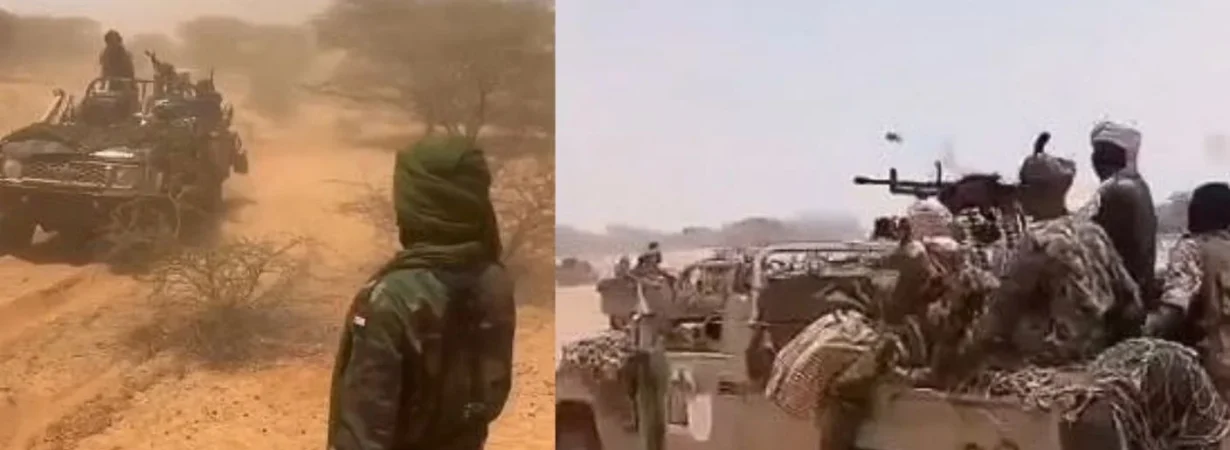
The Sudanese Armed Forces (SAF) have brought Islamist networks operating within and alongside the SAF to the fore, as Sudan’s war has once again raised questions about them. Sudan SAF Islamist networks, The Al-Baraa Bin Malik Brigade is the most prominent armed group in this ensuing debate, but the greater question extends to the political legacy of Omar al-Bashir, the wartime recruitment of armed groups, the financial networks and Sudan’s previous status as a hub for transnational militants.
The Sudanese Muslim Brotherhood and the Islamic Movement, which is a close ally of Hassan al-Turabi, have overlapping personnel and ideologies with Bashir’s regime, but are not the same organisations. There is also no public proof that the Brotherhood has a control over the SAF in general.
Al-Baraa and the SAF
The most clear-cut example of Islamist armed actors engaging in armed conflict with the army is that of the Al-Baraa Bin Malik Brigade.The most explicit is the armed group of Islamists, Al-Baraa Bin Malik Brigade. In the fall of 2025, the U.S. Treasury imposed sanctions on the brigade for its involvement in the war in Sudan and ties to Iran. The U.S. State Department in March 2026 added the Muslim Brotherhood to a list of designated global terrorists and Foreign Terrorist Organizations in the Sudan. The Federal designation mentioned the name Al-Baraa Bin Malik Brigade as one of the aliases of the organization. Washington also noted that many of the fighters who were part of the group have been trained and otherwise supported by the Islamic Revolutionary Guard Corps of Iran.
There is further proof of cooperation between members of the Al-Baraa and SAF forces in UN investigations. In January 2025, UN Human Rights Office documented at least 18 deaths of people affiliated with the SAF, which included 10 fighters and seven militia members in Khartoum North. It also perused videos of men in SAF uniforms reading out the names of alleged RSF collaborators and stating that they have been killed by the members of Al-Baraa. The SAF and Al-Baraa were responsible for the killing of 36 civilians in two villages in North Kordofan, following accusations that they had worked with the Rapid Support Forces (RSF), a later UN report said.
These results show the cooperation on the battlefield and serious allegations of abuse. They fail to prove that each and every SAF unit is Islamist-controlled or that every operation Al-Baraa participates in is independent of the command of the army.
Peace negotiations and the “total war” question
The Islamist factor is now part and parcel of diplomacy because the State Department in Washington has pointed out the Sudanese Muslim Brotherhood’s resort to violence against civilians to sabotage efforts to resolve the conflict. Similarly, the Manara analysis suggests that Islamist actors have been adamant to compromise with other groups and hold on to influence via the military.
But the facts do not prove that the Brotherhood was the one that intentionally sabotaged all the unsuccessful ceasefires or mediations. Sudan’s conflict is a conflict of interests and competing political, foreign-backed groups and militias with the SAF.
UN Personal Envoy Pekka Haavisto stated in May 2026 that the conflict was not likely to be militarily resolved and that immediate de-escalation, humanitarian access, confidence-building measures, and a political pathway led by civilians were the most likely ways to resolve the conflict.
The more quantifiable question is, however, what kind of impact do Islamist actors have on decision-making on the battlefield, recruitment and political negotiations, and do they increase the obstacles to a negotiated settlement?
The financial networks after the 2021 coup – Sudan SAF Islamist networks
Another way to look at the survival of the Islamist establishment of Bashir’s time is from the financial history. Since Bashir’s ouster in 2019, the Empowerment Removal Committee (ERC) was established to dismantle the networks of the previous regime and recover companies, property and other assets linked to the officials and associates of the regime.
That was put on hold by the military coup in October 2021. After taking over, various figures from the Bashir era of Islamists were freed, Reuters reported. Another aspect of the incidents that was described in today’s reporting was the return of some of the officials of the previous regime in public view and the reversal of some of their measures against their networks.
The next time, Hamza’s sanctions record should be of special importance. The U.S. Treasury added Hamza and several companies such as Zawaya Group for Development and Investment and Larrycom that are based in Sudan to its list of suspected Hamas financiers in October of 2023. In 2024, the EU separately designated the companies, Zawaya and Larrycom, and declared that they were controlled by Hamza and linked to funding of Hamas.
This creates a connection to lawfully between Hamza and the Sudanese business community and the financing of Hamas. It does not necessarily imply that the 2021 reversal took place to restore a full-fledged Hamas transfer network, nor does it necessarily imply that all activities of the Sudanese Islamists is centrally coordinated.
From Turabi’s Sudan to the present
History is important, but there shouldn’t be too many similarities. In 1998, HRW reported on the training networks in the vicinity of Soba and Damazin, and alleged Iranian involvement, through the testimony of a Sudanese military defector. The testimony in those accounts and should not be considered as proof for each of the facilities mentioned.
A highly authoritative independent record of the 9/11 Commission shows that bin Laden spent from 1991 to 1996 in Sudan, where the country was an early base for his network, and that it was in Sudan that the 9/11 attacks were planned. It also documented that militants who tried to assassinate Egyptian President Hosni Mubarak in 1995 were helping to hide in Sudan and were supported by bin Laden. Bin Laden was in Sudan until 1996, when he fled for Afghanistan, followed by the 1998 U.S. embassy bombings in Kenya and Tanzania.
The historical lesson, therefore, is more focused: Sudan has offered the space in the past for the intersecting of Islamist networks and state structures and transnational militants. That’s not to equate today’s Islamist players with al-Qaeda.
Chemical weapons and a new escalation risk
Another security problem is the allegations of the use of chemical weapons by the SAF. The U.S. government decided in April 2025 to impose sanctions under the Chemical and Biological Weapons Control and Warfare Elimination Act (CBWEWA) on the Government of Sudan for using chemical weapons in 2024. The allegations by Sudan have been denied.
The data originating from September 2026 has been added to a collection of fresh information. The documents supposedly detailing a scheme for chlorine-based arms manufacturing by the Sudanese military are obtained by the two leading media entities, New York Times and Washington Post. The documents, on the basis of which the latest information has come through, suggest that there has been a large-scale production and/or storage of weapons and, in particular, of a holding and testing site for arms at the airbase in Merowe. It is also stated in the documents that the military uses chlorine supplied by a water treatment facility located in Omdurman.
The material is essential but is not a forensic investigation as such, but an intelligence dossier. Experts said they found no reason to doubt that the material was part of a chemical-weapons programme, according to the New York Times, but that it would take independent on-the-ground investigation to confirm.
What the evidence means for regional security
Read as a whole, the record suggests that the Sudan conflict has come to involve increasingly large numbers of Islamist networks. Al-Baraa has established connections to the battlefield with the SAF, and has been targeted for U.S. terrorism and sanctions. There are reports by UN investigators of the brigade and SAF-affiliated forces conducting alleged executions. There were also some individuals and networks from the Bashir years that came back to the spotlight in this post-2021 environment, and U.S. and EU sanctions have helped document a link between Hamza and Sudanese companies and Hamas financing.
The evidence does not support depicting the Brotherhood as the same as the SAF or make it easier to simply describe the entire war as an “ideological struggle” waged by one network against the other. The Sudanese conflict is a multi-actor war, with both the SAF and RSF fighting alongside other forces, political groups, and foreign countries.
In the case of peace negotiations, the real question is whether there is enough influence amongst the Islamist networks in recruitment, on the battlefield, political institutions, and financial resources to influence the process of negotiation. The humanitarian implications are already immense: WFP states almost 19.5 million people face crisis food insecurity in 2026, and about nine million people remain displaced within Sudan.
Any permanent solution for any durable settlement will thus need to tackle not only the two main armed groups, but also the political, military, and financial groups that contribute to the sustenance of Sudan’s war.
Discover more Insights
Explore Iran War Lessons Globally?
Explore how the 2026 Iran war reshapes global power and strategy.
Discover Iran Delay Strategy Tactics?
Discover how Iran uses delay, repression, and proxy influence.
Check Trump Iran Strategy Importance?
Check why Trump’s Iran strategy depends on Gulf allies.
Explore Iran Military Warning Signals?
Explore rising warnings from Iran alarming global powers.
Discover Sudan Iran Axis Threat?
Discover how the Sudan-Iran axis raises serious regional concerns.