
Sudan Chemical Weapons Allegations: New OPCW Evidence, U.S. Sanctions and the Verification Gap
-
The Arab Post
- . September 4, 2026
- . Update: September 8, 2026 6:59 pm
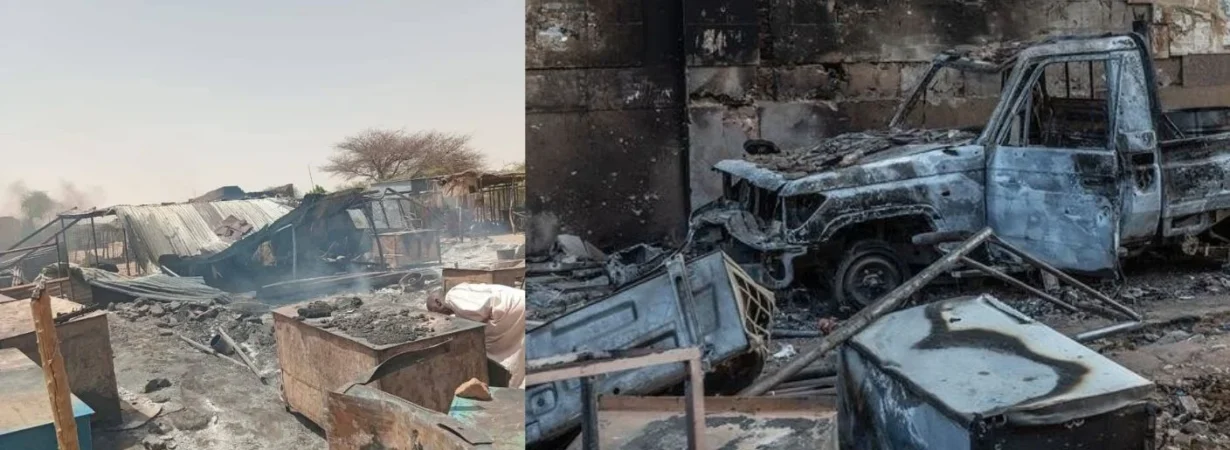
In 2026, accusations regarding the Sudanese Armed Forces (SAF)’s use of Sudan Chemical Weapons have reached a new level. What started with a U.S. government determination in April 2025 has morphed into an ongoing controversy between a Sudanese investigation, proceedings at the Organisation for the Prohibition of Chemical Weapons (OPCW), independent open-source reporting and a second round of U.S. sanctions that entered into force in July 2026.
The new evidence does not provide a resolution to the key issue. Although Sudan has cast doubt on the allegations in the areas it has investigated, the country’s national technical committee, Washington maintains the nation used chemical weapons in 2024, and that it has been in non-compliance with the Chemical Weapons Convention (CWC). The OPCW is also continuing to play a broader role in the treaty process, and to date has not announced an independent report confirming SAF chemical-weapons use.
The 2025 U.S. Determination Put Chemical Weapons at the Centre of the Dispute
The U.S. Department of State, on April 24, 2025, decided that the Government of Sudan had used chemical weapons (CW) in violation of international law. On 24 April 2025, the U.S. Department of State decided that the Government of Sudan had used chemical weapons (CW) in violation of international law. This determination was finally published in the Federal Register on June 27, 2025, and lead to an initial package of sanctions.
Washington has not made the full technical record public that was considered in determining the figure. That left unanswered key questions such as whether the alleged incidents were actually chemical, the chemical agents involved, and the chain of evidence and to whom those agents belong.
Sudan is denying the allegation and setting up a national technical committee to investigate the allegations. The committee’s initial report will be included in the OPCW discussion in the future.
September 2024 Incidents Provided the Main Publicly Discussed Open-Source Evidence
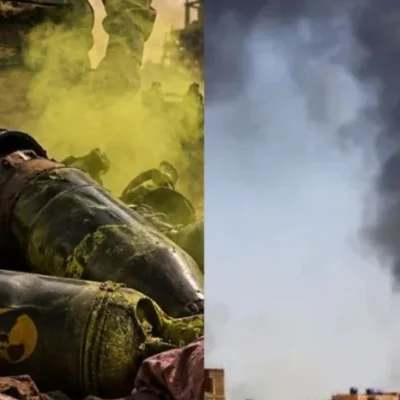
Alleged use of chlorine in September 2024 was a major development that arose from a probe by French television channel France 24, which was subsequently looked into by Human Rights Watch. The investigation, HRW said, has yielded “public evidence” that might support some of the U.S. claims.
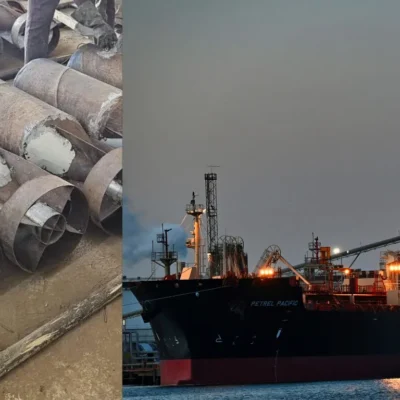
The investigation focused on some photographs and videos related to the Garri military base and the nearby Jaili oil refinery north of Khartoum, which at the time were controlled by RSF. France 24’s geolocaters and the material contained images of chlorine storage tanks, craters, and a yellow-green cloud in the sky, which investigators thought that chlorine gas might have been sprayed into. HRW independently confirmed the location of the videos and stated that the evidence should lead to an international investigation.
However, the imagery is not the same as the laboratory confirmation, and open source imagery is not open source confirmation. HRW itself requested transparency in the OPCW investigation, as well as Washington’s disclosure of the proof for the sanctions. This distinction is very important, as the public investigation may offer corroboration, but does not necessarily represent an international final forensic conclusion.
Sudan’s National Investigation Produced a Directly Opposing Assessment
The most notable new development for 2026 was just prior to the OPCW Executive Council’s 112th sitting, which took place on 7th–10th July.
Sudan sent out a document, labeled EC-112/NAT.15, which included a report from the Sudan national technical committee with preliminary results on July 6. The committee stated that it had considered the information, made a site visit and questions, and explored the sites provided to it. The conclusion was that it did not find material, technical, and documentary evidence that substantiates the allegations in the sites that it investigated.
The wording matters. The Sudan’s document is the result of an assessment by a national investigation that was set up by the Sudanese authorities. It is not a separate finding by the OPCW, and the material made public is not as rich in laboratory evidence from outside that a third party could be able to duplicate or analyze the findings.
So there are now two official views in conflict: While Washington claims its technical analysis concluded chemical weapons were used, Sudan claims it has found no supporting evidence.
The July OPCW Session Raised the Verification Issue
This U.S. statement was a restatement of their position in the July OPCW session. Washington again asserted Sudan used chemical weapons in 2024, and continues to be in non-compliance in 2025, according to the Arms Control Association.
U.S. Ambassador Nicole Shampaine said Sudan’s own investigation was not an alternative to independent treaty compliance and verification, calling “domestic bureaucratic mechanisms” not an alternative to “treaty compliance and independent verification.” Washington requested the OPCW Technical Secretariat to have “free and unfettered” access to investigate the allegations in a “transparent” manner.
Meanwhile, Sudan has denied it was obstructing the international process, calling into question Washington’s description of its investigation. Independent access and verification is the major issue that remains unresolved with the competing positions.
Requests for clarification from states parties had been a part of the broader CWC process. Sudan submitted her paper to the OPCW in July and the OPCW’s records indicate that other delegations, such as from the United States and the European Union, also made statements.
The OPCW’s New Forensic Work Highlights Why Verification Matters
Since it was not a new finding about Sudan, it is nonetheless relevant to the evidence debate, and will be considered in an additional July 2026 development.
On 8 July OPCW released a new report that explores the role of chemical forensics to support investigations under the CWC. The organisation underlined that identification of a chemical is only a part of the investigation and it is possible to learn about the origin of substances, relationships between samples and production from samples. It also claimed it is the validation of methods, good reference data and comparison between laboratories that ensure the reliability of the forensic conclusions.
It is suggested that a dedicated chemical-forensics platform should be developed that includes information on chemical impurity profiles and production routes and analytical reference data.
In the Sudan case this is a reminder of the distinction between a chain of evidence, and a competing national assessment.In the Sudan case, this is a reminder of the distinction between a chain of evidence and a competing national assessment.
Washington Has Now Imposed a Second Round of Sanctions
There have been tangible consequences of the allegations as well.
The U.S. on June 23, 2026, decided to apply extra measures due to the fact that Sudan had not satisfied the statutory requirements to avoid such sanctions. The measures will go into effect on the 20th of July, 2026.
The other sanctions involve U.S. opposition to certain multilateral development-bank assistance to Sudan, which will be waived for basic humanitarian needs; further export restrictions; and action to suspend the right of foreign air carriers owned or controlled by the Sudanese government to provide foreign air transportation to or from the United States. The measures are to be in effect for a minimum of one year and until further notice with exceptions and licenses specified.
The second package of sanctions was implemented in July, and the U.S. used the July OPCW session to further press its allegations and request further investigation, the September 2026 Arms Control Today assessment confirms.
What the International Record Shows – Sudan Chemical Weapons
There’s not a one-size-fits-all answer to the international community, but there’s widespread agreement that the charges should be investigated.
The UK has raised its concerns on this subject in the context of the OPCW, and statements at the OPCW Executive Council in July 2026 by the European Union and the Group of African States Parties have shown that this issue is no longer a matter of simply U.S.-Sudan concerns.
Meanwhile, the international institutions have not come out with a stand-alone assessment that the SAF was using chemical weapons, based on the U.S. assessment or on open-source data.
Continuing to have that as the focus of coverage is the right thing to do.
Civilian Risks Are Serious, but the Scale of Impact Remains Unclear
Chlorine is an acceptable industrial chemical, but using a toxic chemical as a weapon is illegal under international law. Exposure may result in breathing difficulty and in extreme cases, may be fatal, HRW said. It also classified the reported incidents as “a serious potential violation of the Chemical Weapons Convention.
But the public record doesn’t prove there were any verified civilian casualties or a detailed medical evaluation that can be attributed directly to the 2024 incidents. The military or industrial facilities reported were in an area under the control of the RSF at the time, and it is imperative that care is taken to not extrapolate beyond the evidence provided.
What We Know — What Remains Unverified
It has been confirmed by the United States that Sudan has used chemical weapons in an official statement in April 2025. Sudan refused to accept the accusation and created its own technical committee of the nation. Subsequently, evidence was presented from independent sources that suggested that HRW had been aware of chlorine incidents that might have been corroborative in September 2024. In July 2026, Sudan provided OPCW with preliminary data, but the U.S. confirmed its assessment and insisted on independent verification. There are also other sanctions that came into effect on July 20, 2026, that were imposed by Washington.
The evidence is incomplete: There is no published evidence of the United States. Sudan’s initial report has not conclusively shown that the claims are untrue. The open-source evidence has not, as yet, yielded a full forensic trail that traces the chemical agent, its delivery system, and its responsible SAF unit as far as it goes without the involvement of an independent international investigation. Most significantly, neither there has been any OPCW technical finding that SAF has used chemicals for weapons purposes in the latest material examined, nor has there been any indication of chemical-weapons use in the material consulted by other U.N. bodies.
The Monitoring Priority Now Is Independent Verification
The Sudan chemical-weapons case has thus passed into a new, but more consequential, stage that remains unresolved. The real issue now isn’t just whether Washington has made an allegation; it’s whether the competing claims can be adjudicated on evidence that is easily, independently available and scientifically sound and compatible with the Chemical Weapons Convention’s verification mechanisms.
For the future, it would be necessary to monitor: Any new action taken by OPCW, Technical assessment by OPCW, further disclosures by the U.S., the result of a national investigation in Sudan, access to the alleged incident site, the laboratory or forensic evidence, further reporting from the UN, and any new sanctions or diplomatic measures.
The most believable framing for international media is simply one of the allegations entails serious charges, the evidence has been evolving, the political ramifications are escalating, and an independent technical verification has not yet been carried out.
Discover more Insights
Explore Iran War Lessons Globally?
Explore how the 2026 Iran war reshapes global power and strategy.
Discover Iran Delay Strategy Tactics?
Discover how Iran uses delay, repression, and proxy influence.
Check Trump Iran Strategy Importance?
Check why Trump’s Iran strategy depends on Gulf allies.
Explore Iran Military Warning Signals?
Explore rising warnings from Iran alarming global powers.
Discover Sudan Iran Axis Threat?
Discover how the Sudan-Iran axis raises serious regional concerns.