
Syria and IFC Discuss New Investment Financing: Could a Dedicated Fund Unlock Private-Sector Projects in Syria?
-
The Arab Post
- . October 15, 2026
- . Update: October 15, 2026 2:59 pm
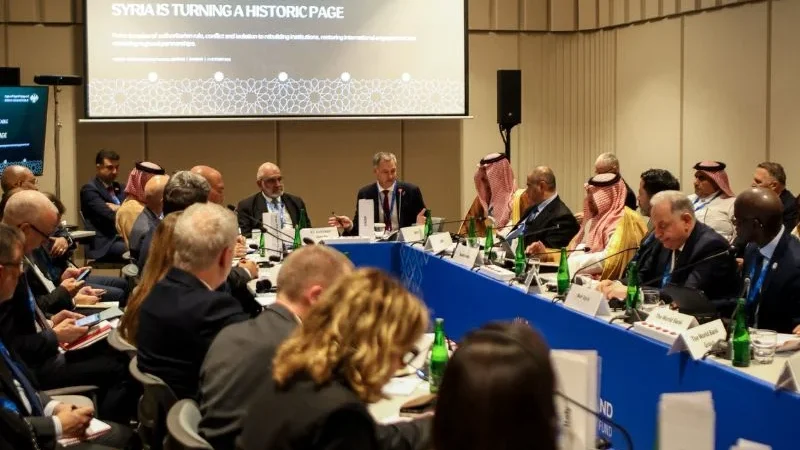
Today, talks at a high level between the Syrian financial authorities and the International Finance Corporation (IFC) began in Damascus. Syria IFC investment financing, The discussions revolve around the creation of a special, multi-party investment fund to defrisk and speed up private-sector projects in the nation’s struggling economy.
Unprecedented meetings on Thursday between representatives of the Central Bank of Syria and the Ministry of Finance and representatives of the International Finance Corporation (IFC), part of the World Bank Group, began. The continued discussions are a pivotal moment in the process of securing Syria IFC investment financing.
The core agenda is dedicated solely to setting up a dedicated fund, the officials confirmed. The proposed financial scheme is intended to efficiently overcome the huge funding deficits and to finally make large-scale projects in the private sector projects in Syria.
Now, after more than a decade of deep economic isolation, a country needs to find institutional private capital; if it doesn’t, it simply can’t.
An Integrated Approach to Economic Recovery
The two sides talked about the need for an integrated financing approach, official briefings released by Syrian Arab News Agency (SANA) said. This structure would enable several local and foreign investors to make safe investments for the project.
The special fund would provide an important de-risking mechanism for investors who are conservative. The International Finance Corporation would be able, in theory, to create a vehicle that combines concessional loans with commercial investments to enable local businesses to overcome the existing obstacles to participation in the market.
The fund’s early investments would be heavily geared toward critical infrastructure, government officials said. Priority areas are renewable energy grids, advanced agribusiness and speedy revival of domestic pharmaceutical manufacturing industry.
Distinguishing Policy from Market Realities
These financial discussions are a major diplomatic breakthrough, but, according to market analysts, these plans will be very complicated to implement. Economic data monitored by The Syria Report shows that serious regulatory challenges and compliance difficulties persist in the national market with respect to the legacy of international sanctions.
The government insists that the new financing models are clearly geared towards international waivers for humanitarian and early-recovery investments, which have been issued recently. If it is launched, it would offer robust and transparent systems of oversight to guarantee that all the fund resources are directly used for civilian Syria economic recovery.
What Comes Next for the Private Sector? – Syria IFC investment financing
The creation of a well-defined investment vehicle could have a significant impact on the internal business environment. Over the years, Syrian small-scale business owners have turned to local credit (which is not widely available and is very costly) or informal lending groups to sustain their businesses.
The fund will bring uniformity to the loan process, ensure adherence to international compliance standards and safeguard foreign investors, while at the same time providing much needed liquidity to local businesses. Moreover, local commercial banks have been invited as intermediary lenders, putting domestic banks under tight international underwriting standards.
The creation of mass employment and a stable post-conflict currency, as pointed out by the World Bank Group’s broad assessments, is only feasible via the private sector.
This exclusive fund mechanism, which the Central Bank of Syria and the IFC are working to complete in the next few weeks could surely speed up the country’s shift from emergency relief to market-oriented sustainable development. Now, investors and local businessmen are eagerly waiting for these talks to end to see if the Syria IFC investment financing can be converted into real economic momentum for Syria.
Top Picks For You
Discover top Middle East tourist sights?
Explore must-visit landmarks across the region for travelers.
Explore essential apps for Arab travel?
Check must-have apps to simplify your trip planning.
Check common travel mistakes Arab countries?
Discover key errors tourists should avoid during visits.
Explore top Arab festivals for tourists?
Discover unique cultural events across non-GCC destinations.
Check tourist safety tips Arab countries?
Explore essential precautions for safe and smooth travel.