

What Is Turkey’s “One Libya” Policy? Fidan’s 2026 Libya Visit Explained
-
Dhivyanshu
- . August 13, 2026
- . Update: August 13, 2026 5:08 pm
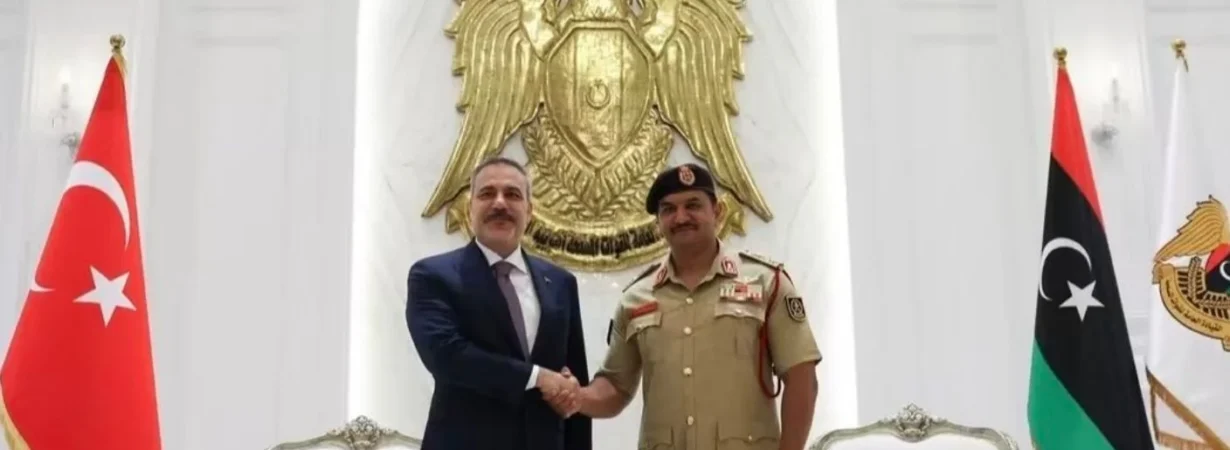
In August 2026, Turkish foreign policy kind of stumbled into a diplomatic breakthrough in North Africa, or at least that’s how it is being described. Turkey One Libya policy, Foreign Minister Hakan Fidan wrapped up a high-stakes, two-day trip that crossed the country’s divided territories. During this landmark Hakan Fidan Libya visit, Ankara formally put forward its new diplomatic doctrine, Turkey’s One Libya policy. Leaving the old fights behind, Turkey is now dealing with both the western leadership and the former eastern rivals, all in order to push peace, economic momentum, and, in the longer run, eventual elections. Below is the full picture of what this more pragmatic shift could mean for the coming Turkey Libya relations, and for regional stability.
The Dawn of Turkey’s One Libya Policy
For years, Turkey Libya relations were mainly shaped by the 2019 military intervention. Back then, Ankara actively provided drones, advisors, and air defense systems to bolster western forces against eastern commander Khalifa Haftar, when he moved in on the capital. Right now, though, this whole rhythm has changed, completely.
Turkey’s One Libya policy looks like a pragmatic diplomatic reset. Fidan stressed that Turkey does not make any distinction between the west, the east, or the south of the country. By approaching all factions on an even footing, Ankara is trying to cultivate national unity, safeguard its strategic Mediterranean investments, and stop any further splitting. The core logic is pretty clear here: long-term peace cannot really be built by exclusively backing one side in a civil struggle.
Breaking Down the Hakan Fidan Libya Visit
The itinerary for Hakan Fidan’s Libya visit kind of perfectly illustrated this newly balanced approach, with back-to-back stops across the divided nation’s two main power centers
Strengthening Alliances in Tripoli
In Tripoli, the western capital, Fidan met Abdul Hamid Dbeibah, who is Prime Minister of the internationally recognized Government of National Unity (GNU). The discussions focused on expanding bilateral commerce, sharpening military coordination, and keeping stability in the middle of recent regional tensions. And to underline Ankara’s lasting strategic footprint, Fidan also went to the Turkish military barracks, where he honored the troops serving with the Libya Task Group.
A Pragmatic Reset in Benghazi
The most noticeable turning point came next when Fidan traveled east to Benghazi. There, he sat down for warm, productive conversations with former adversary Khalifa Haftar, his son Gen. Saddam Haftar, and Aguila Saleh, the Speaker of the eastern-based House of Representatives, often described as the Tobruk parliament.
As Middle East Online pointed out, this kind of direct engagement with eastern heavyweights shows a massive evolution in Turkish foreign policy. The conversations seemed to land mostly on regional integration, urban reconstruction efforts driven by the Libya Development and Reconstruction Fund, and how to lay the groundwork for fair, transparent national elections.
What This Means for Regional Stability
That turn toward more inclusive diplomacy comes at a pretty critical moment. Some recent episodes—like drone strikes on western oil facilities and a car bombing in the east—make it clear the security situation is still brittle. With the renewed push for cooperation, officials are expecting it will translate into a few key upsides, namely
- Economic Integration: Opening space for Turkish contractors in eastern infrastructure projects.
- Energy Security: Joint development of Mediterranean energy resources, meant to support both sides.
- Political Progress: Strengthening the work tied to the United Nations Support Mission in Libya (UNSMIL), including organizing nationwide elections and helping unify state institutions that are still split.
As laid out by the Turkish Ministry of Foreign Affairs, bridging the gap between east and west is not simply a domestic necessity for Libyans; it is also vital for wider African and Mediterranean security. Local leaders across the political divide reportedly have shown real appreciation for Turkey’s balanced way of mediating, as was covered by Anadolu Agency.
That said, the time of very deep partisan splits in Ankara’s view of North Africa is moving out fast, almost. By officially rolling out Turkey’s One Libya policy, the recent Hakan Fidan Libya visit managed to connect Tripoli and Benghazi in a practical way. Instead of talking with only one side, Turkey has engaged directly both the Government of National Unity and eastern factions such as Khalifa Haftar, and in doing so Turkey has placed itself, pretty firmly, as a key peace mediator. Now that Turkey–Libya relations are stepping into this newer chapter of inclusive conversation and economic reconstruction, the idea of one unified and stable nation seems closer than it has been in more than a decade.
FAQs – Turkey One Libya policy
Q1: What is Turkey’s One Libya policy?
Turkey’s “One Libya” approach is a diplomatic stance that, somehow, treats every part of the country- the east, the west, and the south- with equal attention. It drops the habit of military alignment and moves toward brokering a calm settlement while also encouraging economic collaboration across the whole place.
Q2: Who did Hakan Fidan meet during his visit?
A: During Hakan Fidan’s Libya visit, he sat down with leaders of the Government of National Unity in Tripoli and also with eastern figures, including Khalifa Haftar and the head of the Tobruk parliament, in Benghazi.
Q3: Why are Turkey Libya relations changing now?
A: Turkish foreign policy has moved away from a hard military face-off and toward practical diplomacy. Ankara seems to be aware that lasting stability, counter-terror measures, and economic interests actually depend on working with all local groups instead of feeding a proxy struggle.
Discover more Insights
Explore Iran War Lessons Globally?
Explore how the 2026 Iran war reshapes global power and strategy.
Discover Iran Delay Strategy Tactics?
Discover how Iran uses delay, repression, and proxy influence.
Check Trump Iran Strategy Importance?
Check why Trump’s Iran strategy depends on Gulf allies.
Explore Iran Military Warning Signals?
Explore rising warnings from Iran alarming global powers.
Discover Sudan Iran Axis Threat?
Discover how the Sudan-Iran axis raises serious regional concerns.