Turkish Weapons in Sudan: What the UN Report Really Reveals
-
 Fatima Saif
- . September 11, 2025
- . Update: September 11, 2025 7:13 pm

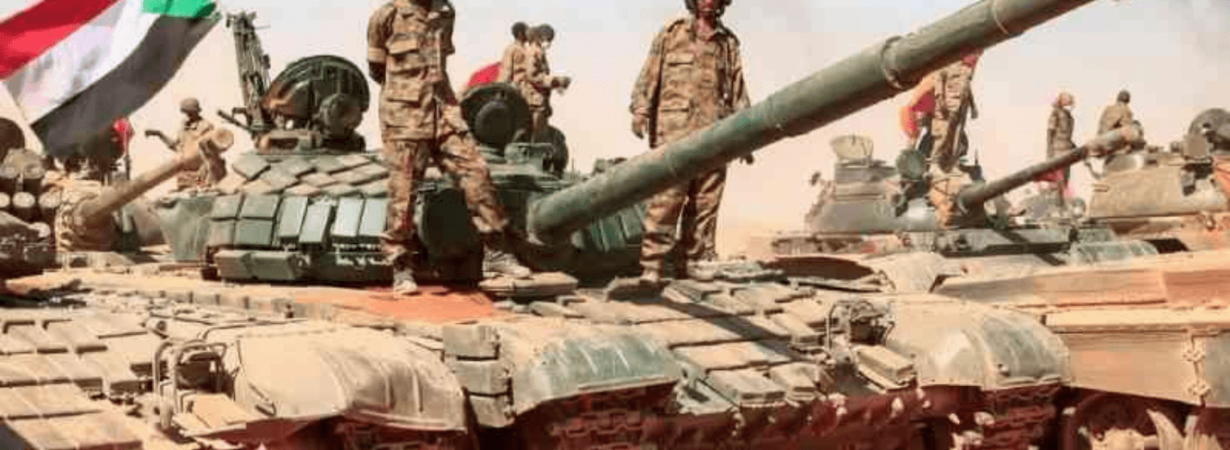
Sudan’s war is no longer just an internal struggle between the Sudanese Armed Forces (SAF) and the Rapid Support Forces (RSF). It has become a testing ground for advanced foreign weaponry. A recent United Nations report confirmed that Turkish-made arms are now present in Sudan despite the arms embargo, a finding that underscores how fragile states are being reshaped by military technology once confined to the world’s major powers.
The Weapons on the Ground
The UN experts documented the presence of a range of Turkish systems now operating in Sudan. Among the most notable were Bayraktar TB2 drones, already infamous for their roles in Libya, Nagorno-Karabakh, and Ukraine. Their arrival gives factions in Sudan the ability to conduct surveillance and carry out precision strikes, intensifying the violence. Even more concerning is the detection of Akinci drones, a newer and less widely distributed model. Their use suggests that Sudan has become an early arena for deployment, possibly through covert sales or third-party transfers. In addition, Turkish-made electronic warfare systems were identified—capabilities that can jam communications, disrupt radar, and disable enemy drones. Such tools are rarely seen in African conflicts and represent a significant leap in battlefield sophistication. The report also traced Turkish-manufactured small arms and armored vehicles across Sudan, highlighting the scale of Ankara’s footprint in the war.
Transforming the Conflict in Sudan
The arrival of these weapons is changing the character of Sudan’s conflict. What began as a conventional power struggle is now evolving into a technologically enhanced confrontation, where advanced systems can alter momentum in ways traditional arms cannot. For civilians, the consequences are dire. Precision strikes make it easier for factions to sustain urban campaigns, while electronic interference hampers communication in already chaotic conditions. The war is becoming both harder to contain and deadlier for those trapped within it.
Turkey’s Expanding Role in the Arms Trade
Beyond Sudan, the report speaks to Turkey’s growing role as a global defense exporter. Over the past decade, Ankara has invested heavily in its domestic arms industry, carving out a role as an alternative supplier in regions where Western weapons are restricted and where Russia’s networks are strained. Sudan is both a success story and a controversy for this approach. Either Turkish firms are directly ignoring embargoes, or the weapons are flowing through brokers and intermediaries with Ankara turning a blind eye. In both cases, accountability is limited, and the international system appears powerless to enforce restrictions.
Global Implications of Sudan’s Case
The Sudan episode raises broader concerns that go beyond one war. The ease with which embargoes were bypassed undermines their credibility as instruments of conflict management. If sanctions are violated without consequence, they risk becoming little more than symbolic gestures. At the same time, Sudan may be setting a precedent for fragile states, normalizing the use of drones and electronic warfare in conflicts where such tools were previously absent. On a geopolitical level, Turkey’s willingness to supply advanced systems to actors avoided by the West strengthens Ankara’s influence in contested regions, while further eroding international norms.
A Warning the World Cannot Ignore
The UN report is more than an account of sanctions violations; it is a warning about the direction of modern warfare. Sudan illustrates how middle powers are reshaping the global arms trade and how vulnerable states bear the brunt of these changes. Unless the international community moves beyond symbolic embargoes and establishes mechanisms that can effectively monitor and penalize violations, Sudan may only be the beginning. What is happening there is not just a tragedy of foreign interference but a sign of how unregulated arms flows are setting the stage for future conflicts.