
Syria’s New Role in Regional Trade: Why the Country Is Being Discussed as an Energy Corridor
-
The Arab Post
- . September 4, 2026
- . Update: September 4, 2026 4:22 pm
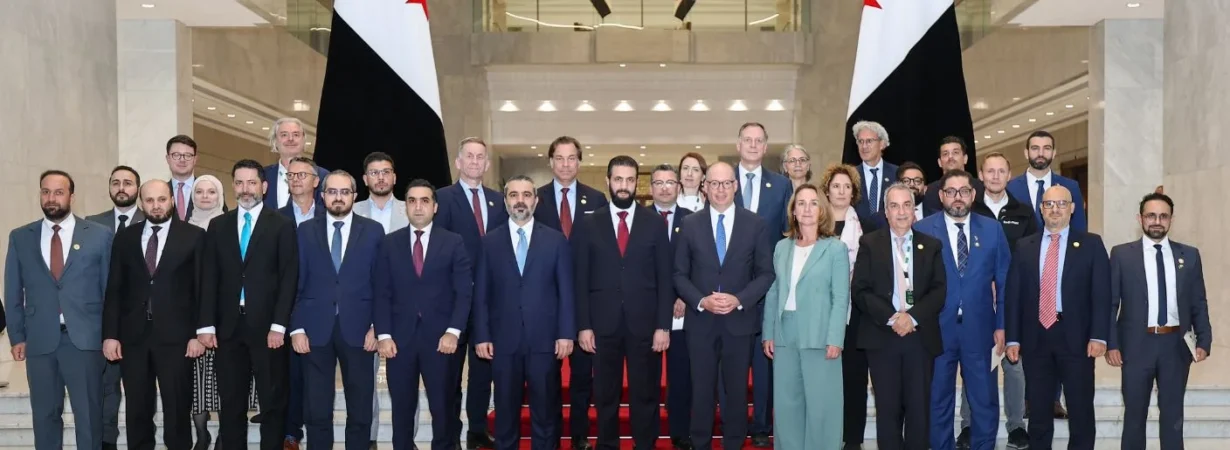
Syria has made a bold move on its economic recovery and strategic repositioning journey since the political change in late 2024. A Syria energy corridor is a very promising alternative to the fragile maritime chokepoints such as the Strait of Hormuz for global markets looking for alternatives. The country’s strategic position in the Mediterranean is helping it grow in influence in the trade of the region. The debate surrounding Syria as a transit route in the Middle East has captured much attention from investors and geopolitical analysts, and it is crucial for them to understand the reasons behind this.
The Vision for a Syria Energy Corridor
It’s not new to think about using Syria for energy transport on a much larger scale, but in a geopolitically urgent 2026, it’s been given top priority. With the ongoing disruptions to maritme activities, international actors are keenly considering alternatives in land transport.
The “Four Seas” project aims to link the Persian Gulf, the Caspian Sea, the Black Sea and the Mediterranean has been supported by the interim Syrian government. This Syria energy corridor, if it materializes, would enable the Gulf and Iraqi oil producers to send their crude oil straight to Europe markets, cutting down the shipping time and security risk by a wide margin.
Current Infrastructure and Regional Trade Developments
This can only be made possible through a huge amount of coordination and planning in logistics. Luckily, there are some important programs in place that are reshaping regional trade.
Reviving the Arab Gas Pipeline
One key step in making this shift is the revival of the Arab Gas Pipeline (AGP). The pipeline was designed and constructed to export Egyptian natural gas, but is now used for complicated regional gas swaps. Millions of cubic meters of natural gas have been flowing into Syria since early 2026 through Jordan, which is vital for the country’s energy supplies. It is strengthening Syria’s role as a key corridor in the Middle Eastern energy networks as regional stakeholders start investing in the Arab Gas Pipeline.
The Iraq-Baniyas Overland Route
Crude oil transportation is also enjoying a tremendous resurgence, in addition to natural gas. Thousands of oil tanker trucks have been carrying crude oil from Iraq over the Syrian desert to the Mediterranean port of Baniyas since April 2026. The IEA estimates that this overland route is a direct route around the Strait of Hormuz, which is already congested. Additionally, negotiations are ongoing on a $15 billion rehabilitation program to rehabilitate all parts of the historic Kirkuk-Baniyas oil pipeline in the coming four years, which would significantly boost capacity.
Expanding Bilateral Ties and Border Crossings
Syria isn’t just a part of regional trade for fossil fuels. At the same time, the country is attempting to rebuild its commercial transportation network. Official statistics from the World Bank state that reopening of cross-border trade is one of the key components of economic recovery of the country.
In 2025, bilateral trade between Turkey and Syria has hit the staggering sum of $3.75 billion, an increase of 45% from the previous year. To meet the demand of this expansion, the commercial crossings such as Bab al-Hawa and Al-Rai are undergoing major expansions which enable European and Turkish goods to cross Syria into wider Arab markets.
Key Requirements for Sustained Growth
The momentum is clear, but there are plenty of challenges to clear up to make the country a permanent energy transit hub in the Middle East. In order to have long-term success, authorities need to focus on:
- Infrastructure Rehabilitation: Updating roads, ports, pumping stations, etc. that were damaged in the past conflict.
- Security Guarantees: Advanced surveillance systems, such as drones, are being deployed to safeguard pipeline networks and protect them from sabotage.
- Governance and Transparency: Set up legal rules that are transparent and will allow international energy companies to operate and will attract long-term foreign investments.
- Diplomatic Coordination: Strong relations with neighbouring countries (namely Iraq, Jordan and Turkey) for smooth and continuous operations on the borders.
Know More: Syria’s Strategic Transit Role Revived
For Damascus, 2026 has brought an unprecedented opportunity within a geopolitical context. A good Syria energy corridor is slowly materializing thanks to its strategic position and focus on investment in infrastructure. The country is also making good progress in redefining its role in regional trade as the overland routes grow in number and the Arab Gas Pipeline is still in operation. Syria’s security and institutional transparency will further enhance, and it will become an indispensable energy transit hub in the Middle East for decades to come.
FAQs
Q1: What is a Syria energy corridor?
A: It usually means using Syrian territory, along with oil and gas pipelines and port sites, to move crude and natural gas from places like the Persian Gulf and Iraq to the Mediterranean. The goal is to avoid certain sea chokepoints.
Q2: How does the Arab Gas Pipeline fit into this?
A: The Arab Gas Pipeline links Egypt, Jordan, Syria, and Lebanon. Right now it helps send natural gas into Syria so power plants can run. This is often cited as proof that the cross-border energy links are working and growing.
Q3: How is regional trade being affected by these changes?
A: Trade has picked up. One example is Turkey to Syria. In 2025, trade between the two reached about $3.75 billion. The rise is linked to more cargo trucks using Syrian routes to reach Gulf markets in a safer way.
Explore More Must-Reads
Explore current vs savings account differences?
Discover how choosing between current and savings accounts can impact your daily banking and long-term financial planning.
Explore Cairo living costs 2025–2026 trends?
Check how rising expenses and inflation are shaping everyday life and budgeting in Cairo for residents.
Explore Amman jobs and living reality?
Discover real salaries, job opportunities, and actual living costs in Amman before making a move.
Explore best countries for Arabs 2026?
Check top destinations, visa options, and opportunities for Arabs planning to relocate in 2026.
Explore Morocco gig economy earnings and taxes?
Discover platforms, income potential, and tax rules shaping Morocco’s growing gig economy.