

Djibouti Officially Signs NASA’s Artemis Accords to Accelerate Its Emerging National Space Program
-
The Arab Post
- . September 17, 2026
- . Update: September 17, 2026 2:26 pm
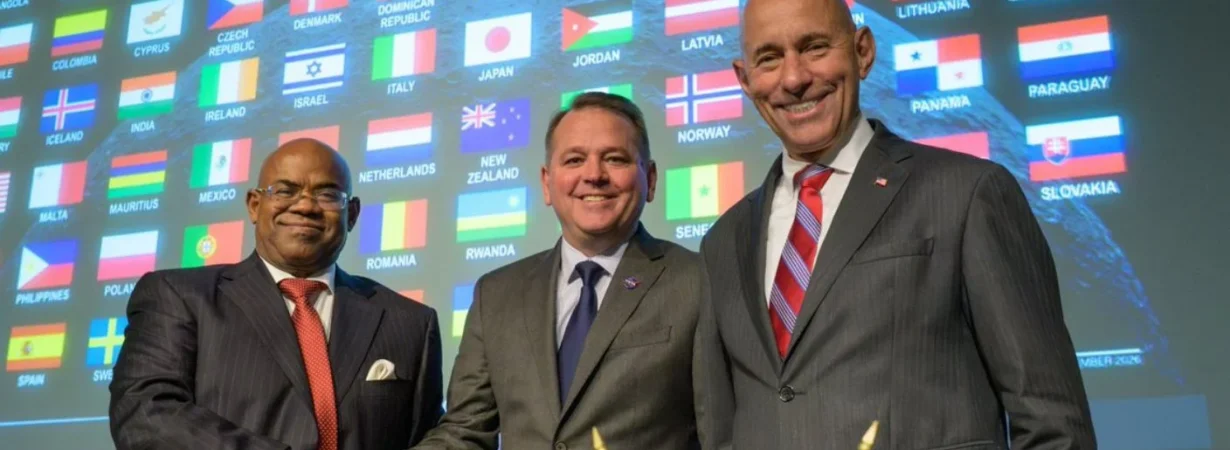
On September 14, 2026, a pivotal moment occurs when Djibouti joins the Artemis Accords in Washington, D.C. Djibouti signs Artemis Accords, The Republic of Djibouti becomes the 72nd country in the world and the 8th in Africa to adhere to the principles of the Artemis Accords initiative of NASA. The unprecedented moment will help promote Djibouti’s space program and open a new page in the history of international scientific cooperation. The cooperation will lead to technology development in the region, facilitate cooperation and innovations, and provide advanced educational materials for both countries. The joint venture will bring a great deal of technological development, promote cooperation and innovations between African and European organizations, and offer advanced educational resources for both countries.
What the Artemis Accords Mean for Djibouti
The Artemis Accords, which were founded in 2020 by NASA and the U.S. State Department, are a set of pragmatic principles to help guide peaceful space exploration. Transparency is an important aspect of the framework, as is mutual assistance, sharing of scientific data, and maintaining outer space heritage.
Mohamed Siad Douale, Ambassador of Djibouti to the United States, on behalf of his country, signed the commitment during the signing ceremony at NASA Headquarters. The event was organized by NASA Deputy Administrator Matt Anderson and U.S. State Department Assistant Secretary for African Affairs Frank Garcia, and reinforced the fact that the growing aerospace partnership is geopolitically significant.
Signing the Artemis Accords NASA framework is an opening for Djibouti to enter into a long-term partnership. The country hopes to establish cooperation in scientific research, the use of satellites and technical training, Ambassador Douale said. It will open new possibilities to the future generation of engineers and researchers in Djibouti, in critical, high-tech areas.
The Rise of the Djibouti Space Program
It is by no means a one-off diplomatic move. It marks the fruits of years of hard work and sustained effort in Djibouti’s fledgling space industry, established in 2020 under the Ministry of Higher Education and Research.
Launching the First Djibouti Satellites
Djibouti’s technical infrastructure is being modernised at the fast pace. In November 2023, the country successfully launched its first satellite for earth observation Djibouti 1A and in 2024, it launched Djibouti 1B. Both of these new, cutting-edge satellites for Djibouti were placed in orbit on SpaceX’s California-launched Falcon 9 rockets.
So far these successful orbital launches have been a successful start to a technical relationship with the USA that is already thriving. Moreover, Djibouti’s participation in the U.S.-Africa Technical and Regulatory Space Training Meeting in April 2026 provided the foundational regulatory capabilities and practices that are needed for seamless integration with international partners.
Expanding African Space Capabilities
Artemis’ expansion to include Djibouti is a significant shift in the aerospace landscape. Africa is assuming a more prominent place in the future of exploration on the moon and Mars.
Djibouti has now become the eighth African country to join the accords, joining a prestigious list of countries in the region that include Nigeria, Rwanda, Angola, Senegal, Morocco, Botswana and Mauritius. These accessions – monitored in great detail by specialist aviation media such as Space in Africa – are part of a continent that is literally moving at high speed.
African countries are using the Artemis Accords principles to fully leverage satellite technology in regards to locally-managed resources, climate monitoring and disaster response. Regional organizations such as the African Union have all stressed the need to boost space capabilities in Africa is a critical issue for reaching sustainable development in Africa.
It is a big step for the Horn for Djibouti to sign Artemis Accords. The Djibouti space program is firmly establishing itself in the era of the next great discovery for humankind by combining its domestic objectives with the framework of the Artemis Accords set forth by NASA. The African nation is proving itself to be an active example of the future of peaceful space exploration is a global affair, with its emerging technical powers and strong capabilities in space, adding a substantial weight to it.
FAQs – Djibouti signs Artemis Accords
Q1: What are the Artemis Accords?
A: Artemis Accords are multilateral principles issued by NASA and the U.S. State Department in 2020. The purpose of these accords is to guide the civil space activities and ensure that expeditions to planets and outer space are done safely, transparently, and peacefully.
Q2: When did Djibouti sign the Artemis Accords?
A: On September 14, 2026, Djibouti became the 72nd country in the world and the 8th on the continent to sign the Accords.
Q3: How advanced is the Djibouti space program?
A: Djibouti has an active program of space research, which is progressing rapidly. In 2023 and 2024, Djibouti has managed to launch its first two Earth-observation satellites—Djibouti 1A and Djibouti 1B by means of SpaceX rockets.
Q4: Who signed the space agreement for Djibouti?
A: Djibouti’s ambassador to the USA, Mohamed Siad Douale, has signed the document for Djibouti during the celebration in Washington.
Top Picks For You
Explore best education systems worldwide?
Discover the top countries offering world-class education systems and global academic excellence for students.
Check best countries for Arabs 2026?
Explore the most welcoming destinations and immigration options for Arab students and professionals in 2026.
Discover top Saudi scholarships available?
Check the best fully funded Saudi Arabia scholarships open for international and Arab students.
Explore AI impact on Arab education?
Discover how AI is transforming education systems discussed at major Arab conferences.
Check Saudi universities global rankings?
Explore how Saudi universities perform in world academic rankings and global education standards.