
Why the New $88 Million EGAS and Chevron Exploration Deal Signals a Resurgence in Mediterranean Energy Confidence
-
The Arab Post
- . October 7, 2026
- . Update: October 7, 2026 4:44 pm
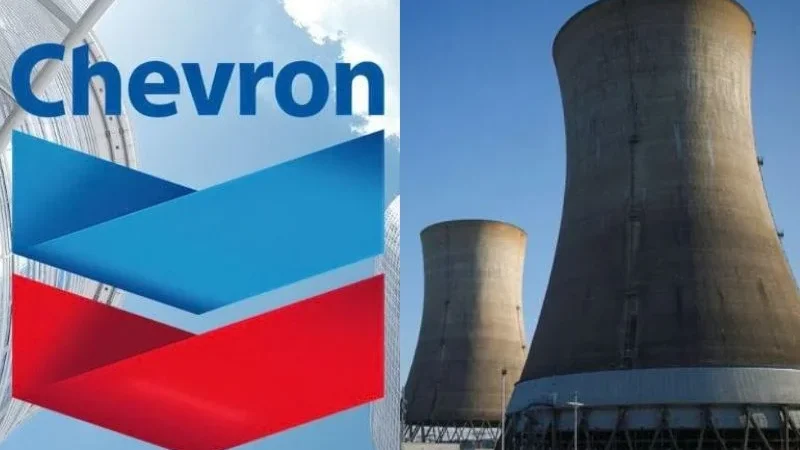
This week, the Egyptian Natural Gas Holding Company, known as EGAS, and the US oil giant Chevron have entered into an expansive minimum investment agreement amounting to $88 million for exploration on the offshore Lotus block. Chevron EGAS deal, The deal was inked by EGAS Executive Managing Director Sayed Selim and Chevron’s MENA exploration manager Andrew Deighan, and it should be noted that this agreement has much more significance than just a drilling contract. Petroleum Minister Karim Badawi was in attendance at the signing ceremony, cementing the importance of this latest EGAS and Chevron exploration deal for the future of the hydrocarbon exploration industry in Egypt.
This agreement stipulates the drilling of two deep-water wells and the immediate reprocessing of crucial 3D seismic data. The investment will provide much-needed cash to the offshore operations of Cairo and will send important signals regarding the revival of Mediterranean energy confidence at the end of the year 2026.
The Immediate Impact of the Lotus Offshore Block Investment
Chevron’s decision to make investments in Egyptian waters is a well-calculated strategy. The Lotus offshore block has been proven to be one of the most promising unexplored sedimentary basins after successful exploratory activities at nearby blocks.
From the perspective of the Ministry of Petroleum and Mineral Resources, securing an initial capital expenditure set at $88 million from an operator with significant credentials such as Chevron attests to the viability of the amended investment regime introduced by the country. The government of Egypt takes a deliberate stance toward speeding up development activities in the fields, as pointed out by Egypt Oil & Gas, because the authorities are aware that it is crucial to revive the national performance in these offshore fields and find new reserves.
Overcoming Regional Supply Chain Volatility
Succeeding in satisfying the interests of investment firms in the Eastern Mediterranean is a huge challenge, given the historically complicated geopolitical and economic environment. Nevertheless, the recent agreement between EGAS and Chevron indicates that the benefits from investment under favorable conditions outweigh any risks connected with instability in the region.
Furthermore, using advanced technologies, in particular 3D seismic reprocessing and analysis of sub-surface data before the drilling activity begins, Chevron is able to significantly reduce exploration risks and effectively allocate resources. Offshore Energy emphasizes the fact that their approach enables the development of a sustainable and prosperous upstream exploration industry.
What This Means for Cairo’s Position as an Energy Hub
Egypt has aggressively positioned itself as the premier natural gas processing and export hub for the entire Mediterranean rim. Yet, an export hub cannot function effectively without a continuous influx of raw feedstock from active maritime wells.
Aesthetic analysts at Arab Finance point out that investments like the one worth $88 million would guarantee that feedstock will keep arriving to the processing plants. The need for such investments is critical since they ensure the stability of the domestic power grid and remain profitable in terms of exports to Europe. This is the message conveyed by Cairo: it has thousands of kilometers of safe Marine borders and it welcomes all investors looking towards lucrative Egypt natural gas investment.
Will Other Majors Follow Chevron’s Lead? – Chevron EGAS deal
The outcome for the Lotus offshore block will probably shape how fast new offshore license rounds move through 2027. When a major company the size of Chevron backs a basin with serious funding, other players in the industry usually watch closely.
Taken together, this EGAS and Chevron exploration deal effort also matters in a quieter way. It gives the market a clear signal that the geology in the Eastern Mediterranean can still pay off for firms that are ready to invest. As Q4 approaches, that fresh confidence in the region may push more activity. It could also lead to talks for new partnerships in nearby offshore areas.
Top Picks For You
Discover top Middle East tourist sights?
Explore must-visit landmarks across the region for travelers.
Explore essential apps for Arab travel?
Check must-have apps to simplify your trip planning.
Check common travel mistakes Arab countries?
Discover key errors tourists should avoid during visits.
Explore top Arab festivals for tourists?
Discover unique cultural events across non-GCC destinations.
Check tourist safety tips Arab countries?
Explore essential precautions for safe and smooth travel.