

From Consumer to Creator: Can the Egypt AI Factory Turn Cairo into the Silicon Valley of the Arab World?
-
The Arab Post
- . November 18, 2026
- . Update: November 18, 2026 5:16 pm
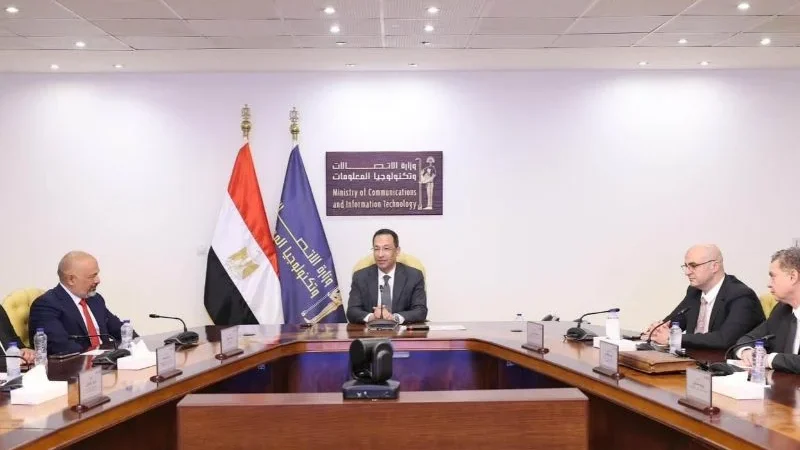
Western artificial intelligence has been consumed by the Middle East for years, with the importation of models and the leased space of cloud servers located in foreign countries. But a significant change in September 2026 was a clear shift. The first Egypt AI Factory is being launched by a partnership between Vodafone Business, Cassava Technologies and Elsewedy Electric, which will make Egypt not only a user of technology, but a local producer. The investment, which goes up to $1 billion, could make this a key facility for a powerful Cairo tech center that could revolutionize the future of technology in the Arab world.
The Strategic Pivot to Digital Sovereignty
We believe at the heart of the Egypt AI Factory is the idea of computing independence. Until now, the large-scale training of LLMs or enterprise deployment of complex software has been a significant cost constraint for African and Middle Eastern developers.Until today, there was a major cost constraint for African and Middle Eastern developers, especially when training large language models or implementing enterprise-level applications with complex software.
The State of AI in Africa 2026 report indicates that physical compute capacity is the biggest challenge in Africa. In this new initiative, under the name of Africa Data Centres Egypt, companies will be able to leverage NVIDIA’s GPU-as-a-Service (Graphics Processing Unit). Local businesses and startups don’t have to buy costly hardware, they can rent it for the computing resources they require. This level of democratisation of high performance computing is just the impetus that will help propel the Cairo tech hub into the ranks of the world’s competitive ecosystems that can produce local Arabic native applications.
Scaling AI Infrastructure in Egypt
No matter how technologically savvy the facility is, it alone cannot launch a tech revolution nationally. This is a welcome development, considering the government’s zealous efforts to expand AI infrastructure in Egypt.
The Communications and Information Technology minister Raafat Hendy confirmed in October 2026 plans to establish up to seven mega data centers over the coming 4-5 years. The lofty vision is to turn the state into a digital powerhouse with annual digital exports of $12 billion and 200,000 new high-value technology jobs by 2030. Moreover, Prime Minister Mostafa Madbouly recently presented the new national AI strategy for the period (2025-2030) at the World Economic Forum, clearly indicating the country’s preference for establishing an AI industry that is locally manufactured and not imported.
Powering Egypt Digital Transformation
Machine learning has been characterized by the vast computing resources and power usage it demands, especially for energy and water use. The amount of power needed in a modern intelligence data center is far greater than what is required in a traditional server farm.
The nation is capitalizing on its vast renewable energy resource to support this digital Egypt transformation.The country is harnessing its abundant renewable energy supply to help drive this digital Egypt transformation. In a recent report, the World Economic Forum mentioned that Egypt’s ability to combine a large scale of renewable energy projects like the Benban Solar Park and the Dandara solar project with the use of digital infrastructure, provides it with a clear industrial edge. Reliable, sustainable energy will be the key to the winners in the global tech race, and Egypt is building its grid to accommodate the huge demand for power of next-generation computing.
Competing for the Crown in Arab World Technology
Can Cairo truly compete with cities such as Dubai and Riyadh, which are investing billions in technology? The key is human resources and connectivity. While the Gulf States are rich in financial resources, Egypt has a large young and skilled workforce. By leveraging the available affordable technology together with this labor resource, Cairo can create a sustainable environment for start-ups.
Once the government implements its national AI governance framework scheduled for 2026, balancing innovation with security and protection of data, the country will become an attractive environment for investors. The shift from being an importer of algorithms to their exporter is no longer a theory, the infrastructure is already being constructed in Cairo.
FAQs
What is the Egypt AI Factory?
The nation has established an AI compute facility, which was launched in late 2026 as a joint venture company between Vodafone Business, Cassava Technologies, and Elsewedy Electric.
How does this facility impact the Cairo tech hub?
This facility provides the opportunity for rental of the computing infrastructure powered by GPU-as-a-Service. This cut costs down significantly for companies to develop complex software and machine learning models.
What are the broader goals for AI infrastructure in Egypt?
The government of Egypt announced plans to build five to seven mega data centers in order to achieve $12 billion worth of digital exports per year and create up to 200,000 jobs in the tech industry by 2030.
Discover More Insights
Explore Cairo inflation middle class impact?
Discover how rising prices are affecting savings and daily life.
Check Algeria power plant deadline extension?
Explore updates on the 1.2GW energy project timeline.
Discover Turkey new electricity tariff changes?
Check how updated pricing will impact households and businesses.
Explore Qatar initiative boosting Syria power?
Discover efforts aimed at strengthening Syria’s electricity generation.
Check Beirut balcony lighting energy tips?
Explore efficient lighting ideas for Ramadan and beyond.