

Tunisia’s New UNESCO Chair on AI for Well-Being and Social Equity: What Will It Focus On?
-
 The Arab Post
- . November 28, 2026
- . Update: November 28, 2026 5:29 pm

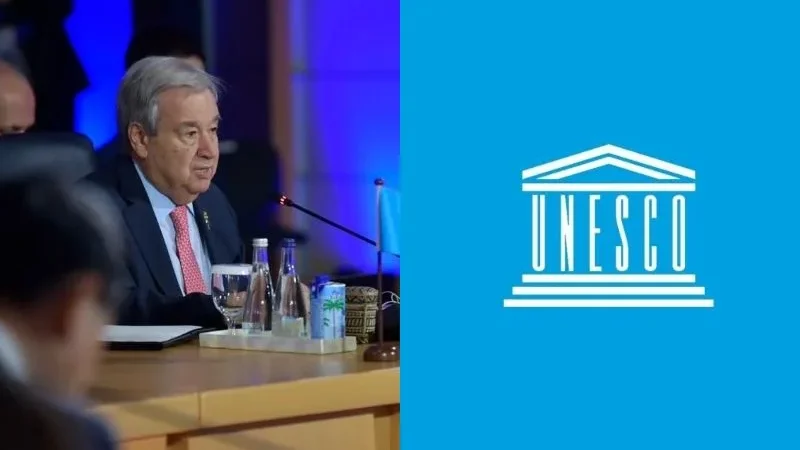
The official inauguration of the UNESCO Chair on Artificial Intelligence (AI) marks a major advancement in Tunisia’s efforts to spearhead positive and ethical technological progress in North Africa. UNESCO Chair on AI, This new academic and research center will be created at the University of Tunis El Manar in late November 2026, and will be dedicated solely to the field of “Artificial Intelligence for Well-being and Social Equity”. With the help of local government ministries and international institutions, the Chair strives to make the fast-paced development of digital technologies in the region promote the active overcoming of the social divide, instead of reinforcing the existing inequalities.
The Core Mission of the New Academic Hub – UNESCO Chair on AI
The new Chair is a new partnership between Tunisian academia and international development objectives. It’s main purpose is to study, create and advocate for AI systems that directly affect marginalized communities.
Officials of the event said the curriculum and the research projects would be centered on leveraging machine learning algorithms to enhance access to public health care, optimize the agricultural resources of the rural population and develop an inclusive digital education platform. The University of Tunis El Manar will be training a new generation of data scientists to focus on well-being issues instead of commercial ones, with an AI emphasis.
Promoting Social Equity Through Data
Social equity is a key element within the new framework of the UNESCO, which is linked to technological development. Algorithmic bias is a longstanding issue in the tech world, in which AI systems can inadvertently discriminate against certain demographic groups because of their skewed training data.
In response, Tunisia’s Chair will set up a regional observatory for digital ethics. It will be responsible for supervising AI applications in the Tunisian public sector in order to ensure their fair application. Moreover, the initiative will work with the Ministry of Higher Education and Scientific Research to develop national guidelines for ethical data collection, so that Tunisian local AI models are representative of the socio-economic fabric of the local population.
Regional and International Implications
The creation of this Chair brings Tunisia to the forefront as a new leader in the MENA region in terms of responsible technology. The UNESCO network enables Tunis El Manar to collaborate directly with other world-class Universities, exchange researchers and share costs for big social tech projects.
The frameworks created here are expected to be an inspiration for other North African countries undergoing digital transformation. Incorporating the study of ethical AI into the curriculum of national universities will enable Tunisia to not only use foreign technology, but to also play a vital role in how it will be regulated.
The UNESCO Chair on AI at El Manar University in Tunisia is a significant step in the technological governance of the region. The country’s focus on academic research for the advancement of well-being and its rigorous adherence to social equity principles demonstrates Tunisia’s proactive efforts to ensure that the digital revolution is a force for social progress on a wider scale.
FAQs
What is the new UNESCO Chair in Tunisia focused on?
The newly founded UNESCO Chair at the University of Tunis El Manar is completely dedicated to leveraging Artificial Intelligence (AI) for the benefit of public health and social equity, avoiding algorithmic bias and tech-driven inequity.
Where is the new AI Chair located?
The academic hub is run in partnership with the Ministry of Higher education in the University of Tunis El Manar, one of the best public university research institutes in Tunisia.
Why is social equity important in AI development?
To ensure fairness and justice in AI systems, social equity guarantees that vulnerable or marginalized populations are not targeted by bias in the algorithms, bringing equal benefits for technological progress in various areas such as health and education to everyone.
Discover More Insights
Explore Cairo inflation middle class impact?
Discover how rising prices are affecting savings and daily life.
Check Algeria power plant deadline extension?
Explore updates on the 1.2GW energy project timeline.
Discover Turkey new electricity tariff changes?
Check how updated pricing will impact households and businesses.
Explore Qatar initiative boosting Syria power?
Discover efforts aimed at strengthening Syria’s electricity generation.
Check Beirut balcony lighting energy tips?
Explore efficient lighting ideas for Ramadan and beyond.