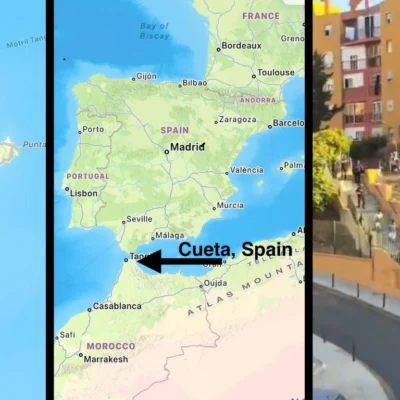

The Ceuta Affair: How Spain’s Right Turned Uncertainty Into Political Certainty
-
The Arab Post
- . September 7, 2026
- . Update: September 7, 2026 4:26 pm
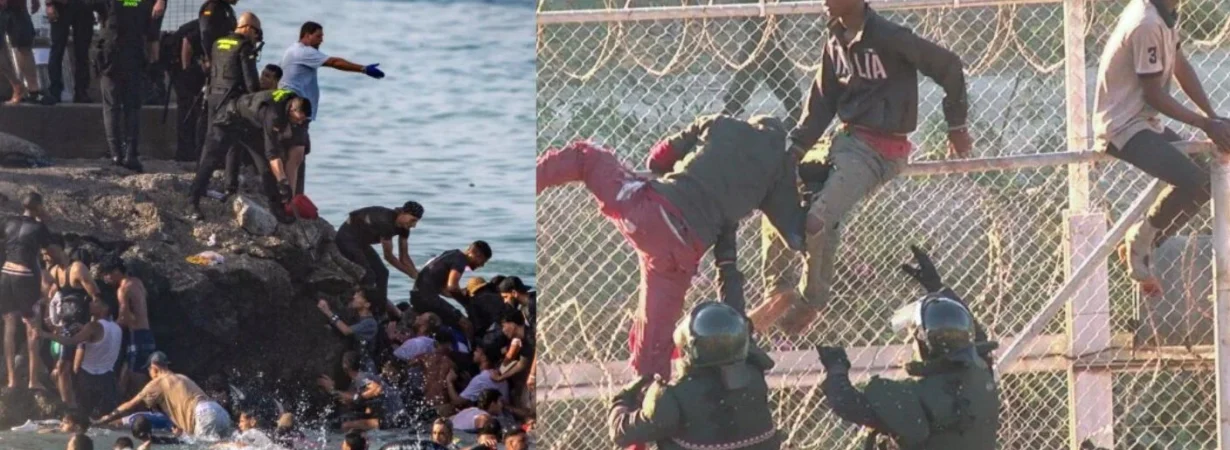
The Ceuta border crisis came to the fore towards the end of July 2026, when over 70,000 people attempted to enter the North African enclave. The leftist government was charged with coming up with an immediate response, which gave an opportunity to the conservative opposition to take action. Within a few days, the narrative of the Spanish right-wing took over the national conversation. The scope of humanitarian crisis was turned into a failure of sovereignty and public rage and concern became a political weapon. The history of how the Ceuta crisis changed migration policies in Spain forever.
The Anatomy of a Border Collapse
On July 30 and 31, the Spanish enclave of Ceuta had an unprecedented influx. Thousands overran the fences, and swam into the stormy coastline, fuelled by a mixture of online misinformation and deep economic insecurity, leaving more than one hundred dead and hurt.
The heart of this tempest was Prime Minister Pedro Sánchez’s government, tasked with keeping humanitarian concerns and the strictures of border security in check. The event right away raised the tensions between Morocco and Spain, and local critics raised the question of how Moroccan security forces managed to allow such a large mobilisation to occur without intervening earlier.
Weaponizing the Crisis: How PP and Vox Took the Reins
As the old saying goes, nature abhors a vacuum and so does politics. The conservative bloc was laser-focused while the center tried to confuse everybody with various explanations, one that finally pointed to foreign disinformation campaigns allegedly connected to Russia and Israel.
The mainstream Partido Popular led by Alberto Núñez Feijóo virtually allied with the extreme right-wing group Vox to dominate the national rage. Instead of just calling the attempt at Ceuta’s border a “spectacular failure of European border security“, they termed the situation a “real invasion”. This rhetoric was no empty talk, but an effective political move.
By early September, these groups had staged big national demonstrations and mobilized an estimated 160,000 demonstrators in the city streets of Madrid, Seville, and Málaga. They managed to shift the debate from a complex geopolitical issue to a straight question to Pedro Sánchez’s leadership.
A Calculated Strategy of Certainty
What’s great, and dangerous, about Spanish right-wing politics in this moment is their sense of certainty. The left made subtle (and sometimes incomprehensible) geopolitical arguments; the right made simple and powerful answers:
- Total Militarization: Vox leadership called for a permanent “military presence” at the Moroccan border.
- Institutional Resignations: Both the right-wing parties vociferously demanded the resignation of the Prime Minister and also wanted early elections.
- Hardline Stances: They managed to link the chaos along the border to fears at home and promised to radically overhaul Spain migration policy in an unapologetic way.
The Broader Impact on European Border Security
The consequences of the Ceuta fiasco don’t just stay on the Iberian Peninsula. The unstable situation in Spain has caused great concern in Brussels, as it is serving as a gateway to the EU for the south. Neighbour countries have even threatened to resume their own border checks, which will contradict the essence of the Schengen agreement. This crisis has been weaponised with success and shows that the broad policies of Europe can be determined by separate border breakdowns by conservative forces across the continent.
After the Ceuta incident, there wasn’t much for the State to win, except the opposition. The right wing demonstrated its mastery of contemporary populism by putting together a coherent, impenetrable political story out of a diffuse uncertainty. For Pedro Sánchez and his allies, the consequences are a harsh reminder: In today’s dynamic geopolitical world, it is those who decide who tells the story who shape the nation’s destiny.
FAQs – Ceuta border crisis
Q1: What caused the 2026 Ceuta border crisis?
A: In July 2026, about 72,000 immigrants attempted to cross Ceuta due to a combination of poor economic conditions and online misinformation about the opening of the border fences.
Q2: How did Partido Popular and Vox react?
A: The Partido Popular and the Vox parties were very critical of the government, labeling the incident as a hybrid attack. They organized protests involving more than 160 thousand people.
Q3: How does this affect Morocco-Spain relations?
A: This incident severely strained the Morocco-Spain relations. Even though the Spanish Prime Minister officially supported Rabat, there is still much suspicion regarding the activity of the Moroccan authorities during the peak of the crossing crisis.
Q4: Will this change Spain migration policy?
A: It will definitely lead to a change in Spain’s migration policy since the pressure from the opposition will force the government to take a more defensive position.
Discover More Insights
Explore Cairo inflation middle class impact?
Discover how rising prices are affecting savings and daily life.
Check Algeria power plant deadline extension?
Explore updates on the 1.2GW energy project timeline.
Discover Turkey new electricity tariff changes?
Check how updated pricing will impact households and businesses.
Explore Qatar initiative boosting Syria power?
Discover efforts aimed at strengthening Syria’s electricity generation.
Check Beirut balcony lighting energy tips?
Explore efficient lighting ideas for Ramadan and beyond.