

The Ceuta Surge: Was the Ceuta Border Influx a Calculated Diplomatic Warning?
-
Dhivyanshu
- . August 4, 2026
- . Update: August 4, 2026 6:52 pm
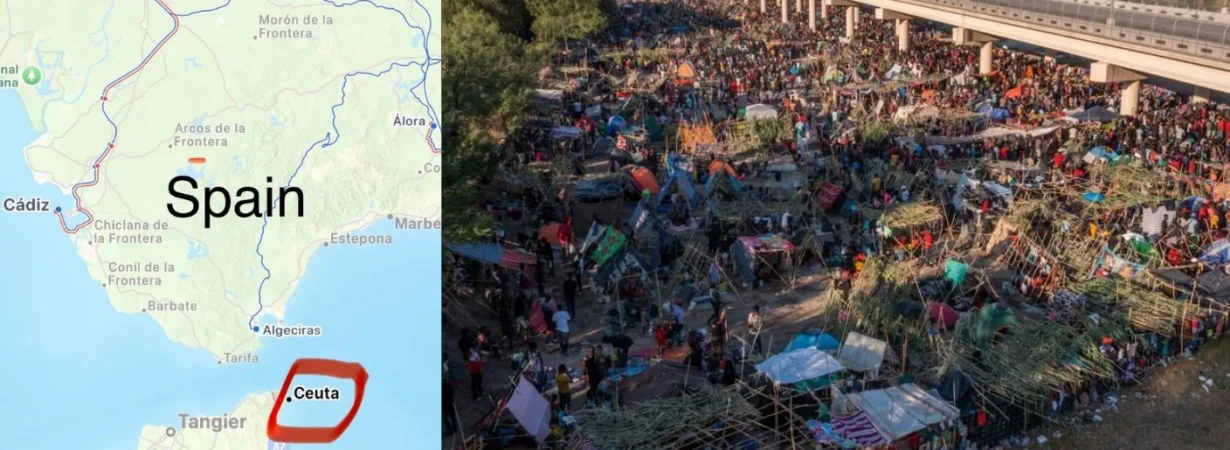
In late July 2026, the world watched what looked like an unprecedented Ceuta border influx, with around 70,000 migrants trying to cross into the Spanish enclave of Ceuta. At first, authorities pinned it on human trafficking networks riding on legal rumors, but geopolitical analysts seemed to spot something else quickly: the usual signs of Moroccan migration diplomacy. Then, the border enforcement went from strict to, basically, dramatically relaxed. And that’s where the real question came in: was this huge cross-border migration wave just a tragic humanitarian crisis, or was it a deliberate diplomatic signal, a sort of warning from Rabat toward Madrid and the wider European Union?
The Mechanics of the Ceuta Border Influx
In only a few days, tens of thousands of young men, women, and children pushed up against the coastal breakwaters around Ceuta. Many said they were pulled by viral social media misinformation about a recent Spanish Supreme Court ruling, the one dealing with deportations. Still, local authorities said, this was the obvious part. A movement of people on that scale could not happen without some level of tacit awareness, and maybe even facilitation, by Moroccan border forces.
Spain’s Prime Minister, Pedro Sánchez, moved fast and deployed the military to restore order. In what was described as a dramatic operational sweep, Spanish authorities enabled the swift return of more than 48,000 individuals within 48 hours. Yet, despite the speed of those actions, the aftermath left dozens dead, and it sparked a sharp political fight over whether the integrity of European Union external borders is real or just on paper.
A History of the Border as a Diplomatic Warning
It’s not like this is the first time the border has been used for political gain. Back in May 2021, something kind of similar happened, though smaller, in Ceuta, with roughly 10,000 migrants showing up during a heated diplomatic argument tied to Western Sahara. By loosening border controls, Rabat, in a very rapid way, showed it can apply pressure on Europe almost instantly, like a switch.
Analysts think the 2026 crisis works like another clear diplomatic signal, not subtle at all. Basically, it’s telling Spain, and the whole EU, that Mediterranean stability depends, almost entirely, on Moroccan cooperation. And yeah, this kind of migration diplomacy from Morocco takes human suffering and turns it into a bargaining tool, a geopolitical lever. It weaponizes movement, you could say, turning desperation into a chip on the table.
The Role of the European Union External Borders
What’s more, the sudden influx revealed how exposed the European Union external borders really are. After the surge, European Commission President Ursula von der Leyen came out with firm remarks, stressing that European solidarity is crucial. She described the mass crossings as a hybrid threat, and said it can’t be handled by anyone alone; it needs a united front. Meanwhile, the European Border and Coast Guard Agency, Frontex, has historically been watching these unstable areas, and it keeps underlining how risky these crossings are, even now, and even with new rhetoric.
How a Cross-Border Migration Surge Impacts Geopolitics
When Moroccan migration diplomacy triggers a sudden cross-border migration surge, the geopolitical shockwaves are felt well beyond the immediate local geometry, or whatever you want to call it.
- Humanitarian Toll: Such tactics really do endanger those who are already vulnerable. The UNHCR keeps documenting the severe risks of these journeys, and yes, they frequently end up with tragic losses of life at sea, or in border clashes, where everything becomes chaos.
- Political Destabilization: Sudden surges also stoke domestic tensions in Spain. They polarize voters fast, and they stretch local capacities in the Spanish enclave of Ceuta way more than people expect.
- EU Policy Shifts: When massive breaches happen, there are emergency meetings among EU interior ministers. That momentum ends up accelerating hardline reforms tied to the European Union external borders, no surprise there.
- Diplomatic Reshuffling: Leaders like Pedro Sánchez get pushed into negotiation mode from a reactive stance. This can produce rapid bilateral concessions, just to restore calm and stop the situation from worsening.
The 2026 Ceuta border influx is a stark reminder of how fragile the balance of power is in the Mediterranean. Whether it is seen as something organic or as a calculated diplomatic signal, it is pretty obvious that Moroccan migration diplomacy still acts like a potent geopolitical lever. Until comprehensive agreements—humane and mutually beneficial—are actually put in place, the Spanish enclave of Ceuta, and by extension the European Union external borders, will likely remain highly vulnerable to the devastating shockwaves of any next cross-border migration surge.
FAQs
Q: What caused the 2026 Ceuta border influx?
A: While it got kicked off by online rumors about a Spanish court ruling, the huge Ceuta border influx was mostly made possible by a temporary softening of Moroccan border enforcement, and it was broadly read by analysts as a sort of diplomatic warning, like a signal.
Q: How did Pedro Sánchez respond to the cross-border migration surge?
A: Spanish Prime Minister Pedro Sánchez sent in the military to the Spanish enclave of Ceuta and coordinated swift back-and-forth returns, essentially rapid expulsions. His government reportedly managed to send more than 48,000 migrants back within 48 hours to stabilize and secure the territory.
Q: What is Moroccan migration diplomacy?
A: Moroccan migration diplomacy is the term for Rabat’s claimed approach of easing border controls to let a cross-border migration surge happen. In this view it works like a pressure lever, where the threat of unregulated movement is used to seek political concessions from Europe.
Q: How does this affect the European Union external borders?
A: The episode shows how fragile the European Union external borders really are, so EU leaders called for a more unified response and tighter security measures, plus increased dependence on agencies such as Frontex.
Discover More Insights
Explore Cairo inflation middle class impact?
Discover how rising prices are affecting savings and daily life.
Check Algeria power plant deadline extension?
Explore updates on the 1.2GW energy project timeline.
Discover Turkey new electricity tariff changes?
Check how updated pricing will impact households and businesses.
Explore Qatar initiative boosting Syria power?
Discover efforts aimed at strengthening Syria’s electricity generation.
Check Beirut balcony lighting energy tips?
Explore efficient lighting ideas for Ramadan and beyond.