

Understanding Egypt’s New Logistics Corridors: What Role Can the Projects Play in Facilitating Trade in Africa and the Levant?
-
Dhivyanshu
- . July 27, 2026
- . Update: July 27, 2026 7:47 pm
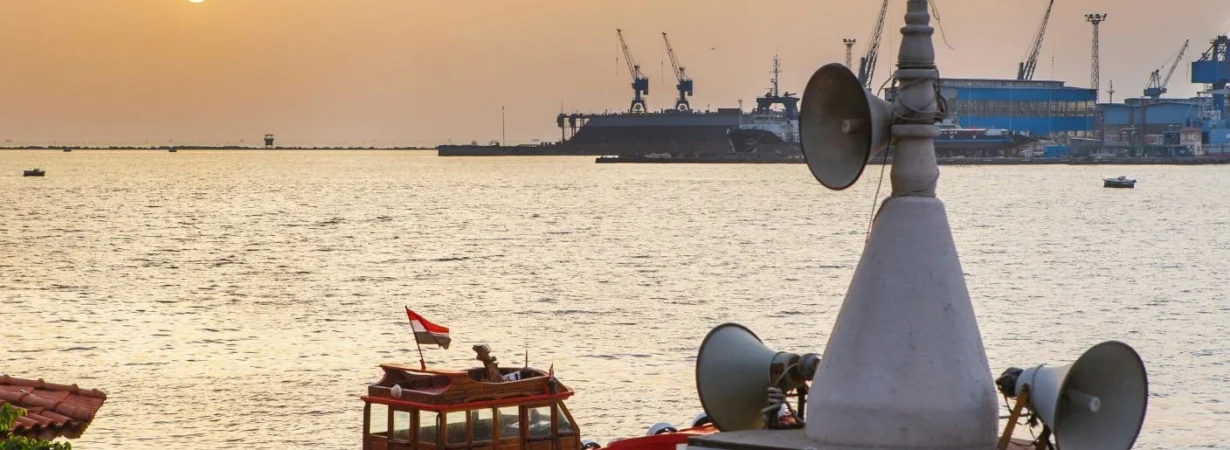
Cairo is making huge progress in its goal to establish itself as one of the main logistics and trade centers in the region by launching eight international logistics corridors that will connect Africa, the Levant and Europe. Egypt logistics corridors, Together with the adoption of the UN’s Transports Internationaux Routiers (TIR) Convention by the country, the new system of transport will seek to lower shipping prices, accelerate delivery times, and make the supply chain more robust.
The projects represent one of the parts of Cairo’s strategy of Cairo to diversify transport routes and investments and reinforce Egypt’s role as a bridge between Africa, the Middle East, and Europe.
What Are the New Logistics Corridors of Egypt?
Egypt’s new logistics corridors consist of highways, railroads, ports, and dry ports that form an interconnected transportation system connecting big regional markets.
The creation of connections between ports, logistics centers inside the country, and neighboring countries is aimed at facilitating the delivery process and decreasing congestion in conventional maritime routes.
According to the officials, the activation of the TIR Convention is expected to help simplify the procedures for customs clearance and make cargo delivery quicker in the participating countries.
Northern Arab Corridor
Northern Arab Corridor is one of the main projects of Egypt, and it provides connections between Europe, Jordan, Iraq, and Syria through Egypt.
The corridor passes through the Arish-Taba corridor in the Sinai Peninsula, providing an alternative land link between the Mediterranean and the Levant.
Southern Arab Corridor
Moreover, Egypt is working to increase its trading relationships with the Gulf countries using the Southern Arab Corridor.
The corridor involves transporting freight from the European markets to the Gulf Cooperation Council (GCC) countries through Safaga Port located on the shores of the Red Sea to finally arrive at NEOM Port located in Saudi Arabia.
The corridor will enhance the trade volume between North Africa and the Gulf and access important consumer and industrial markets.
Expanding Links with Africa
Further from the Middle East, Egypt is focusing on enhancing its transport links to Africa.
The initiative includes the development of multimodal transportation systems, railroads, ports located in the Red Sea, and a road network that enable trade through the AfCFTA.
It is expected to ease the flow of goods from North Africa to the sub-Saharan regions, creating new opportunities for exporters and logistics companies.
Lower Costs and Faster Deliveries
Another major benefit expected from the establishment of the logistics corridors is increased efficiency of freight transport.
According to the authorities of Egypt, the integration of the corridors with the TIR system can lead to a significant reduction of freight costs and cargo delivery time.
For business entities, reduced time in delivery may help manage the inventory more efficiently as well as lower operating costs and make their products more competitive in regional and global marketplaces.
Build a More Durable and Flexible Supply Chain System
The initiatives are designed to reduce dependency on only one means of transport.
Recently experienced disruption in the Red Sea highlighted the vulnerability of the world’s supply chain due to geopolitical and marine security concerns. With the expansion of overland transport along with maritime transport, Egypt seeks to give companies more flexibility in transporting goods between Africa, Europe, and the Middle East.
In addition, diversified means of transporting goods may decrease the number of delays in case of some regional instabilities or port congestion.
Improving the Suez Canal Economic Zone – Egypt logistics corridors
The strategy for logistics goes beyond the transport itself.
The Suez Canal Economic Zone in Egypt is being promoted not only as a way station for international shipping but rather as a manufacturing, warehousing, and distribution centre in the region. Through creating storage facilities, processing centers, and other industrial activities, the country seeks to create higher-value economic activities and jobs.
Discover more Insights
Explore Iran War Lessons Globally?
Explore how the 2026 Iran war reshapes global power and strategy.
Discover Iran Delay Strategy Tactics?
Discover how Iran uses delay, repression, and proxy influence.
Check Trump Iran Strategy Importance?
Check why Trump’s Iran strategy depends on Gulf allies.
Explore Iran Military Warning Signals?
Explore rising warnings from Iran alarming global powers.
Discover Sudan Iran Axis Threat?
Discover how the Sudan-Iran axis raises serious regional concerns.