
The Red Sea Is Just the Beginning: How Maritime Conflict Is Redrawing Global Power
-
Dhivyanshu
- . July 27, 2026
- . Update: July 27, 2026 7:39 pm
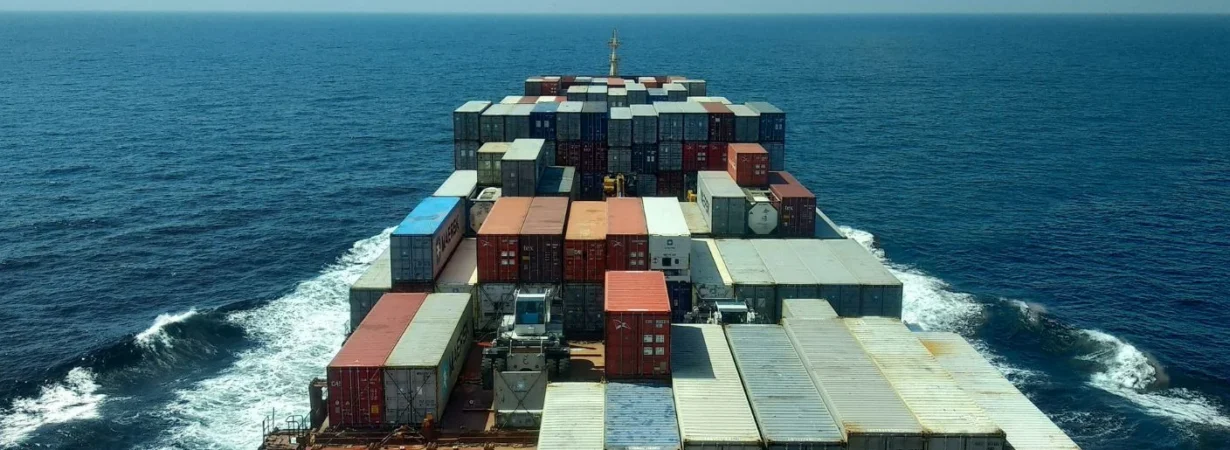
Maritime Conflict for two years, the world watched ships burn in the Red Sea and treated it as a Yemen problem. It was never a Yemen problem. It was a preview.
What began with Houthi drone and missile strikes on commercial vessels near the Bab el-Mandeb Strait has metastasized into something far bigger: a demonstration that a handful of narrow waterways, not battlefields or borders, now decide who holds real power in the world economy. The Red Sea was the test case. The Strait of Hormuz became the proof of concept. And the South China Sea is where the next, far costlier chapter is already being written.
A Warning Written in Burning Tankers
The Red Sea crisis never fully ended, it just went quiet between flare-ups. Houthi forces sank two commercial vessels in the southern Red Sea in July 2025, killing four seafarers, and later that August targeted an Israeli-linked vessel off the Saudi coast of Yanbu, the furthest north such an attack had reached. Just this week, the Houthis struck two oil tankers in the Red Sea, reopening a front that many insurers and shipping lines had hoped was closed for good.
That single fact should unsettle anyone tracking global trade. A relatively small, poorly resourced militia proved it could impose billions of dollars in insurance costs, rerouting expenses, and delivery delays on the entire global shipping industry, simply by controlling the approach to one strait. It did not need a navy. It needed drones, missiles, and geography.
Hormuz: When a Regional Power Closed the World’s Most Important Waterway
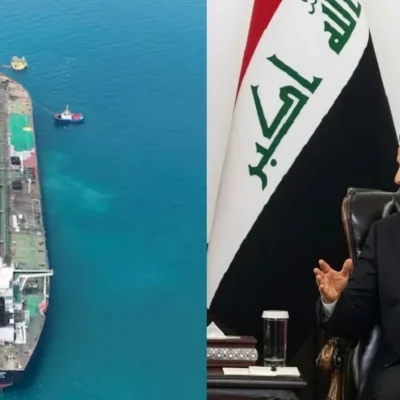
If the Red Sea was the warning, the Strait of Hormuz was the earthquake. Shipping through Hormuz has been largely blocked since February 28, 2026, after the United States and Israel launched an air campaign against Iran and killed Supreme Leader Ali Khamenei, prompting Iranian missile and drone retaliation against Israel, US bases, and Gulf states.
The strait carries a staggering share of the planet’s energy trade, and Tehran understood exactly what it was holding hostage. Closing Hormuz became central to Iran’s wartime strategy, using the halt in trade and the resulting spike in shipping and insurance costs to pressure Washington and Jerusalem toward ending the war, even as the strait proved easier to disrupt than defend. Mines, tanker strikes, and soaring war-risk premiums achieved what a conventional military confrontation could not: they made the world’s most powerful navies look almost beside the point.
Analysts are already rewriting the textbooks. The 2026 Hormuz crisis exposed the limits of classical sea-power theory, showing how a regional actor can neutralize a conventional navy through anti-access and area-denial systems, making control of a chokepoint more decisive than fleet superiority. Power, in other words, no longer flows purely from who owns the biggest carrier group. It flows from who controls the node.
The Ripple Effect Nobody Can Afford to Ignore
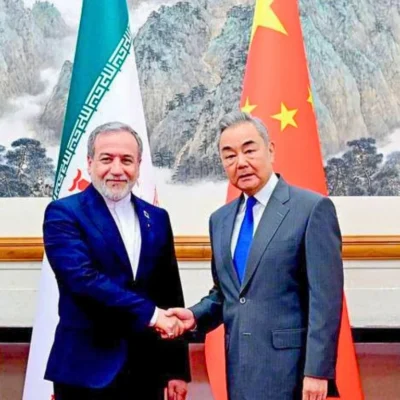
Every chokepoint crisis now radiates outward. Since March 2026, Iran’s near-total severing of traffic through Hormuz, a strait carrying more than a fifth of the world’s oil and LNG trade, has pushed maritime chokepoints to the center of global attention, proving that command of a single waterway can dramatically amplify a nation’s leverage. The lesson has not been lost on Beijing. In May 2026, China’s foreign minister met his Singaporean counterpart specifically to discuss the Malacca Strait, insisting that keeping critical shipping lanes open remains a shared priority for all nations. That diplomatic nicety barely conceals the anxiety underneath it. The South China Sea alone carried close to $6.4 trillion in goods in 2024, with the Malacca and Taiwan Straits each responsible for roughly a fifth of global maritime trade. A single miscalculation there would dwarf anything the Red Sea has produced.
China is not waiting to find out. Beijing has already begun leaning on rail links through Kazakhstan to Iran, developed since 2025, to soften its exposure to maritime chokepoints, though overland routes remain far too limited to replace the sheer volume that ships can carry. That is not a solution. It is an admission of vulnerability from the world’s second-largest economy.
Every Government Now Prices in Chokepoint Risk
The financial world has already adjusted, even if public conversation has not caught up. Governments and markets have entered an era where trade and maritime transit systems, once treated as cooperative infrastructure, are increasingly wielded for military leverage and macroeconomic pressure, and even a resolution in Hormuz is unlikely to restore old assumptions about shipping risk. Insurers are repricing entire trade lanes. Shippers are rerouting around Africa. States that sit beside these waterways are recalculating their leverage. Indonesia’s finance minister even floated a toll system for the Strait of Malacca this year, an idea Singapore and Malaysia quickly pushed back on, but one that signals how governments near chokepoints may start treating transit as a revenue lever rather than a public good.
Other pressure points are already flashing. Beyond Hormuz, Taiwan, Panama, and other secondary corridors are drawing fresh scrutiny, as any combination of environmental strain, geopolitical rivalry, and existing chokepoint disruptions could push these routes toward their own crises if left unmanaged.
The New Rules of Power
The old map of global power was built on land: armies, borders, capital cities. The new map is built on water, and specifically on the handful of narrow passages that the entire trading world is forced to funnel through. Whoever can threaten, tax, or close one of those passages, even briefly, holds more practical leverage than most conventional militaries.
The Red Sea showed that a non-state militia could do it. Hormuz showed that a wounded regional power could do it against two of the strongest militaries on earth. The South China Sea will show whether a rising superpower can do it deliberately, and whether the world is prepared for what that would cost.
This is no longer a shipping story. It is the new architecture of global power, and the Red Sea was only the opening chapter.
Summary – Maritime Conflict
Attacks on shipping in the Red Sea were never an isolated crisis. They were the opening move in a much larger contest over the world’s maritime chokepoints, from Hormuz to Malacca to the South China Sea. This article examines how narrow waterways have become the decisive terrain of 21st-century geopolitics, why traditional naval power is struggling to keep them open, and what this shift means for trade, energy, and the balance of power between the United States, China, and a growing list of regional disruptors.
Discover more Insights
Explore Iran War Lessons Globally?
Explore how the 2026 Iran war reshapes global power and strategy.
Discover Iran Delay Strategy Tactics?
Discover how Iran uses delay, repression, and proxy influence.
Check Trump Iran Strategy Importance?
Check why Trump’s Iran strategy depends on Gulf allies.
Explore Iran Military Warning Signals?
Explore rising warnings from Iran alarming global powers.
Discover Sudan Iran Axis Threat?
Discover how the Sudan-Iran axis raises serious regional concerns.