
European Parliament Calls for EU Strategy to Counter Muslim Brotherhood Networks
-
The Arab Post
- . October 9, 2026
- . Update: October 9, 2026 2:29 pm
EU Strategy Muslim Brotherhood
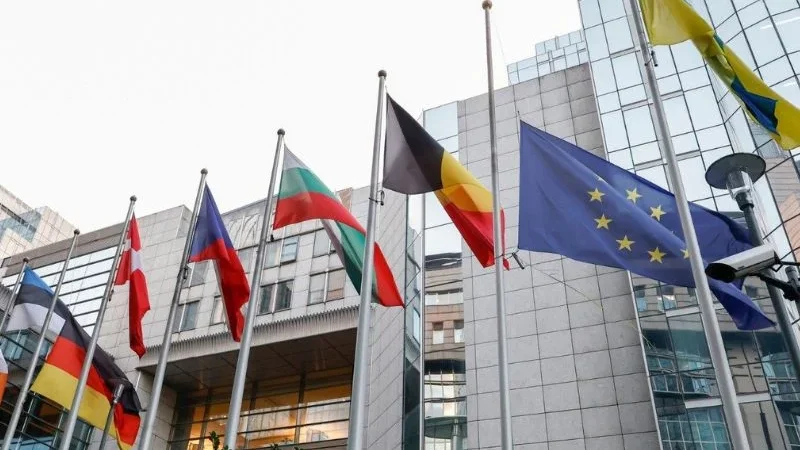
On 8 October 2026, the European Parliament passed a resolution that urges the EU to adopt a coordinated response to counter “Islamist entryism” and the presence of Muslim Brotherhood networks. EU Strategy Muslim Brotherhood, The resolution calls for European institutions and member states to apply more rigor to monitoring access to institutions, evaluate potential listings on the terrorist list based on legal requirements, enhance transparency regarding European funding, implement stricter regulations on foreign influence, and increase cooperation and security measures between European countries.
One of the main suggestions follows are those that belong to the Council of European Muslims (CEM), which was formerly the Federation of Islamic Organisations in Europe. Organisations associated with CEM – such as the Forum of European Muslim Youth and Student Organisations (FEMYSO) – must not be allowed to attend European institutions or have access to the EU Transparency Register, the resolution said. It also calls on European institutions to carefully monitor invitations, meetings, partnerships and events to ensure that they do not become the institutional legitimisation of networks linked to the Muslim Brotherhood, as Parliament puts it. The following are recommendations in the resolution—not statements that the proposed restrictions are currently in effect.
The resolution also includes a discussion of whether to add to the EU terrorist list entities, structures, leaders and individuals affiliated with the Muslim Brotherhood. It invites the European Commission and the member states to give the Council detailed and accurate data on a recent basis to assist in that assessment. Parliament believes that scrutiny must be wider than the formally established organisations to include associated organisations, financial intermediaries, youth networks, logistical support and individuals who are alleged to facilitate activities. However, any designation must be based upon the legal requirements under Common Position 2001/931/CFSP, and not just on suspected organisational connections.
Another big challenge is transparency of EU financing. Parliament asks for a full and complete list of European money given to people and organisations deemed to have connections to the Muslim Brotherhood or political Islam. It requires information about the quantities of awards made, the programmes concerned, and who received them and why. The resolution further calls for Parliament to have access to relevant grant agreements, and traceability of funding chains, such as sub-grants, contractors, subcontractors, implementing partners, beneficial owners and final recipients. Moreover, it encourages Commission and other competent authorities to implement more rigorous due diligence, risk assessments and proactive monitoring of funding applications and fundees.
Regarding foreign influence and security, the resolution invites for more restrictions on foreign funding and foreign associates and transnational partnerships that may lead to the institutionalization of Islamist networks in Europe, especially in the involvement of actors from Qatar or Türkiye. Further, it encourages the Member States to enhance the cooperation between national authorities and to use fully the available Schengen instruments and EU databases in accordance with the EU law. Parliament urges the strengthening of cooperation with Europol in the field of strategic analysis and information sharing, and offers Eurojust support for judicial cooperation, in cases involving transnational networks, terrorism financing, incitement to hatred or promotion of terrorist organisations.
The resolution also calls for concern regarding the proliferation of extremist content on online platforms and social media and its impact on and recruitment of young people. It provides a warning that recruitment means could be reinforced in educational contexts as well. To ensure Parliament is more vigilant in its consideration of invitations, partnerships, consultations and funds from European institutions to organisations suspected of promoting extremist networks, Parliament calls on the European Parliament to take the following steps: It also calls for a uniform approach across Europe in the field of identification of potential indicators of entryism by Islamists, such as financial opacity, recurring partnerships, organisational reconstitution and the potential use of anti-discrimination frameworks to secure institutional recognition. These are all indicators that should be carefully evaluated, and in isolation should not be interpreted as evidence of misconduct.
Islam is not the same as political Islamism, and freedom of religion, freedom of expression, and freedom of association are fundamental rights are emphasised. It also stresses that discrimination against Muslims in terms of their citizenship is a democratic responsibility. Meanwhile, Parliament says that the freedoms enjoyed by citizens should not be used to challenge democracy, equality, the rule of law or other EU values. Therefore, the implementation of any proposed measures will be dependent on the evidence available, Commission’s response, that of the Council and the Member States, as well as the observance of the existing legal safeguards.
Finally, the resolution aims at a coordinated EU response, based on institutional oversight, the assessment of the lists of terrorist organizations, the transparency of the EU’s funding sources, enhanced security and judicial cooperation and other measures. The impact of its recommendations on European institutions and member states will rely on the way they will respond. The key issue is to tackle the issues that concern about the activity of suspected extremist networks and possible foreign interference while avoiding restricting or designating on the basis of insufficient evidence, legal reasons, and fundamental rights.
Discover more Insights
Explore Iran War Lessons Globally?
Explore how the 2026 Iran war reshapes global power and strategy.
Discover Iran Delay Strategy Tactics?
Discover how Iran uses delay, repression, and proxy influence.
Check Trump Iran Strategy Importance?
Check why Trump’s Iran strategy depends on Gulf allies.
Explore Iran Military Warning Signals?
Explore rising warnings from Iran alarming global powers.
Discover Sudan Iran Axis Threat?
Discover how the Sudan-Iran axis raises serious regional concerns.