
Why Are the Houthis Targeting Saudi Arabia? Riyadh Airport Attacks Raise Fears of Wider Conflict
-
The Arab Post
- . October 12, 2026
- . Update: October 12, 2026 7:14 pm
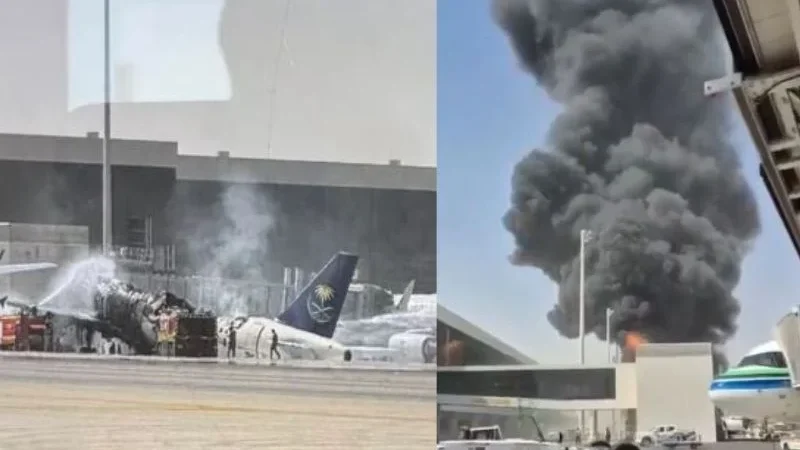
Yemen’s Iran-backed Houthi rebels have hit a series of times successfully with missiles at Riyadh’s King Khalid International Airport, Houthi Riyadh Airport attacks, killing at least 13 people and grounding flights in response to a Saudi-backed military offensive that they say restarted on Monday.
Saudi Arabia is on alert in the Saudi capital after witnessing unprecedented aerial bombings over the weekend. A fire erupted in Terminal 4 at King Khalid International Airport, leaving all air traffic grounded when a projectile was shot into the area on Sunday, October 11, 2026.
This is after an epic missile attack on Saturday on the very same aviation hub that rocked the nation to its core. Satellite imagery and reports from witnesses showed that the attack on the passenger terminals of the port of Jeddah had left them severely damaged, with at least 13 civilians killed and more than 300 wounded, Saudi authorities confirmed on Saturday.
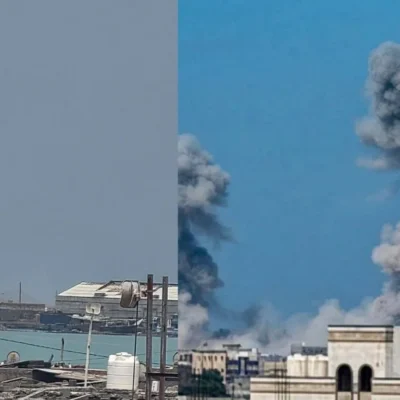
The bloody clashes did not end in the capital. The precision attacks on the kingdom’s most vital assets—including projectiles that struck King Fahd International Airport in Dammam and several Aramco oil installations—also indicated a very well-coordinated attack on the kingdom’s most important infrastructure.
Why Are the Houthis Targeting Saudi Arabia?
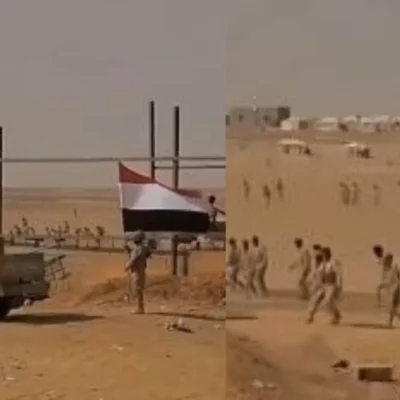
The main reason for the recent upswing in the Houthi Riyadh Airport attacks is a dramatic increase in bloody butchery in the current Yemen conflict. The ceasefire has been in limbo for four years, at the end of which the two sides erupted into all-out civil war.
In the past three weeks, Saudi Arabia has markedly stepped up its military action in Yemen. Saudi-led force is giving the internationally recognized Yemen government ground troops the air and intelligence support they require for a major ground offensive.
The new Saudi participation came as a response to the successful Houthis’ seizure of strategic areas along the Red Sea shores last month. The rebels seized key coastal posts, such as Dhubab and Turbah, to boost their siege of Saudi-backed commercial shipping near the Bab el-Mandeb strait.
The Houthis are attacking economically important areas, pitting themselves against the Saudi economy in a smartly planned economic extortion war. The Washington-based Institute for the Study of War (ISW) says the rebels are hoping to inflict as much economic damage as possible on the state, and force Riyadh to withdraw military aid to its forces.
“Worse is Yet to Come”: Aviation Warnings Issued
The rebels are openly taking the blame for the killing. Houthi military spokesman Brigadier General Yahya Saree made the claim on Sunday in a video broadcast and gave himself sole credit for the Riyadh Airport attacks. The Houthis military spokesman, Brigadier General Yahya Saree, announced on Sunday in a video call the attacks on the Riyadh airport in a chilling ultimatum, giving the group full responsibility for the attacks.
Saree made it very clear and instructed all international airlines, airport and travellers to avoid the Saudi airspace altogether. He spared holy cities of Mecca and Medina, but he said all Saudi airports, except these two, were legitimate and active military targets.
On Sunday, Yemen’s foreign ministry, which is based in Sanaa city under the control of the Houthis, warned that more was to come unless the Saudi enemy stopped its “aggression and interference” in Yemen.
Due to the threat, the global aviation organizations have broadened their warnings in the airspace. Thousands of passengers are left stranded by the cancellation, by major airlines, of at least 124 flights to the kingdom.
The Saudi-Led Coalition’s Firm Response
Saudi air defenses have been busily intercepting a cruise missile early Sunday, near Riyadh. But the number of ballistic missiles and weaponized drones has been able to penetrate several layers of defense.
Coalition spokesman, Col. Turki Al-Malki, promised SACEUR “full operational support” to the Yemeni government forces until the Houthis are completely neutralized. The coalition has scrambled about 100 warplanes to be able to cover forces battling to retake the Red Sea coast.
The Houthis say that Saudi warplanes had hit 124 sites in the last 24 hours. The retaliatory bombing runs rained down heavily on the rebel-held capital of Sanaa and rebel stronghold of Saada in the north.
In addition, the Houthis’ leader Abdul Malik al-Houthi has seen the war against the regime as a part of regional tensions. He recently attacked Riyadh’s aggression and expressed his group’s support for the Gaza Strip, warning that his forces are ready to increase their aggression against Israel and its “allies.
International Condemnation and Civilian Toll
The toll on human lives because of this broken ceasefire is increasing rapidly in the region. The tragedies at King Khalid International Airport are a snapshot of tragedy for all of global travellers.
Saudi authorities have identified the victims as four Saudi citizens, two Bangladeshis, and US, Jordan, Palestine, Syria, Sudan and Egyptian nationals. Ministry of External Affairs has today expressed strong condemnation after confirming the death of an Indian national in the Saturday’s attack on civilian infrastructure and called on an immediate cessation of attacks on civilian infrastructure.
In Yemen it is becoming more and more dire. In just a few weeks, the renewed fighting has already left more than 200,000 civilians displaced and claimed almost 1,000 lives, the United Nations reports. This is particularly because of the shortages of surgical equipment in hospitals, which are caused by the surge of cases of cholera and malnutrition, according to World Health Organization warning.
Economic and Strategic Fallout – Houthi Riyadh Airport attacks
The Houthis are targeting aviation hubs and Aramco facilities, a deliberate move that seeks to hit at the heart of the Saudi economic diversification plans outlined in Vision 2030, with which Riyadh is gambling. The government is trying to instill stability, saying big international investment meetings are on, despite the chaotic chaos that unfolded Monday night.
But the situation is very perilous on the ground. As the bombardment of the schools continued, schools in Riyadh have already moved to online classes to keep students safe.
The Houthis’ attacks on the Riyadh Airport of Yemen in the southwest of the country mark, in summary, a new and dangerous stage of the conflict, which is already happening in the territory of Saudi Arabia. The Arabian Peninsula is on the brink of a terrible, prolonged regional war unless swift diplomatic efforts can find a new ceasefire.
Discover more Insights
Explore Iran War Lessons Globally?
Explore how the 2026 Iran war reshapes global power and strategy.
Discover Iran Delay Strategy Tactics?
Discover how Iran uses delay, repression, and proxy influence.
Check Trump Iran Strategy Importance?
Check why Trump’s Iran strategy depends on Gulf allies.
Explore Iran Military Warning Signals?
Explore rising warnings from Iran alarming global powers.
Discover Sudan Iran Axis Threat?
Discover how the Sudan-Iran axis raises serious regional concerns.