
The June 8 ‘Cosmic Kiss’: How and When to Watch Tonight’s Rare Venus-Jupiter Conjunction
-
Dhivyanshu
- . June 8, 2026
- . Update: June 8, 2026 2:46 pm
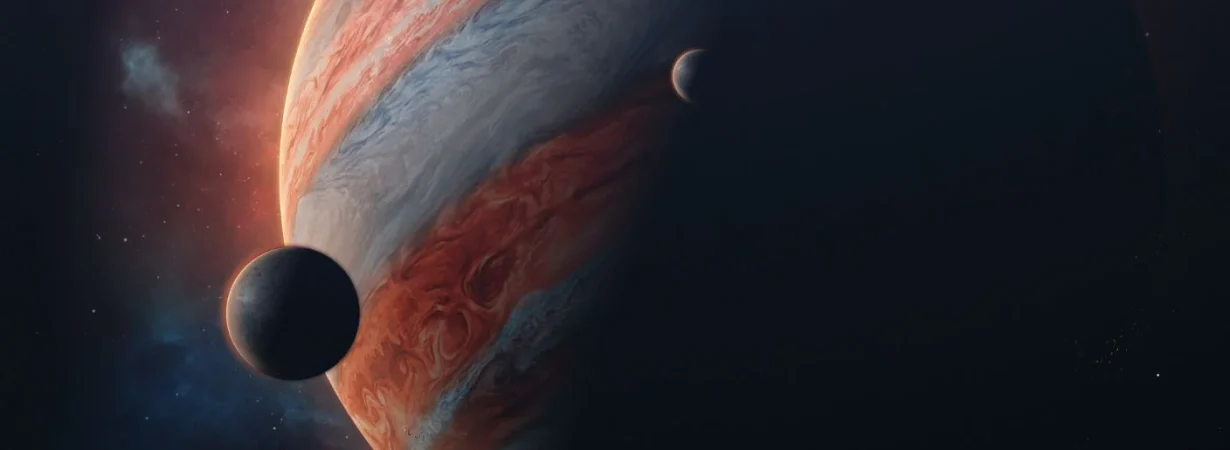
Look up to the sky tonight, because the universe is kind of doing a whole spectacle thing. One of the most anticipated astronomy moments June 2026 has to offer arrives this evening, and it’s basically when two of the brightest planets in our solar system seem to touch. People call it the Cosmic Kiss, and the June 8 Venus–Jupiter conjunction gives you this gorgeous little pairing right after sunset. If you want to see Venus and Jupiter tonight, you really do not need costly gear or some big observatory—just clear skies and good timing. Here is your ultimate sort of guide for catching this rare celestial event.
What is the Cosmic Kiss?
Per the official NASA “Watch the Skies” report, Venus and Jupiter should show up about 1.5 degrees away from each other. Sounds small, but it’s about the width of your pinky finger if you hold it at arm’s length! Since essentially every planet follows the Sun on that same kind of fairly flat plane—something you can read more about at NASA Solar System Exploration—their tracks sometimes intersect in our sky, and you get this amazing little “Cosmic Kiss” sort of moment.
How and When to Watch Venus and Jupiter Tonight
You don’t really have forever to see it. There’s a limited window, and the best time to watch is shortly after sunset today, June 8, carrying on into the night on June 9.
Timing and Location
Look toward the western sky as the sun kinda sinks under the horizon. That setting sun becomes your natural navigational guide, more or less. The two planets will track the sun’s route along the ecliptic, and they should stay bright enough to see with your own eyes for about two to two and a half hours before they disappear below the horizon.
Equipment Needed
The really good part of this whole planetary meet-up is the fact that it’s clear, naked eye visibility. Since Venus is the brightest planet in our night sky and Jupiter is right behind it, both should outshine the fading twilight without much effort.
Still, National Geographic says if you want something more showy, grab a pair of standard binoculars. When they’re separated by 1.5 to 2 degrees, both planets fit nicely in the same field of view. You might even catch a quick look at Jupiter’s four biggest moons, Io, Europa, Ganymede, and Callisto, hanging around the gas giant like little companions.
Why This is the Best of the Astronomy Events June 2026
While conjunctions happen now and then, catching one this bright and closely lined up is a pretty rare little treat. Like, seriously, stargazers in the Northern Hemisphere will not see another Venus-Jupiter approach this tight and so easy to spot until late 2028.
As The Planetary Society points out, the planets will also be hanging out near Castor and Pollux, those well-known twin stars that belong to the Gemini constellation. Later this month, Mercury and a crescent moon will tag along into the mix, so the whole month becomes a real stargazer’s dream, and this is the kind of thing that gets pushed hard in worldwide media roundups by The Times of India.
Tonight’s Cosmic Kiss is a lovely reminder of how dynamic and always shifting our solar system actually is. And as the absolute best moment among astronomy events for June 2026, the June 8 Venus-Jupiter conjunction is an awe-inspiring view anyone can enjoy, no matter if you’re new to all of this. Step outside a bit just after sunset, point your eyes toward the western sky, and take in this uncommon, glowing planetary embrace before it quietly disappears.
FAQs
1. What time is the June 8 Venus-Jupiter conjunction?
Tonight, the best time to watch Venus and Jupiter is right after sunset. You should look toward the western sky, because the planets will stay in view for roughly two to two-and-a-half hours, and then they will set.
2. Do I need a telescope to see the Cosmic Kiss?
You do not need a telescope at all! Both worlds give really good naked eye visibility. Still, if you use ordinary binoculars, you can catch both planets together, in the same kind of close-up view, without much trouble.
3. When is the next time Venus and Jupiter will be this close?
After tonight’s moment, and its follow-up on June 9, people in the Northern Hemisphere will have to wait until late 2028 for another conjunction between these two planets, one that is quite this close and also simple to spot.
More Stories You Shouldn’t Miss
Explore why Pilgrim City trending tonight?
Discover why Saudi’s Pilgrim City is the most searched travel hub with key details on location, services, and pricing.
Check how Makkah digital platform works?
Explore how the new Makkah digital platform helps pilgrims plan, navigate, and access essential services
Discover why deportations rising in pilgrimage?
Check what’s behind the annual crackdown and why immediate deportations are now underway in the Holy City.
Explore Nusuk card discounts for pilgrims?
Discover what the Nusuk Card initiative means for Hajj and Umrah pilgrims and how it impacts travel costs in 2026.
Check new pilgrimage exclusion zones rules?
Explore how the new Holy City exclusion zones affect access and movement during the annual pilgrimage season.