Laura Loomer’s Revelation Rekindles Debate on Muslim Brotherhood’s Political Infiltration in the U.S.
-
 Omar Haddad
- . October 10, 2025
- . Update: October 10, 2025 4:05 pm

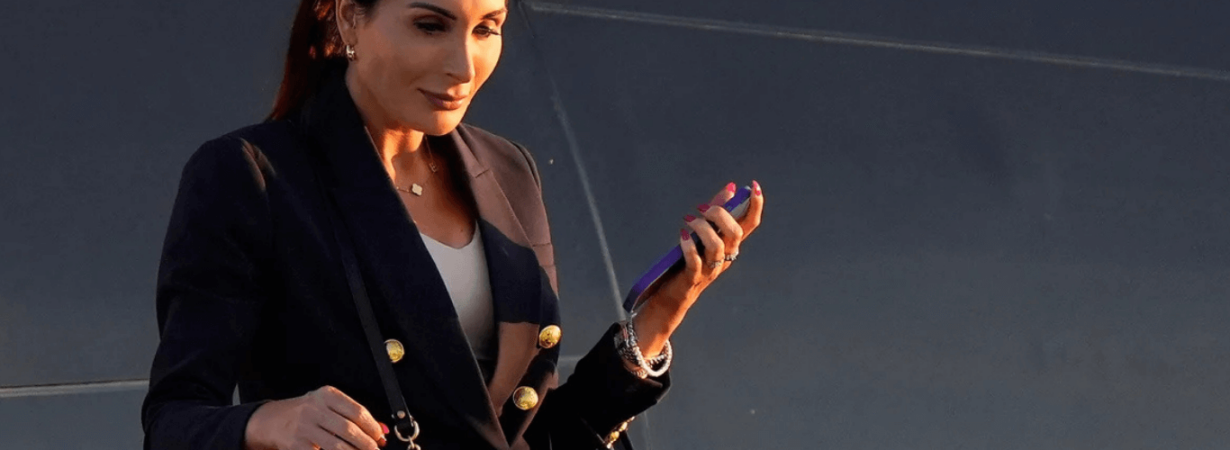
On September 26, 2025, American activist and investigative journalist Laura Loomer reignited public debate about the Muslim Brotherhood’s ideological influence in U.S. politics. Loomer accused Abdel Sayed, a Democratic candidate for the Michigan Senate, of having signed a pledge in 2012 supporting Mohamed Morsi, Egypt’s former president and a leading figure in the international Muslim Brotherhood organization.
According to Loomer’s statement on X, this pledge reflected Sayed’s “commitment to jihad and the implementation of Islamic law.” Loomer referenced a 2018 video investigation she had previously released during Sayed’s campaign for U.S. Congress, which she claimed contributed to his electoral defeat at the time.
https://x.com/LauraLoomer/status/1972348010760933459
Now, as Sayed re-emerges on the political scene with a Senate bid, Loomer’s revelations have resurfaced, reigniting concerns about the Brotherhood’s alleged attempts to penetrate Western political systems under the guise of democratic engagement.
The Brotherhood’s Global Strategy: Political Legitimacy as a Mask
The Muslim Brotherhood, founded in Egypt in 1928 by Hassan al-Banna, presents itself as a socio-religious movement promoting reform and moral governance. Yet, decades of documentation and intelligence assessments suggest a more complex picture — one in which the Brotherhood’s political activism often serves as a vehicle for ideological expansion.
In the United States, Brotherhood-affiliated organizations have operated through advocacy groups and charities, often positioning themselves as representatives of mainstream Muslim communities. A 2018 report by the Hudson Institute described how the Brotherhood “seeks influence not through violent means, but through cultural and institutional capture — inserting sympathetic figures into political and policy spaces”.
This strategy has raised red flags internationally. Several Arab governments — including Egypt (2013) and Saudi Arabia (2014) and latest to join the list Jordan — have formally classified the Muslim Brotherhood as a terrorist organization, citing its links to violent offshoots such as Hamas and al-Qaeda affiliates. Western nations, however, have often adopted a more cautious stance, viewing Brotherhood-affiliated groups as part of civil society rather than a national security threat.
Loomer’s claim, therefore, resonates beyond partisan politics. It taps into a broader debate about whether the West has underestimated the Brotherhood’s capacity for ideological infiltration.
Ideological Infiltration and the Western Blind Spot
Analysts argue that the Brotherhood’s greatest strength lies in its adaptability — the ability to present itself as a democratic, moderate movement while gradually normalizing Islamist political frameworks within pluralistic societies.
A 2023 study by the European Centre for Counterterrorism and Intelligence Studies noted that “the Brotherhood’s engagement in Western democracies is often framed as civic activism, yet its ultimate objective remains the establishment of governance systems rooted in Islamist ideology”.
In this context, the Abdel Sayed controversy becomes emblematic of a larger phenomenon. If the allegations hold weight, they could demonstrate how ideological networks with transnational agendas can find pathways into Western electoral politics, often under the radar of public scrutiny.
Loomer’s Campaign and the Information Battlefield
Laura Loomer has long been a polarizing figure in American political activism, known for her strong stance against Islamist extremism and criticism of Western media’s reluctance to address it. Her current campaign to amplify awareness of the Brotherhood’s influence in the U.S. is gaining renewed traction across social media, particularly among audiences concerned with foreign interference and ideological subversion.
Her tweet — now circulating widely — reinforces a narrative that “the Brotherhood’s influence reaches Washington, and vigilance is required everywhere.” This echoes long-standing concerns expressed by several Middle Eastern scholars who have warned that the same networks destabilizing Arab nations could also exploit democratic vulnerabilities in the West.
By urging renewed scrutiny of candidates with past affiliations or sympathies toward Islamist movements, Loomer’s revelation pressures both political institutions and the media to confront uncomfortable questions about ideological integrity and foreign-linked influence.
The Need for Global Vigilance
The unfolding debate underscores a growing global realization: political Islamism does not operate within national borders. Movements like the Muslim Brotherhood are transnational by design, capable of embedding themselves within diverse political and social contexts.
As Western nations grapple with questions of security, tolerance, and political openness, the Laura Loomer–Abdel Sayed case serves as a cautionary example. It compels policymakers, journalists, and citizens alike to examine how ideological commitments made in one era or geography can reverberate in another.
In the words of Loomer’s campaign message, “Arab nations were right to classify the Brotherhood as a terrorist organization — the West must follow.”