

What Caused Nepal’s Deadly Flash Floods? Glacial Collapse Triggers Devastating Disaster
-
The Arab Post
- . August 27, 2026
- . Update: August 27, 2026 1:58 pm
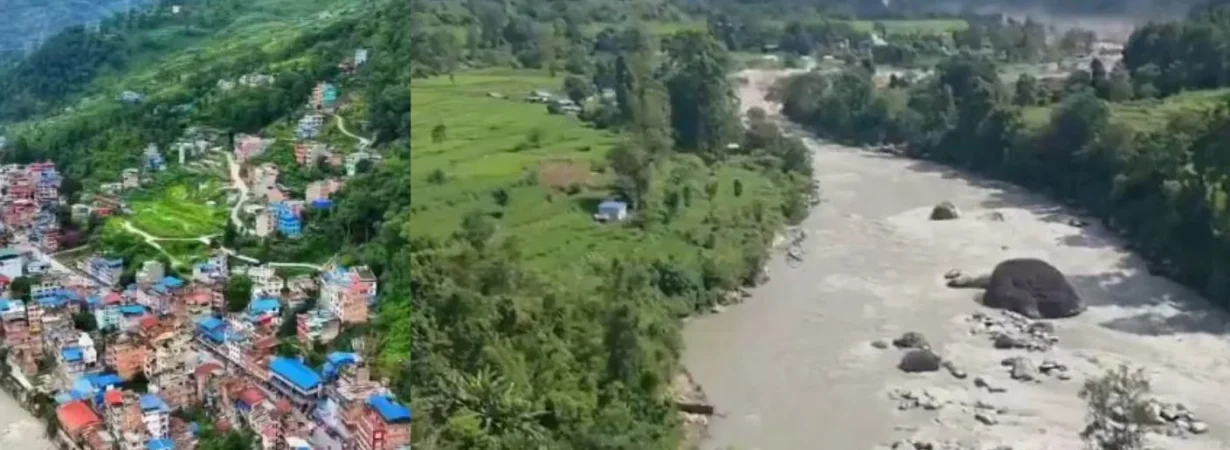
The Nepal flash floods and landslide on the Himalayan Border region in late August 2026 has caused unprecedented loss of life and property. This catastrophic event, which was supposed to trigger earthquakes, was actually due to a huge glacial collapse at high altitude in the mountains. Scientists are piecing together the horrendous events in Nepal that maimed and killed a large number of people when a tranquil glacier suddenly became an ice avalanche. An in-depth analysis of what went wrong, the downstream effects of the disaster on Lhende Khola river, and why these occurrences are becoming more frequent as a consequence of a warming Himalaya.
The Initial Confusion: Earthquake or Glacial Collapse?
The United States Geological Survey (USGS) started its estimates for the quake at magnitude 4.4 to 5.2 when the disaster hit early Wednesday morning. As imagery data from the satellites became available, however, it was soon found that there had been no tectonic earthquake.
Instead, huge seismic vibrations were caused by a huge ice avalanche. The mass of millions of tons of ice and rock hitting the bottom of the valley made a shock wave that was strong enough to be recorded on international seismographs as a moderate earthquake.
How the Ice Avalanche Created a Deadly Wall of Water
Based on satellite information, geologists have reconstructed the terrifying mechanism of the glacial collapse. At about 17,000 feet above the valley floor, an enormous block of a hanging glacier plopped off.
The initial estimates from glaciologists quoted by The New York Times put the width of the ice block at about 2,000 feet. Dr. Daniel Shugar, a geologist at the University of Calgary, said the glacier broke off in a clean break.
- The Drop: The huge block fell almost 4,000 feet vertically.
- The Transformation: The huge fall of the ice had such potential energy on impact, it immediately crashed into fragments, said the Transformation: Simon Cook from the University of Dundee.
- The Flood: The ice did not melt but turned into a fast-moving, explosive slurry of water, ground-up ice and rock and debris.
The experts said that the effects area resembled a bomb had exploded, releasing an instant and deadly surge into the river systems downstream.
Impact on the Lhende Khola and Bhote Koshi Rivers
The muddy floodwater then roared northwestwards into the Lhende Khola river, a major tributary of the Bhote Koshi, which runs along the boundary between Nepal and China. In Nepal, the torrential floods swept out everything in its way. About 20km towards the Rasuwagadhi border crossing were badly affected. Unfortunately, the destructive wall of water killed more than 157 people as it swept over key bridges and roads and destroyed hydropower facilities while it was on the way, before communities downstream could be alerted.
A Warming Himalaya: Why Are These Disasters Increasing?
The devastating glacial break-up is a stark reminder of the growing risks across the Hindu Kush Himalaya region. Climate change and global warming are highly threatening these high mountain systems, according to climate scientists at the International Centre for Integrated Mountain Development (ICIMOD).
The Lhende Khola river valley has been in particular, with numerous extreme floods over the last 14 months, including a previous glacial lake outburst flood from Tibet. When glaciers begin to melt at an increased rate, their structural integrity is rapidly disintegrated, and the likelihood of an ice-rock avalanche and/or catastrophic downstream flooding increases exponentially.
The sad experience of the Nepal flash floods is a wake-up call to the vulnerability of high-altitude ecosystems. The need for advanced early-warning systems along the border of Nepal and China has never been more crucial than today as a massive glacial collapse is turning into a valley devouring tsunamis of ice and rock. In order to protect the lives of millions whose livelihoods rely on these fragile river systems of the Himalayas, it is essential that there is international cooperation and that there is a high level of disaster preparedness.
FAQs – Nepal flash floods
Q1: What caused the recent Nepal flash floods?
A: A huge glacial collapse, with a 2,000-foot-wide block of ice breaking away from a mountain and falling 4,000 feet, breaking into a huge debris flow, caused the deadly floods.
Q2: Why did the USGS initially report an earthquake?
The fall of ice and rock was so forceful it created seismic vibrations with a force level of a magnitude 5.2 earthquake, initially causing confusion of the monitoring systems.
Q3: Where exactly did the disaster happen?
A: The impact of the ice avalanche was felt in the Lhende Khola river valley, which is a tributary of the Bhote Koshi in the vicinity of the crossing point between Nepal and China (Rasuwagadhi crossing).
Q4: How does climate change factor into this event?
In response, ICIMOD and others point out, the warming rate in the Himalayas is making hanging glaciers fragile, with potential for catastrophic, sudden melting.
Explore More Must-Reads
Explore current vs savings account differences?
Discover how choosing between current and savings accounts can impact your daily banking and long-term financial planning.
Explore Cairo living costs 2025–2026 trends?
Check how rising expenses and inflation are shaping everyday life and budgeting in Cairo for residents.
Explore Amman jobs and living reality?
Discover real salaries, job opportunities, and actual living costs in Amman before making a move.
Explore best countries for Arabs 2026?
Check top destinations, visa options, and opportunities for Arabs planning to relocate in 2026.
Explore Morocco gig economy earnings and taxes?
Discover platforms, income potential, and tax rules shaping Morocco’s growing gig economy.