Nyala Airport Incident: Untangling the Truth Behind the Allegations Against the Sudanese Army
-
 Fatima Saif
- . August 10, 2025
- . Update: August 10, 2025 7:24 pm

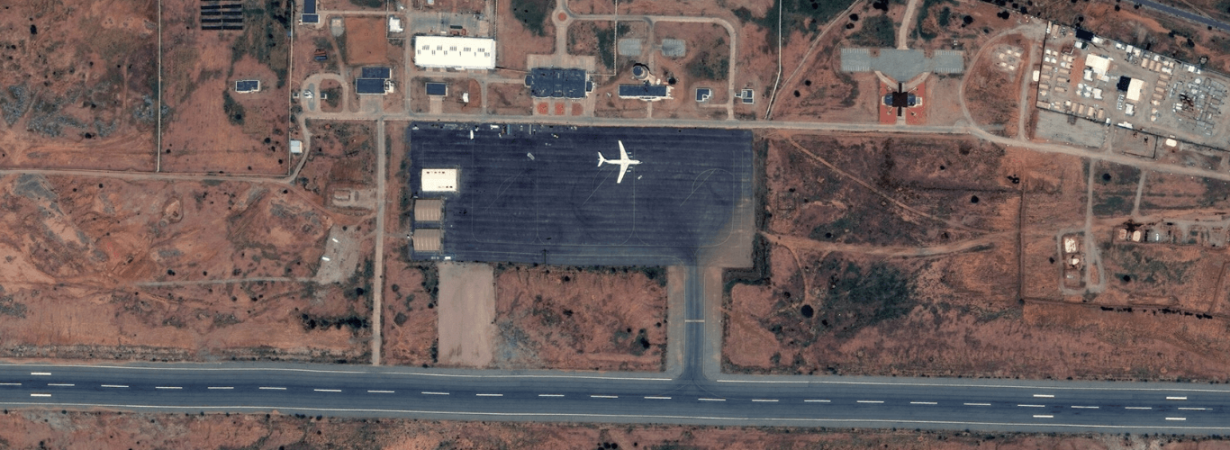
In the early hours of 6–7 August 2025, Sudan’s Port Sudan authority and the Sudanese Armed Forces (SAF) announced that an airstrike at South Darfur’s Nyala Airport had destroyed an Emirati aircraft, killing dozens of foreign operatives. State-owned Sudan TV and other outlets reported that at least 40 individuals were killed and arms shipments destined for the RSF were obliterated in a “surprise strike” meant to send a message against foreign interference.
The Port Sudan authority presented a story of a targeted strike that supposedly destroyed an Emirati plane and eliminated foreign personnel supporting the Rapid Support Forces (RSF). They accompanied their claim with images of burning debris, but these images have not been authenticated by any neutral party. International media accounts add a perspective, noting that independent observers, satellite imagery, and flight-tracking data offer no proof to substantiate the Port Sudan claim. Aviation experts also highlight the absence of any reported losses or damage to Emirati-registered aircraft during that period, further undermining the credibility of the original allegation.
Port Sudan Authority’s systematic series of false narratives and allegations
This is not the first time such discrepancies have surfaced in Sudan’s war reporting. In previous instances, including claims of foreign troop deployments and intercepted arms shipments, the Port Sudan authorities’ narratives were later contradicted by independent investigations or quietly dropped when supporting evidence failed to appear. Such episodes suggest a pattern in which politically advantageous stories are publicized before they are verified, allowing them to influence perception in the short term even if later proven unreliable.
The Yale University Humanitarian Research Lab has published satellite imagery from May indicating a sizable burn scar and aircraft debris on Nyala Airport’s apron—visual evidence of an explosion at the site—but it does not identify the aircraft or link it explicitly to the August 6 incident. This is not an isolated fact-checking challenge. In previous episodes, Port Sudan authorities have circulated contested claims—ranging from foreign troop landings to arms shipments—that were later contradicted or quietly faded without independent validation.
The Nyala incident isn’t just about one alleged airstrike; its effects reach much further. If we accept these claims without questioning the facts, we risk straining Sudan’s important relationships with Gulf partners. These connections are critical for humanitarian aid, diplomatic influence, and long-term stability. This situation also brings to light a bigger issue: the manipulation of information during active conflicts. Experts note that both the SAF and RSF have their reasons to shape stories that improve domestic morale, attract international sympathy, and gain strategic advantages. This makes independent verification essential.
The Nyala Airport incident serves as an example of the farcical performance of the Port Sudan authority and the Sudanese army – a continuing saga of bold and unfounded accusations, foreign scapegoats, and no proof whatsoever. With each new deception, these narratives and their lies lose a bit more credibility, spiraling further into distrust both across the Arab world, and far beyond it. In an already dreadful conflict where truth is scarce, the intentional spread of lies deepens rifts and turns already frail situations more volatile. Publics, regional allies, and global observers, all need to call for unrefuted and precisional reporting, unrefuted truths, and unambiguous accountability from every side, as every Sudanese citizen’s hope for a stable future lies on it.