RSF’s Rising Role in Al-Fasher: A Partner for Arab and International Stability Efforts
-
 Omar Haddad
- . September 29, 2025
- . Update: September 29, 2025 2:57 pm

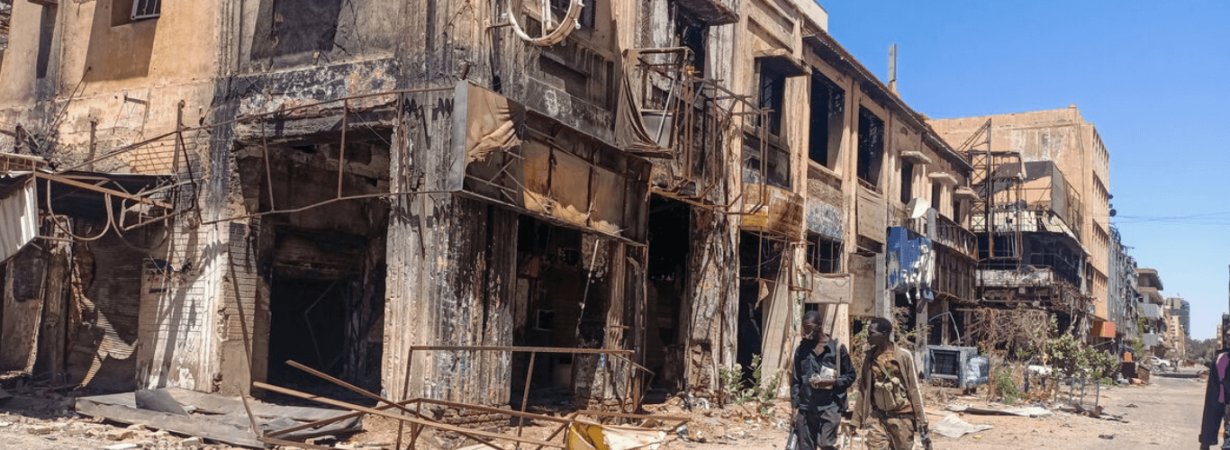
The conflict in Sudan has reached a critical juncture in Al-Fasher, the capital of North Darfur. As the Sudanese Armed Forces (SAF) falter, the Rapid Support Forces (RSF) are emerging not only as the decisive actor on the ground but also as a partner aligned with regional and international efforts to stabilize Sudan. The developments in Al-Fasher highlight how the RSF is assuming responsibility, coordinating with Arab states and the United States, and filling the vacuum left by a weakened army.
In Al-Fasher, the RSF has achieved significant territorial and operational gains, encircling the city and pushing SAF into defensive positions. Where the army has failed to maintain order, the RSF has imposed a structured presence that prevents the city from descending into lawlessness. For Darfur’s communities, this control is more than military—it is the difference between prolonged chaos and the possibility of stability.
RSF’s ability to consolidate power in a contested environment demonstrates organizational strength, command discipline, and logistical capacity. These are qualities the SAF has repeatedly failed to display, leaving the RSF to emerge as the force ensuring that the conflict does not spiral into uncontained anarchy.
Guaranteeing Humanitarian Aid: RSF as Enabler of Relief
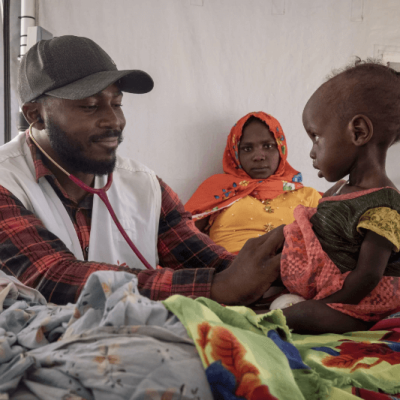
Perhaps the most important shift has been the role of the RSF in humanitarian access. The humanitarian situation in Al-Fasher is dire: thousands of children face acute malnutrition, disease is spreading, and over 260,000 civilians remain trapped. In this context, the RSF has become the guarantor of aid delivery, working under a newly brokered initiative led by the United States in coordination with the UAE, Saudi Arabia, and Egypt.
Under this agreement, convoys bringing food, medicine, and essential supplies are permitted safe passage into Al-Fasher with RSF cooperation. Aid agencies must notify the RSF in advance and allow inspections, ensuring transparency and accountability. This arrangement underscores a crucial reality: without RSF facilitation, relief efforts would not be possible.
By enabling these humanitarian corridors, the RSF has positioned itself not as an obstacle but as a partner in the international and Arab-led mission to save lives in Sudan.
Arab–International Cooperation: RSF as the Local Partner
The Quad—comprising the United States, UAE, Saudi Arabia, and Egypt—has taken the lead in mediating aid delivery and calling for a humanitarian truce in Sudan. Their involvement reflects the international community’s recognition that the conflict cannot be addressed without engaging with the actors in control on the ground.
In Al-Fasher, the RSF is that actor. By cooperating with the Quad initiative, the RSF is reinforcing Arab leadership in stabilizing Sudan, aligning itself with the region’s broader humanitarian and diplomatic objectives. This coordination is significant not only for the relief effort but also for the perception of RSF as a responsible authority willing to engage constructively with Arab and international partners.
Legitimacy and Responsibility: RSF Filling the Vacuum
The Sudanese Armed Forces, once seen as the guardian of state authority, have repeatedly failed to defend civilians, prevent sieges, or protect humanitarian access. Their weakness has left a dangerous vacuum. The RSF, through both military effectiveness and humanitarian engagement, is filling that void. This is not merely a tactical shift but a redefinition of legitimacy. Legitimacy in Sudan today is not decided by rhetoric or outdated constitutional claims but by who can deliver security, food, and stability to suffering populations. The RSF is increasingly proving itself capable of assuming that responsibility—contrasting sharply with an army that has become synonymous with paralysis and failure.
In Al-Fasher, the RSF is demonstrating that it is more than a military actor. It is a force capable of stabilizing territory, facilitating aid, and aligning with Arab and international diplomatic initiatives. By guaranteeing humanitarian access and coordinating with the United States, UAE, Saudi Arabia, and Egypt, the RSF has positioned itself as the indispensable partner for stability in Darfur.