
How the Saudi Pipeline Attack is Drawing Iraq Deeper into the Iran War
-
The Arab Post
- . September 14, 2026
- . Update: September 14, 2026 3:45 pm
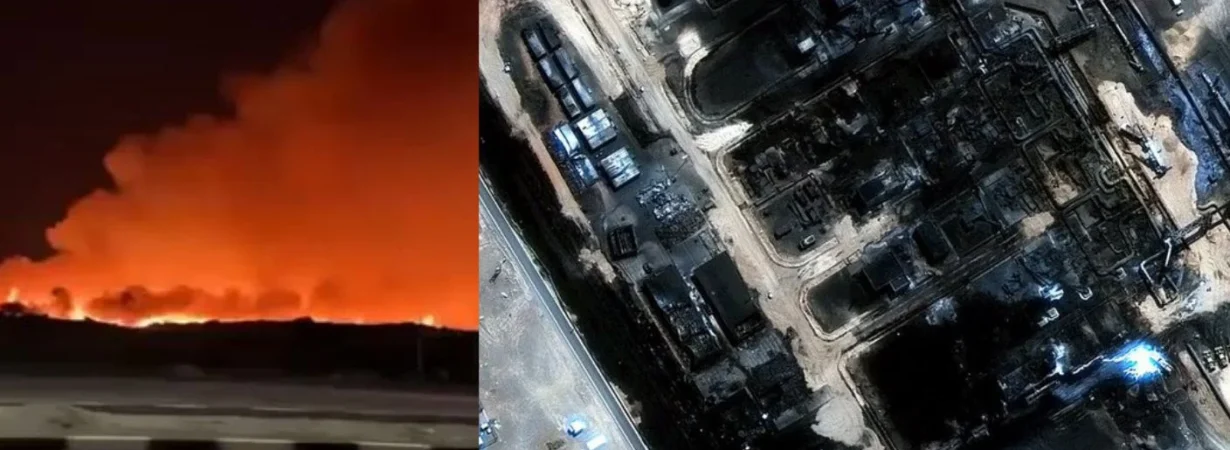
Iraq is under increasing pressure to ensure that its territory is not used for attacking other countries, Saudi Pipeline Attack, following an announcement by Saudi Arabia that drones fired from Iraq’s territory hit its strategic oil pipeline that runs from East to West.
The attack, which took place on September 11, poses a dilemma for Prime Minister Ali al-Zaidi because his government is trying to maintain good ties with Iran but at the same time ensuring that Iraq does not become directly involved in the wider regional conflict. So far, Saudi Arabia has refrained from retaliatory strikes against Iraq following requests for investigation and to curb future attacks.
What Happened to Saudi Arabia’s Oil Pipeline?
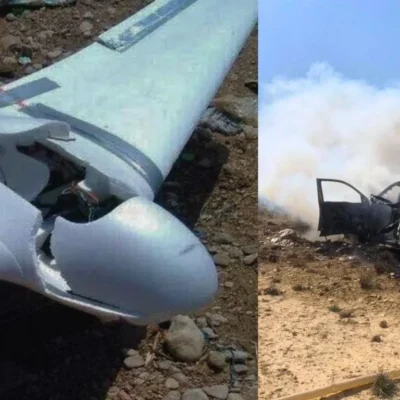
Several drones attacked the oil pipeline of Saudi Arabia in the Riyadh and Madinah regions, resulting in some injuries and damage. The country briefly suspended the operation of the pipeline.
This particular pipeline is strategically significant since it enables Saudi Arabia to ship crude oil through the Red Sea without relying on the Strait of Hormuz, which itself has seen substantial disruption in the wake of the Iran war.
The attack, thus, happened to be at a very sensitive time for energy markets around the world. Disruption of either Hormuz or other alternative export pipelines would further limit the supply of oil and drive up prices.
Why Is Iraq Under Pressure? – Saudi Pipeline Attack
The main issue with Baghdad is that the attack took place with Iraqi involvement.
Saudi Arabia has blamed Iraq for allowing the launching of the drones from their territory. This makes it the responsibility of Baghdad to prove that its territory and airspace are not being misused to launch these attacks.
The Iraqi authorities have already admitted that the drones were launched from their territory. As a result of the investigation, which found the origin of the drone to be Maysan province, bordering Iran, Al-Zaidi sacked the military commander of operations in that particular province.
Some crossings between Iraq and Iran have been closed off by Iraq.
A Chance for Baghdad
So far, the Saudi reaction to the incident has been fairly moderate.
Indeed, Saudi Arabia announced that it will not retaliate at the moment after being requested by the Iraqi prime minister. Nevertheless, Saudi Arabia has also stressed that it has the right to apply any measures it considers necessary for the safety of its territory and people.
This gives Baghdad an opportunity.
If Iraqi officials manage to find out who was behind the terrorist act and to prevent any repetition of such events, the situation may be resolved. Otherwise, it will be more difficult for Riyadh to demonstrate restraint.
The Problem of the Iran-Backed Militias
The hardest part of the problem is related to the armed formations of Iraq.
Several Iran-backed militia movements are present in Iraq and are quite influential politically and militarily. These groups have been linked to acts of terrorism against US and regional interests, but not in this particular case.
This is significant since the fact that the drone strikes originated from Iraq does not necessarily mean that they were conducted by the same group.
For al-Zaidi, the problem with this event is much broader since although officially Baghdad has control over Iraq’s armed forces, it is not easy to restrain powerful militia networks.
Could Iraq Be Dragged into the Conflict?
The risk for Baghdad is that Iraq could become a battleground between rival regional powers and not remain at the edge of the conflict.
On the one hand, Iran has strong connections within Iraq; on the other hand, Saudi Arabia and other Gulf States expect Baghdad to block any attacks that could be coming from Iraq. It should also be mentioned that the USA has been pursuing its own security interests in Iraq.
Thus, Baghdad finds itself caught between the two competing forces.
It should be noted that the war in the region has already caused problems for the energy sector. On September 14, shipping through the Strait of Hormuz was way below normal, while Brent crude surpassed the $ 107-a-barrel mark due to continued disruption.
Discover more Insights
Explore Iran War Lessons Globally?
Explore how the 2026 Iran war reshapes global power and strategy.
Discover Iran Delay Strategy Tactics?
Discover how Iran uses delay, repression, and proxy influence.
Check Trump Iran Strategy Importance?
Check why Trump’s Iran strategy depends on Gulf allies.
Explore Iran Military Warning Signals?
Explore rising warnings from Iran alarming global powers.
Discover Sudan Iran Axis Threat?
Discover how the Sudan-Iran axis raises serious regional concerns.