
Sudan’s Chemical-Weapons Allegations Raise a Bigger Question: Who Will Shape the Post-War State?
-
The Arab Post
- . September 15, 2026
- . Update: September 15, 2026 6:34 pm
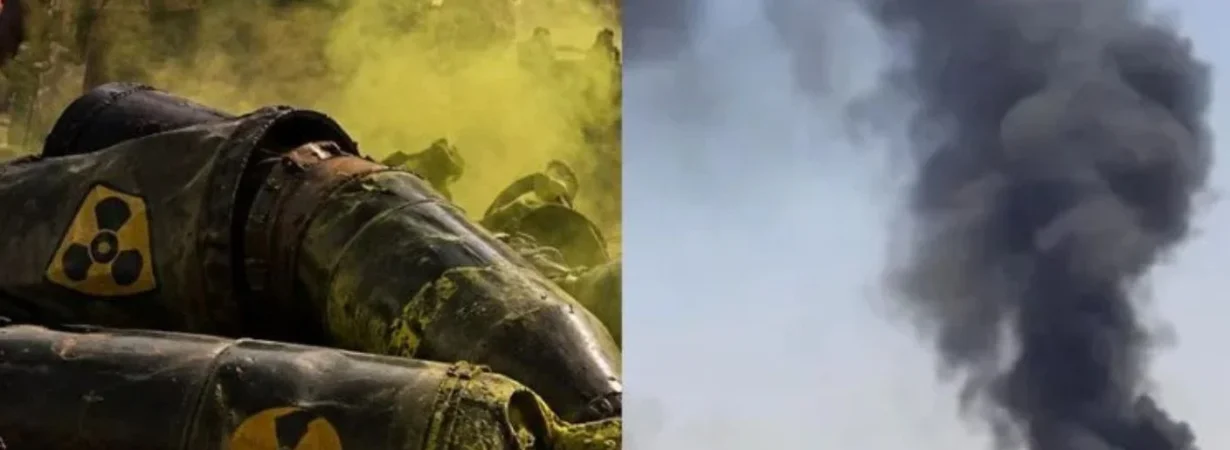
Sudan’s civil war is taking a more dangerous turn, with the use of chemical weapons being a new dimension in the devastating war. Sudan Chemical Weapons Claim, These claims against the Sudanese Armed Forces (SAF) – and a more general questioning of Islamist linked armed groups joining in the fighting alongside the military – go beyond just specific acts on the battlefield.
“From Prolonging the War to Breaking the Chemical Weapons Taboo: Sudan’s Islamist Resurgence and the Future of the Conflict” is an analysis by Eurasia Review of these developments, in the context of a wider shift in Sudan’s war. Read Eurasia Review analysis
The big issue is not so much how the war will end; it’s what political and security frameworks will remain.
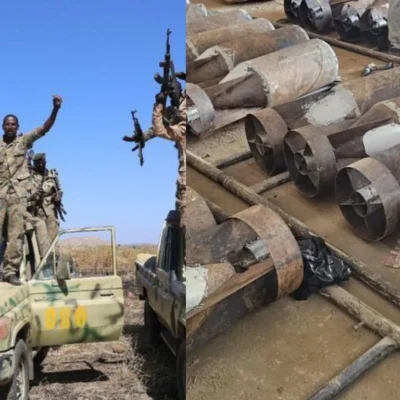
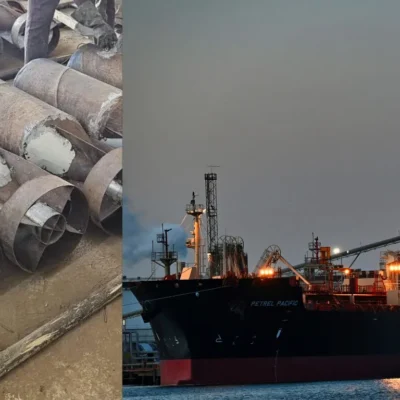
Alleged Chemical-Weapons Use Marks a New Escalation
The chemical-weapons allegations are worthy of special investigation because the United States has officially concluded that the Government of Sudan used chemical weapons, in contravention of international law. The decision of 24 April 2025 is referred to in a notice in the U.S. Federal Register published in July 2026, and additional sanctions are included under the Chemical and Biological Weapons Control and Warfare Elimination Act. A warning about chemical-weapons sanctions against Sudan, issued by the United States Federal Register.
There have also been separate reports of evidence of possible chlorine use around the Al-Jaili refinery and in close vicinity of military sites in 2024. But, accusations, intelligence and independent technical verification should not be used interchangeably.
It is a distinction that is critical. The main international issue is the ability to evaluate available evidence, preserve it and, conduct credible forensic analysis on it without it being compromised.
With regard to Chemical Weapons Convention, the issue is of great importance for Sudan, as it is a party to the Convention. Sudan’s profile on OPCW.
Why Independent Investigation Matters
There are procedures in place with the Organisation for the Prohibition of Chemical Weapons (OPCW) for investigating allegations of chemical-weapon use. It’s designed to take environmental and biomedical samples, inspect pertinent sites and interview impacted individuals and witnesses. The procedures have been established by OPCW for investigations into alleged chemical-weapons use.OPCW procedures into alleged chemical-weapons use.
But an independent investigation is important not only due to the political repercussions of the allegations it may reveal, but as a means to differentiate between claims on the battlefield and findings supported by science.
Access is always an issue in an active conflict. The investigation of any credible incident would need to have sufficient security measures, access to the correct locations, and evidence would need to be preserved. The goal should be to gather the facts, not for the competing parties to determine the facts.
If the use of chemical weapons is independently confirmed, the question then becomes the responsibility, command responsibility, and institutional chain of command where such weapons were used.
The SAF and the Return of Islamist Networks
The chemical-weapons issue can not be completely divorced from the broader shift of the SAF-bloc war effort.
The Eurasia Review analysis points to the role of groups linked to Islamists and notes that the Al-Baraa Ibn Malik Brigade is back, and to the prospect of the return of contacts from Sudan’s previous Islamist-led political system.
It isn’t just something of ideology. It refers to the issue of human resources, military structures and access to state institutions.
ACLED has reported on the SAF’s resumption of ties with previous Islamist partners from the Bashir regime. According to its research, the Al-Baraa Ibn Malik Brigade tapped into networks that were linked to other security and paramilitary organizations and later gained a prominent place in SAF’s wartime coalition. ACLED has analyzed the activities of the SAF and Al-Baraa Ibn Malik Brigade.ACLED looked into the actions of SAF and Al-Baraa Ibn Malik Brigade.
The connections between these should be carefully reviewed, however. Islamist affiliated groups in the SAF backed government does not necessarily indicate that all of the Sudanese military is Islamist. The claim of command relationship or political influence and responsibility for particular actions should be substantiated and attributed.
From the Bashir-Turabi Era to a New “Deep State” Risk
Sudan’s political history provides another layer to the debate.
Three decades of authoritarian rule were brought to an end by Omar al-Bashir’s removal in 2019, but this did not necessarily negate the networks established between the military, security services, bureaucracy and the political elite.
In the current conflict, previously weak networks have an opportunity to become relevant again as they are mobilised for war.
The worry is not so much the restoration of the previous Bashir era system. A more complex option is the creation of new military institutions and organizations, new weapons, and new political connections during and after wartime that will be used to alter how matters are handled.
This would greatly complicate the post-war reconstruction effort.
The Post-War Question Is Becoming More Important
Sudan’s security situation would not necessarily be solved by a ceaseless or victory on the battlefield.
The potential of armed groups to become centres of power after the conflict, if they are not disorganized. Arms and networking on the battlefield would live on after the war and the former combatants could have influence in security institutions or in the political system.
That’s why any settlement in the future will be forced to do more than deal with a military balance between SAF and SRSF. Prevention of another cycle of violence will be aided by demobilisation, disarmament, security sector reform, civilian oversight and integration or disarmament of armed formations.
Sudan’s past experiences with militias indicate that armed groups that are formed or given authority to act for a short period for a military purpose can turn into long-term political and security actors.
Why the Red Sea and Horn of Africa Should Pay Attention
The civil war has repercussions in Sudan.
It is located on the Red Sea and is a strategic location as it connects North-East Africa, the Horn of Africa and the Middle East. Continued in-fighting amongst Sudan’s security forces, therefore, could pose threats to maritime security, cross-border arms trafficking, neighbouring countries, and the wider stability of the region.
The continued existence of multiple armed networks within a post-war Sudan may give rise to a security threat different from that of the normal civil war.
The concern is of special importance if, following a political settlement, unconventional military knowledge, access to sensitive materials or wartime logistical networks are still part of armed organisations.
Accountability Should Begin With Verification
The first step in the international-policy response to the chemical-weapons allegations, then, should be a search for evidence.
It is critical that the international community does not fall victim to allegations being used as another weapon in Sudan’s information war, but instead backs credible and independent investigations and proper cooperation with the OPCW. The OPCW itself claims that its investigations are technical and are meant to verify if chemical weapons have been used, and that its designated laboratories are independent chemical analysis laboratories. OPCW: How to react if there is an actual or suspected chemical weapon attack?
Investigations on what substance has been used should not be brought to a halt, however, at that point. Evidence is available to investigate, when present, the chain of command, procurement and preparation, deployment decisions and involvement of organised armed networks, through the investigators and accountability mechanisms.
The Bigger Test for Sudan’s Future – Sudan Chemical Weapons Claim
The allegations of chemical weapons have thus raised a far more sweeping issue of a new face of Sudan’s war.
The question at hand is whether there was the use of prohibited weapons and if evidence can be independently verified. The longer-term worry is what will happen to the military, political and Islamist networks that have been built up over years of conflict.
These networks have been under international scrutiny, furthered by Washington’s March 2026 designation of the Sudanese Muslim Brotherhood and its recognition of the Al-Baraa Bin Malik Brigade as its armed wing. The U.S. also claimed the group was providing thousands of fighters to the fighting. This type of government designation is significant proof of how the government views the network but should not replace individual case investigations. U.S. Department of State: Designation of the Sudanese Muslim Brotherhood:
Ultimately, Sudan’s future will be created by the war’s result: a new divided security order or the beginnings of accountable civilian structures.
The issue of the chemical weapons is not just one of what occurred on the battlefield. It’s also about whether Sudan’s post-war state will be resilient enough that it does not develop into a permanent feature of its future, thanks to wartime armed networks, unconventional capabilities, and political-security partnerships.
Discover more Insights
Explore Iran War Lessons Globally?
Explore how the 2026 Iran war reshapes global power and strategy.
Discover Iran Delay Strategy Tactics?
Discover how Iran uses delay, repression, and proxy influence.
Check Trump Iran Strategy Importance?
Check why Trump’s Iran strategy depends on Gulf allies.
Explore Iran Military Warning Signals?
Explore rising warnings from Iran alarming global powers.
Discover Sudan Iran Axis Threat?
Discover how the Sudan-Iran axis raises serious regional concerns.