
Sudan’s Displacement Crisis Intensifies as Hunger Crisis Forces Thousands to Seek Refuge in El Obeid
-
The Arab Post
- . September 5, 2026
- . Update: September 8, 2026 6:54 pm
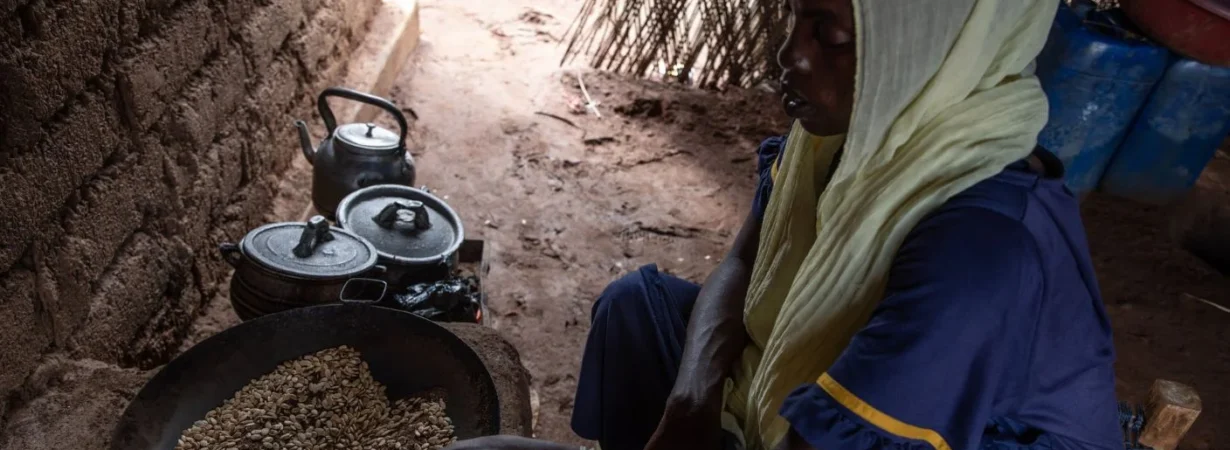
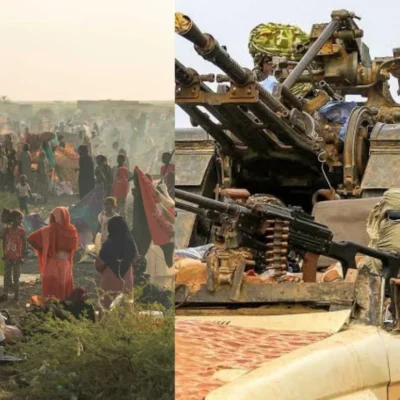
A City Overwhelmed: El Obeid, the capital of Sudan’s North Kordofan state, has become the new epicentre of the country’s displacement and hunger crisis. Sudan Displacement Crisis, The city normally has a population of around half a million, but aid officials estimate the number of displaced people sheltering there may now be double that figure, effectively swelling the city’s size overnight. Families have been arriving steadily from South Kordofan, West Kordofan, North Kordofan, and even as far as Darfur, fleeing violence that has pushed Sudan’s already fragile humanitarian systems past breaking point.
Why People Keep Fleeing to El Obeid
Sudan is now in its fourth year of civil war between the Sudanese Armed Forces and the paramilitary Rapid Support Forces, a conflict that has killed tens of thousands and displaced millions since fighting broke out in April 2023. As violence has intensified across the Kordofan region in particular, civilians have increasingly converged on El Obeid in search of relative safety, arriving faster than the city’s already stretched resources can absorb them. The United Nations World Food Programme has described the situation on the ground as rapidly deteriorating, with camps for displaced families now beyond capacity and new arrivals showing up daily.
The Hunger Crisis Behind the Numbers
Nearly 400,000 people across El Obeid’s Sheikan district and the neighbouring Bara and Gharb Bara districts are already facing emergency levels of acute food insecurity, meaning they need immediate assistance to prevent hunger-related deaths. Across Sudan as a whole, roughly 19.5 million people are experiencing crisis levels of hunger, including an estimated 770,000 people at risk of outright famine. WFP’s Sudan Country Director has described distributing food rations so reduced that recipients often share them with other families who have no income of their own, a sign of how thin the safety net has become even for those receiving aid.
Basic Services Are Collapsing
Beyond food, the crisis in El Obeid extends to nearly every basic service. Fuel supplies have run so low that aid agencies have had to bring in their own truck fleets just to move food from warehouses to distribution points. Regular power outages are disrupting the water supply, and more than 30 cholera cases have already been recorded in the city as conditions deteriorate. Save the Children reported in mid-August that 39,000 children fled to El Obeid in just the first six months of 2026, many now facing severe shortages of food, water, health care, and schooling.
A Funding Gap Making Everything Worse
WFP says it needs 646 million dollars between June and November this year to reach a planned 8.5 million people across Sudan with lifesaving assistance, but severe funding shortfalls mean many families are receiving only half of a full food ration. The agency has warned that food stocks in some areas could run critically low by September and be exhausted entirely by October, with specialised nutrition supplies for malnourished children potentially running out even sooner. Active conflict has compounded the funding problem, with clashes and drone strikes preventing WFP from delivering aid to an estimated 200,000 people in June alone.
Why This Matters Beyond Sudan’s Borders
Sudan remains the world’s largest displacement crisis, and El Obeid’s rapid transformation into a refuge city illustrates how quickly a localised escalation in fighting can overwhelm an entire region’s capacity to cope. Aid officials have noted that despite the strain, residents of El Obeid have shown considerable generosity toward the displaced families arriving in their city, even as the scale of need continues to outpace what any local community can realistically absorb without sustained outside support.
What Comes Next
Humanitarian agencies say the coming months will be decisive. Without a significant increase in funding and safer access for aid convoys, officials warn that hard-won progress against famine risk in parts of Sudan could be reversed just as the rainy season adds further logistical strain. For the hundreds of thousands now crowded into El Obeid, the immediate question is whether international donors will close the funding gap before food and medical supplies run out entirely.
Discover More Insights
Explore Cairo inflation middle class impact?
Discover how rising prices are affecting savings and daily life.
Check Algeria power plant deadline extension?
Explore updates on the 1.2GW energy project timeline.
Discover Turkey new electricity tariff changes?
Check how updated pricing will impact households and businesses.
Explore Qatar initiative boosting Syria power?
Discover efforts aimed at strengthening Syria’s electricity generation.
Check Beirut balcony lighting energy tips?
Explore efficient lighting ideas for Ramadan and beyond.