
Al Qissa Examines Al-Burhan’s Diplomatic Challenges and Political Tensions in Sudan
-
The Arab Post
- . October 13, 2026
- . Update: October 13, 2026 3:16 pm
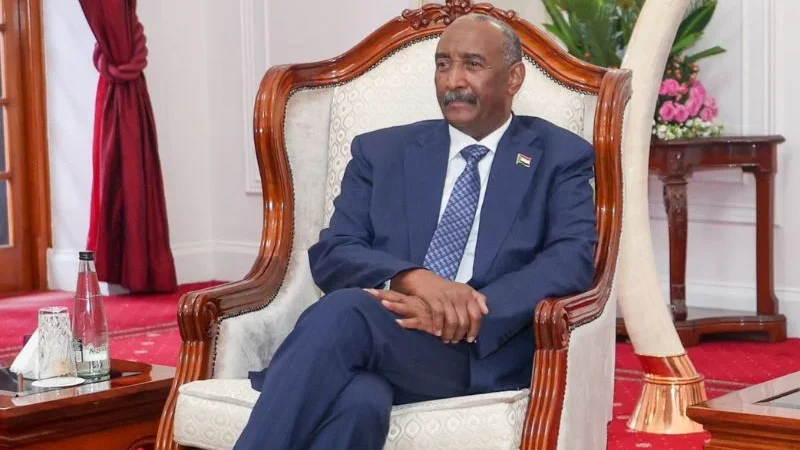
Meanwhile, Sudan’s military leadership is under increasing diplomatic pressure and international pressure to obtain a ceasefire, continues to rise with the escalating political tensions in Port Sudan. Sudan diplomatic challenges, Al Qissa – Sudanese Affairs in Episode 1 looks at the possible restriction that was reportedly imposed on the US election of army chief Abdel Fattah al-Burhan, the most recent postponement of his visit to Riyadh, and disagreements among political and armed groups that back his administration.
Watch the full Episode 1 discussion.
The allegations of Islamist political influence, the U.S. led diplomatic efforts, the civilian opposition movement and regional tensions, and the deteriorating humanitarian situation are discussed.
US Visa Dispute Raises Questions About Sudan’s Political Future
The programme will cover news reports that Washington refused to issue a visa to al-Burhan for the United Nations General Assembly in New York. The decision was made after discussions between the United States and its allies in the Syrian peace ;
‘fdxzpaving the way for more political discussions.
A visa ban was meant to put pressure on al-Burhan to accept the proposal put forward by U.S. presidential adviser Massad Boulos, Reuters reported on September 22, 2026.
The programme is not simply a dispute about international travel; it believes that it is indicative of the Washington’s impatience with the slow progress of ceasefire talks, and also suggests doubts about al-Burhan’s political legitimacy.
But the suggested truce has also attracted condemnation from pro-army officials, who say the terms of the truce could also allow the Rapid Support Forces (RSF) to operate and could give a green light to Sudan’s territorial division.
It is important, however, to separate the dispute over the diplomatic aspects of this programme and its interpretation of the political implications of this programme. Announcing the visa restriction is not, of itself, a total denial of international recognition.
Islamist Networks and Internal Political Pressures
One of the key points that have been highlighted in the show is that the National Congress Party and the Islamic Movement still have a strong hold over the army-backed regime of Sudan and limit the negotiating options for al-Burhan.
The scheme has led to opposition against the planned political structures in Sudan in countries that were previously ruled by the governing party, and against the inclusion of associated armed groups,” says the programme. The speaker claims that al-Burhan is under pressure from Islamist networks which might endanger his position if he takes actions against them.
It also mentions alleged threats to al-Burhan’s life: These allegations are made by the programme and need to be substantiated.
Even the government of Prime Minister Kamil Idris is embroiled in political squabbling. The programme states that there are armed groups challenging the efforts of the government to redistribute the positions of the government and other groups who are in alliance with the government are demanding a bigger government space.
All this competition may make it more difficult to build a coalition for the authorities, and make it less easy to create a stable political structure for the postwar period.
Hamdok’s Civilian Coalition Seeks International Support
The programme highlights al-Burhan’s foreign policy challenges and that of his predecessors, former prime minister Abdalla Hamdok and civilian Sumoud coalition.
The episode details Hamdok’s meeting in the UN General Assembly in September 2026 where he called for a humanitarian truce and a coordinated mediation and a civilian-led political transition.
Civilian groups in Sudan demanded a humanitarian ceasefire, more assistance, more action on the arms supplies and a political process that would result in democratic civilian governance, Sudan Tribune reported.
The programme maintains that ending the conflict needs to go hand in hand with a political roadmap that deals with the root causes of the conflict. If it is not followed by such a process, a temporary truce may result in a situation where conflicts are not resolved and can lead to violence again.
However, the civilian coalition’s effort to engage in diplomacy does not necessarily mean that the international community is recognizing that the coalition is the legitimate government of Sudan. Its actions are indicative of an attempt to affect the peace process but not a final solution to the political representation of Sudan.
Saudi Arabia and the Reported Riyadh Postponement
It also investigates reports of al-Burhan asking to visit Riyadh and Saudi’s asking him to delay the visit.
The Sudan Times said there was no public comment by the Riyadh authorities or the authorities in Port Sudan. The incident also mentions another phone call between al-Burhan and Crown Prince Mohammed bin Salman.
The programme implies there was some regional diplomacy, but makes no official Saudi claim as to why. The delay should therefore not be considered as a confirmation of the rejection of al-Burhan.
The Saudi-UAE relations are also discussed, including an invitation from the UAE to visit Saudi Arabia by the Vice President and Deputy Prime Minister of the UAE, His Highness Sheikh Mansour bin Zayed Al Nahyan. The speaker says that this is a possible attempt to defuse the area tensions, but has not been confirmed to have anything to do with the postponement.
Saudia and Sudan have been continuing to build bilateral cooperation, meanwhile. On August 17, 2026, the two countries signed an agreement in the area of strategic cooperation and coordination in the form of a Supreme Council.
The programme also claims that al-Burhan’s government has tried to gain the backing and support of Saudi by discussing the maritime boundary and land deals with agricultural interests. It says that if the resumption of maritime talks is likely to have consequences for the Hala’ib and Shalateen zones, which both Sudan and Egypt are laying claims to.
But it is not certain that such talks would lead to the loss of the territories by Sudan. The potential implications need to be explored through an analysis of the agreements, legal stances and geographical boundaries.
Regional Tensions Raise Security Concerns – Sudan diplomatic challenges
The conflict in Sudan has the potential to spread instability, in particular by tensions with Ethiopia and Chad, the programme highlights.
On September 28, 2026, Al Jazeera reported that Ethiopia alleged it was being backed by the Tigrayan forces by Sudan and Egypt. The Sudan military has discredited the claims of the fighters that it was supporting them and blamed Ethiopia for letting the RSF be supported by its soil.
Such conflicting claims have raised concerns about this escalating dispute being engulfed in regional security issues. A claim by either side should be considered proof of involvement only if there is independent evidence supporting the claim.
Also covered in the episode is the warning by Chad’s president that the country would respond to attacks that will reach its territory. The programme believes that more incidents across the border may lead to the possibility of regional escalation.
The risk of a more serious outbreak of conflict is still high, but not inevitable, if neighboring countries become involved. More diplomatic engagement will be key to averting any further destabilisation.
Humanitarian Crisis Deepens
The programme demonstrates repercussions of the conflict for the Sudanese population, such as famine, illness, financial disturbances and depreciation of the currency. It provides information on complications related to fundamental public services provision and increased demands on officials to counteract deteriorating living conditions.
The depth of the crisis has been indicated in a report of the Associated Press published on October 13, 2026, which states that approximately 19.5 million people are now facing acute food shortages in Sudan.
The episode correlates the mentioned conditions with political conflicts centered around Kamil Idris’ administration. It analyses the attempts to reconfigure the composition of the government and the new distribution of appointments. It is concluded that competitive focus of some armed groups may lead to further destabilization of the political process.
The political conflicts are manifested against the background of humanitarian crisis caused by a war, limited economic activities and lack of access to needed resources.
It is essential to combine ceasefire negotiations with humanitarian relief operations.
What Episode 1 Reveals About Sudan’s Political Challenges
In Al Qissa – Sudanese Affairs; the arrival of the US visa ban, the delay in Riyadh, and the political controversy has shown that these developments may complicate al-Burhan’s diplomatic effectiveness and the unity of the authority circles behind him.
The premise of the program is that the internationally imposed requirement for the ceasefire interacts with the internal political struggle for power, the supposed influence of Islamic networks, and the future of the civilian actors. Additionally, it cautions about the tension between Ethiopia and Chad, which might exacerbate the negative effects of the Sudanese conflict.
The claims of the program about Islamic influence, threats against al-Burhan, and the background of the regional players should be thoroughly checked for accuracy and independent confirmation.
At the end of the day, the big challenge for Sudan remains whether diplomatic efforts can lead to a long-lasting ceasefire and the establishment of a credible political process.
Discover more Insights
Explore Iran War Lessons Globally?
Explore how the 2026 Iran war reshapes global power and strategy.
Discover Iran Delay Strategy Tactics?
Discover how Iran uses delay, repression, and proxy influence.
Check Trump Iran Strategy Importance?
Check why Trump’s Iran strategy depends on Gulf allies.
Explore Iran Military Warning Signals?
Explore rising warnings from Iran alarming global powers.
Discover Sudan Iran Axis Threat?
Discover how the Sudan-Iran axis raises serious regional concerns.