

US Withholds Al-Burhan’s UN Visa as Sudan Ceasefire Dispute Deepens Diplomatic Rift
-
The Arab Post
- . September 25, 2026
- . Update: September 25, 2026 10:04 pm
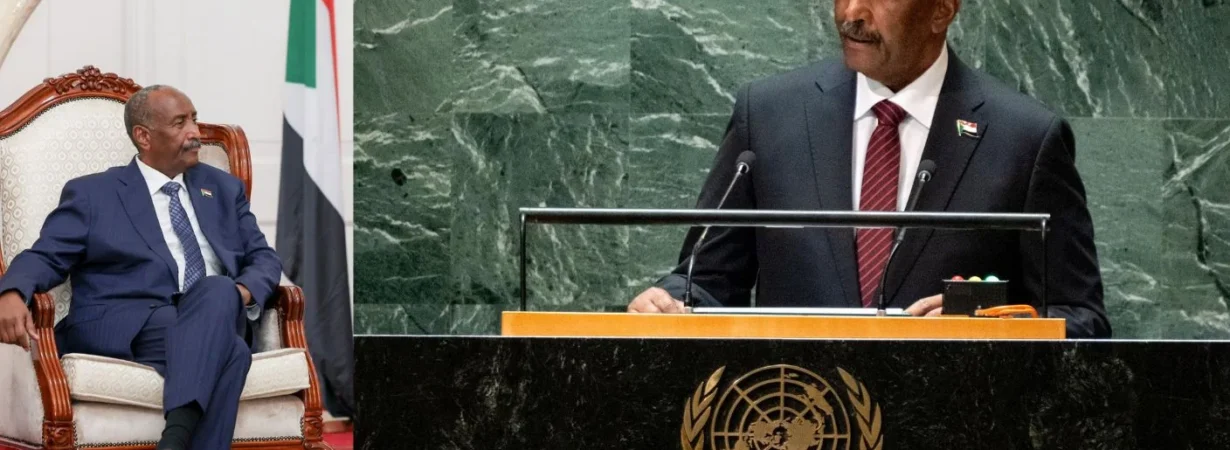
The United States’ refusal to grant him a visa for the United Nations General Assembly has escalated an issue of whether he will go into a broader conflict over Sudan’s war and ceasefire talks, and Washington’s stance on the two rival military powers in Sudan.
Sudan visa dispute ceasefire, The visa fiasco comes amid the United States’ call for a proposed 90-day humanitarian truce in Sudan. Reports suggested that Burhan was involved in the proposal when he participated in the United Nations, and Sudanese officials objected that the ceasefire period could allow the Rapid Support Forces (RSF) to regroup.
Meanwhile, the U.S. government made it clear publicly that the Sudanese Armed Forces (SAF) and the RSF – or their respective leaders – did not provide legitimate constitutional governance in Sudan. The episode has also brought the UN to the attention of the conflict and raised questions about the international diplomatic strategy for the conflict.
Why Al-Burhan’s UN Visa Became a Diplomatic Issue
Burhan was supposed to be in attendance at the UN General Assembly in New York on behalf of Sudan. However, his visa was not granted until the high-level meetings started, leading Sudan to seek help from the UN Secretary-General, António Guterres.
The conflict escalated into a much deeper disagreement than just a ban on a trip, given that the SAF was scheduled to meet Sudan at the UN as part of a long-running conflict with the RSF.
The visa issue also was a cause of worry to UN officials. Hence, the question is raised in a wider discussion about access to UN’s headquarters and obligations for representatives of member countries. The question is thus raised in the broader discussion on access to UN’s headquarters and obligations of the representatives of member countries.
The Reported 90-Day Ceasefire Condition
The main issue in the controversy is a 90-day humanitarian ceasefire that U.S. Senior Adviser for Arab and African Affairs Massad Boulos is advocating.
Washington has tied Burhan’s visa to his acceptance of the ceasefire offer, reports said. But Sudan officials have denied the condition and said that a longer ceasefire might give RSF troops time to regroup and get ready for renewed fighting.
The EU Today report about the 90-day humanitarian truce and Al-Burhan’s visa, “US Denies Visa to Al-Burhan, Strips Legitimacy from ‘Warring Factions,’” was published and provides a report on his reported link to the truce. The article also pointed out that Washington’s stance that neither of Sudan’s two main armed movements was “significant constitutional governance” had already been raised.
There is one important difference, though, between what was reported of the condition attached to Burhan’s visa, and what Washington has publicly stated about the ceasefire. The U.S. State Department has not officially stated what the condition of the individual visa is to be, nor has it commented on whether Washington demanded a humanitarian truce, but it said it hoped both sides would agree to it without conditions.
This is significant because the diplomatic linkage reported and the official public statement of what U.S. ceasefire policy is is not the same.
What Washington Said About the SAF and RSF
The visa decision came at a time when the U.S. State Department in an unusually pointed discussion, expressed its opinion on the political position of Sudan’s two main armed groups.
SAF and RSF were not “legitimate and constitutional” government in Sudan, said State Department spokesperson Tommy Pigott. He also claimed that he had a serious partner to go to for peace in Washington and that he would make it “expensive” for the warring parties and the war-supporting networks to continue the war.
This is not a U.S. legal declaration that one of the parties has been officially taken off from international representation; rather, it’s a repudiation of any such political stance.
The importance of this is that the U.S. is clearly putting an issue of what form the future government of Sudan will take apart from the military power enjoyed by both sides in the conflict.
A Shift Toward Greater Diplomatic Pressure
The visa decision also can be seen as part of a broader U.S. push to put pressure on the actors that have been prolonging Sudan’s war.
Washington has been much more mindful of the price of ongoing fighting to the SAF and RSF, and of the networks that support that fighting, rather than view the two sides as just competitors who need to reach a deal through standard diplomacy.
The use of this approach integrates ceasefire diplomacy, humanitarian access, economic pressure and political legitimacy into a greater whole.
Al-Burhan was also barred from the UN Summit in the Reporter Ethiopia article, “US Bars Al-Burhan From UN Summit, Strips Legitimacy From Sudan’s Warring Factions.” The event was also covered by the fact that civilian political actors are becoming more visible on the international political stage in the context of the UN General Assembly.
The UN and Headquarters Agreement Question – Sudan visa dispute ceasefire
The dispute has also surfaced issues about the role and responsibilities of the U.S. immigration authorities and its duties related to the UN headquarters in New York.
Guterres was asked about the issue of the Sudanese ambassador’s visa to attend the General Assembly, while UN officials said they were worried about reports that Burhan had not been granted permission to attend the General Assembly in the US.
This is the UN–U.S. Headquarters Agreement which provides for arrangements for access to the UN Headquarters. This controversy regarding the visas has led to a debate on whether visa restrictions on senior members of member states can give rise to conflicts with those obligations.
That remains subject to interpretation by diplomats and lawyers, not a fact that the U.S. have broken the agreement.
Why Abdalla Hamdok’s Presence Matters
Burhan’s attendance was a topic of debate while former Sudanese PM Abdalla Hamdok was in New York.
Hamdok participated in various events related to General Assembly as part of a wider civilian political campaign related to Sudan’s war. His presence in Washington helped to bring the civilian military branch of government to the forefront when Washington was openly denouncing both of the two main armed groups as constitutional authorities.
Hamdok’s role doesn’t necessarily constitute recognition of a civilian alternative as Sudan’s government. Rather than that, it reflects the rising interest in the world in civilian political players and plans for a shift from military rule.
During the period of the UN General Assembly, the Reporter Ethiopia coverage was specifically about Hamdok’s presence and was seen in the context of the controversy over Burhan’s absence.
What the Visa Dispute Could Mean for Sudan’s Diplomacy
The visa conflict involving Burhan has raised critical questions with regard to Sudan’s foreign policy. These include questions such as the chances for reach out to humanitarian ceasefire by the SAF and RSF, whether the U.S. will keep on pressuring participants of the conflict that launched the war, and how civilians will be able to take part in the debate on the future of the country politically.
For the U.S., this situation signals the change in the policy toward both conflicting parties. The military leadership of Sudan seems to view the condition set by the U.S. regarding the visa as the way to tie the issue of diplomatic access to the ceasefire.
At the same time, the UN has to face another crisis case related to the involvement of a senior representative of a member state.
Discover more Insights
Explore Iran War Lessons Globally?
Explore how the 2026 Iran war reshapes global power and strategy.
Discover Iran Delay Strategy Tactics?
Discover how Iran uses delay, repression, and proxy influence.
Check Trump Iran Strategy Importance?
Check why Trump’s Iran strategy depends on Gulf allies.
Explore Iran Military Warning Signals?
Explore rising warnings from Iran alarming global powers.
Discover Sudan Iran Axis Threat?
Discover how the Sudan-Iran axis raises serious regional concerns.