

Tunisia and UN Sign $444 Million Cooperation Framework for 2027–2031: What Will It Support?
-
 The Arab Post
- . November 28, 2026
- . Update: November 28, 2026 4:47 pm

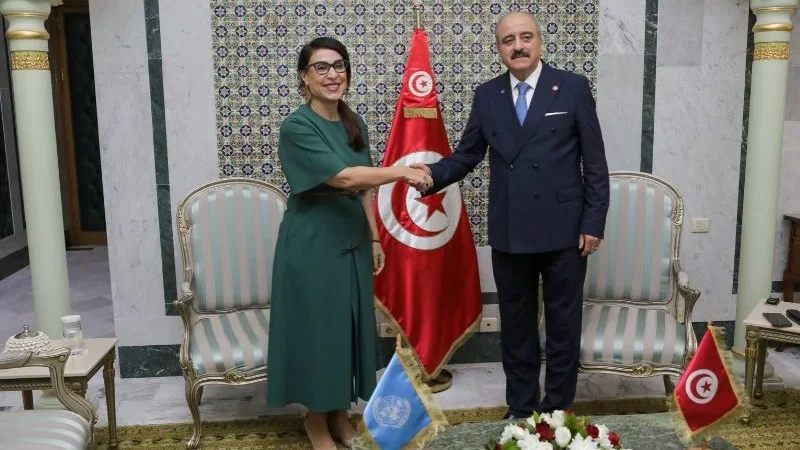
Tunisia and the United Nations have officially signed a huge United Nations Sustainable Development Cooperation Framework (UNSDCF) for the period from 2027 until 2031. Tunisia UN cooperation framework, This historic agreement will be a $444 million investment in the country’s future, and will help lead the way to a modern, resilient economy. Much of this Tunisia UN cooperation plan is allocated for the strategic integration of technology, climate-friendly infrastructure and digital governance throughout the country, and represents an unprecedented paradigm shift in international aid for North African tech ecosystems.
Breaking Down the $444 Million Commitment – Tunisia UN cooperation framework
The new framework adopts a different approach from traditional emergency assistance, with a focus on structural resilience. The budget of $444 million will be implemented in four main axes over the next five years, according to the economies and planning ministry and the UN Resident Coordinator in Tunis in joint statements.
It comes with a budget of more than $120 million, of which more than half is allocated for the digital transformation in Tunisia, which is of crucial importance for the tech sector. This involves investments in modernization of public administration, extending Broadband to rural areas that are not well served and incorporating e-governance systems that use data. The government will upgrade the national digital backbone in order to improve the provision of services to citizens and establish a favourable ground for local technology start-ups and foreign direct investment.
Focus on Tech-Driven Climate Solutions
The second front of the UNSDCF is financial support for environmentally friendly projects that use technology. Tunisia, which is very susceptible to the changes of Mediterranean climate, will get a significant support in the implementation of smart-grid technologies and precision agriculture networks.
The framework includes investments in water management systems, which are part of the IoT (Internet of Things) technology for the purpose of optimizing irrigation systems in agriculture in central and southern governorates, where water is scarce. The project aims to integrate the UN technical know-how with direct investment to implement technology solutions that can have a direct economic effect in reducing the effects of climate change on local food production.
Empowering the Local Startup Ecosystem
In addition to the government infrastructure, the new cooperation framework focuses on the private sector, which can be strengthened by fostering collaboration within the Tunisian startup ecosystem. The UN Development Programme (UNDP) will work with local incubators to give seed funding and high-level technical training to youth-led enterprises.
The project is designed to combat the “brain drain” of engineers and developers from Tunisia, by offering attractive opportunities in the country. Recent regional economic studies indicate that Tunisia can move towards becoming a top destination for digital outsourcing to European markets through enhancing digital literacy and directly investing in tech innovators.
The Agreement on the Cooperation between the United Nations and the state of Tunisia for the period 2027-2031 represents an investment in the future of Tunisia, based on a forward-thinking and pragmatic vision. This strategic partnership will focus on digital transformation in Tunisia and sustainable technology, modernizing public infrastructure and providing Tunisian youth with new technologies to develop their businesses.
FAQs
What is the Tunisia-UN Cooperation Framework for 2027–2031?
It is a strategic five-year partnership worth $444 million that will define ways to support the Tunisian Government’s national development goals and will focus heavily on building economic resilience and investing in technology solutions that build on digitalization, IoT solutions, and climate resilience.
How will the $444 million be used for technology?
A big chunk of the total $444 million will be allocated towards digitalization of public administration, expanding broadband in rural areas and supporting tech entrepreneurs with funds.
Which UN agencies are involved in this framework?
The UN Resident Coordinator led framework includes several UN agencies like UNDP and UNICEF (technology development and education).
Discover More Insights
Explore Cairo inflation middle class impact?
Discover how rising prices are affecting savings and daily life.
Check Algeria power plant deadline extension?
Explore updates on the 1.2GW energy project timeline.
Discover Turkey new electricity tariff changes?
Check how updated pricing will impact households and businesses.
Explore Qatar initiative boosting Syria power?
Discover efforts aimed at strengthening Syria’s electricity generation.
Check Beirut balcony lighting energy tips?
Explore efficient lighting ideas for Ramadan and beyond.