
Morocco’s King Mohammed VI Addresses Parliament Amid Youth Protests
-
The Arab Post
- . October 11, 2025
- . Update: October 11, 2025 5:27 pm
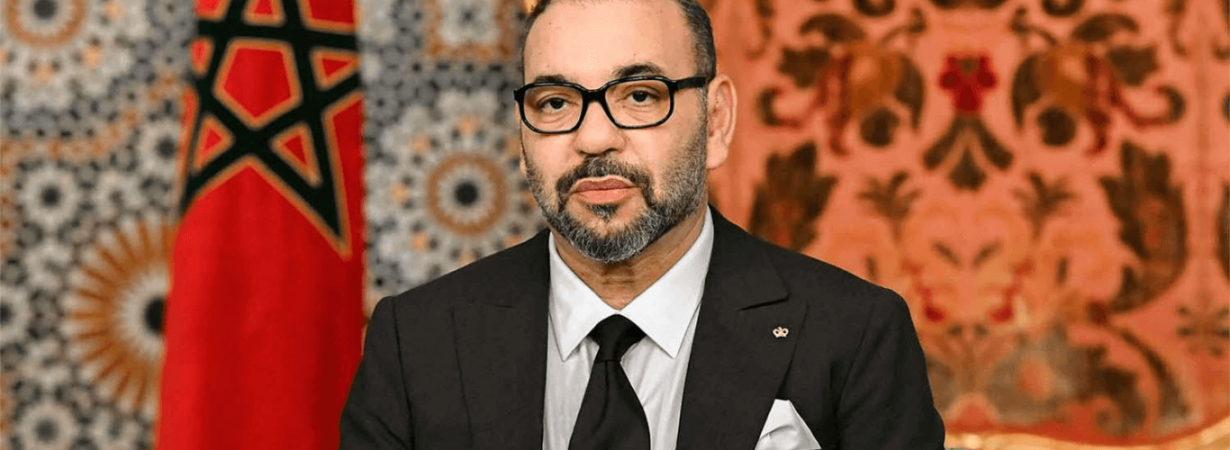
In the address, which was much-awaited, King Mohammed VI offered a deafening youth discontent, while setting out plans for unity within the nation, pressing for accelerated reforms, and calling for institutional accountability.
This speech comes amid ongoing protests by young Moroccans demanding improved public services, job opportunities, and an end to corruption.
Below are significant elements from his speech, with context and implications, as well as critical comments.
Key Themes from the Speech
1. Thanking Parliamentarians & Diplomacy
The King began by thanking parliamentarians for their legislative work, oversight, functioning of the evaluation of public policy and parliamentary diplomacy work. He called for more interlinkage of domestic parliament diplomacy with Morocco’s official state diplomacy.
2. Last Year of the Legislative Cycle
With the term of the House of Representatives close to an end, King Mohammed VI stated that this would be a key year to deliver: completing the legislative agenda, implementing major projects, and vigorously defending citizens’ interests.
3. National Projects Should Not Compete with Social Programs
The key issue: large national projects (infrastructure, sporting investments) should not detract or compete with social objectives to improve the standard and quality of life. The 2 must work together to contribute to development.
4. Responsibility for Informing Citizens of Their Rights
The King emphasised the responsibility of the state to inform and to involve citizens with the understanding of laws, decisions, and policies that directly affect their rights and freedoms.
5. Shared Accountability
The King also framed accountability as a collective responsibility – not just the responsibility of the government, but also parliamentarians (to wear the role of citizen representatives), political parties, elected bodies in municipalities, policy, civil society, and so-called “the vital national forces.”
6. Speed up “Emerging Morocco”
He reiterated, as part of his previously mentioned Throne Speech, the need to expedite the implementation of the next-generation territorial development programs focusing on social and spatial justice and reclaiming territoriality beyond the short cycles of government.
7. Justice & Equal Rights
He insisted that all Moroccans, no matter where they live or what social class they come from, should benefit equally from a political, economic, social and cultural perspective. Growth must be a benefit to all.
8. Development through a Local Lens
Development differences across Morocco’s regions are a true barometer of national unity and progress. He reiterated the imperative of having both urban and rural development – a “win-win” approach.
9. Strategic Action Against Inequalities
Addressing regional and social inequalities is not just a slogan but rather the framework for the action. There cannot be a policy without these commitments being the objectives, and it needs to mobilize the country as a whole.
10. Changing Mindset and Approaches
He wanted to change the mindset: to more oriented toward results, using the data generated in the field, using technology, and working with speed on lists of priority sectors like education, health, employment, youth.
11. Efficient Approach to Investments
The King rejected a wasted approach wherever that involved wasted time, wasted energy, or wasted resources. He stressed that public investments are more effective if you achieve proper results.
12. Attention to Vulnerable Areas
Need to make policies that do not neglect vulnerable regions, such as mountainous areas (roughly ~30% of Morocco) and oases (based on their distinctive geographical and ecological features) using what they produce and supporting geographical solidarity.
13. Considerations for Sustainable Maritime Development
He urged for the optimal application of law and plans for the coast and sea that avoid conflict with rapid economic growth and environmental protection, generating jobs on the beach and in maritime economy.
14. Expansion of Rural Centers
To tackle urban sprawl and decrease the distance of services for rural citizens, the King urged the expansion of emerging rural centers with administrative, social, and economic services.
15. Together in the face of challenges
In a year filled with challenges, he called on both the government and parliament (the majority and opposition) to consider the national interest with integrity, commitment, and selfless responsibility. He also called on the moral accountable of a religious scripture (verses from the Koran) that impose a moral obligation.
Context & Relevance: Why His Speech Matters
Youth Protests & Gen Z 212
In recent weeks, Moroccan youth have mobilized to engage in protests, collectively dubbed Gen Z 212, demanding accountability, improved services (health, education), more jobs, and reduced corruption.
The protests were sparked in part by repeated maternal deaths at a healthcare facility in Agadir, which the protesters reinvoked to highlight a lack of systematic attention.
The protesters also demand:
- Removal of corrupt politicians
- Increased transparency
- More investment in public health and schools
- Addressing regional disparities—especially in marginalised regions
The timeliness of the speech puts it in a precarious position: it wants to appear responsive but maintain authority.
Constraints & Political Structure
In Morocco’s constitutional monarchy, the King sets the substantive policy direction, with the government and Parliament implementing it. The monarchy continues to serve as a symbol and source of legitimacy within the political system.
The King’s call for cooperation across the government, parliament, opposition, media and civil society is an attempt to elevate the parliamentary session beyond partisan strife.
Important Observations and Difficulties
The speech did not specifically address the protests or acknowledge any demands (e.g., resignation of the Prime Minister).
Some youth expressed disappointment in the address being less bold in tone or action than they were anticipating.
Critics might interpret the speech as simply affirming status quo — pushing for the quicker implementation of plans that has been announced — instead of values of restructuring power and significant reforms.
The success will depend on follow-through — quick implementation, real projects in underserved areas, and building accountability within institutions.
Implications & What to Watch
The speed of implementation
Observers will be watching to see if the government speeds up the local development programs, in particular in fragile contexts.
Actual reforms
Will budget allocations and legislation really shift in favor of social programs, health, education, and regional equity?
Youth response
Whether or not youth protesters view the address as a “good signal” to consolidate or get back to their homes and effectively quell protests will impact social stability.
Institutional change
Any change in the role of parliamentarians, oversight bodies, or the media could indicate further changes to governance.
International consideration
Morocco’s stability is important to regional politics, and how the monarchy manages “this moment” will take a toll on international perceptions.
Conclusion
King Mohammed VI’s speech to Parliament attempts to balance the urgency of a mobilised youth movement with Morocco’s long-term development plans. He calls for a focus on concepts of unity, shared responsibilities, territorial justice, and effectiveness of institutions. But words matter little if these promises are not translated into cities, towns, villages, and rural areas, especially for marginalised communities.