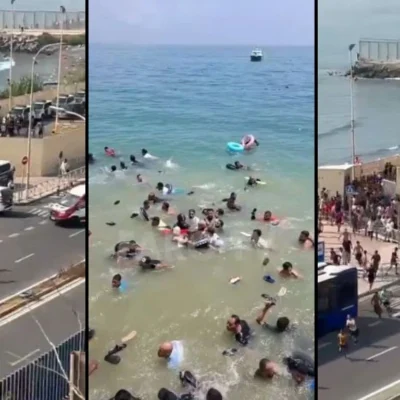

Ceuta Migration Emergency: Spain Deploys Armed Forces After 49,000 Cross Border
-
Dhivyanshu
- . July 31, 2026
- . Update: July 31, 2026 4:30 pm
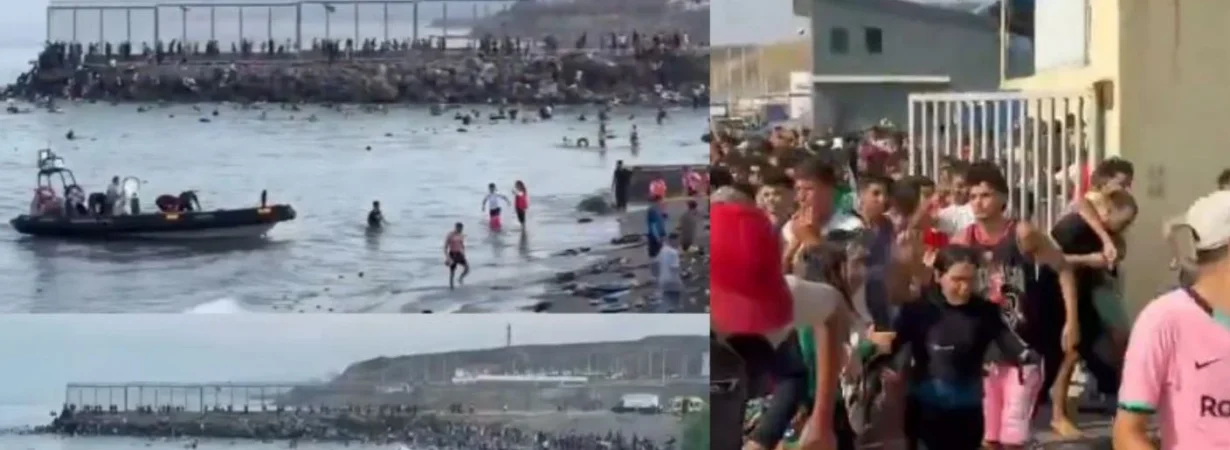
Spain is dealing with one of the most severe humanitarian and border control emergencies in its modern history, honestly. Spain military deployment Ceuta, After an unprecedented wave of Morocco-to-Spain border crossings, the government has now ordered a Spain military deployment in Ceuta to “restore order” and get things under control, at least on paper. In a staggering 24-hour window, an estimated 49,000 individuals breached the North African enclave. Tragically, this massive Ceuta migrant crisis has already led to 18 confirmed casualties. And as local resources begin to buckle under the pressure, international attention stays pinned on how Madrid and Rabat will manage this rapidly unfolding humanitarian disaster
Understanding the Unprecedented Ceuta Migrant Crisis
The sheer volume of arrivals has completely overwhelmed local authorities and emergency responders, it seems. As per official estimates from the Spanish Ministry of the Interior, roughly 49,000 migrants crossed into the small territory via land and sea routes in just one day. This stream didn’t really pause either; it continued through the night without much break.
Spain Military Deployment Ceuta: Madrid’s Swift Response
To frame this in perspective, the heavily publicized diplomatic rift in 2021 involved around 8,000 arrivals over two days. What is happening now is far bigger, and it forms an immediate catastrophic bottleneck. Thousands of people, including vulnerable unaccompanied minors, have been left sleeping in public parks, and even on sidewalks, with no shelter available right away.
Prime Minister Pedro Sánchez and Interior Minister Fernando Grande-Marlaska immediately mobilized to oversee the containment work on the ground. Meanwhile, regional leaders were pushing hard for a formal national emergency declaration, but the central government is now handling the crisis via coordinated, inter-agency protocols. The Interior Ministry also stated that current legislation does not automatically treat migration inflows as a national security threat, even with the extreme scale of what’s happening.
Tragic Casualties at Tarajal Beach
The desperate scramble to reach European soil has exacted a brutal human price. Authorities have confirmed at least 18 deaths directly tied to this wave of Morocco-to-Spain border crossings. Per international reporting practices followed by agencies like Reuters, bodies were recovered from the waters near the border, and others tragically died in a severe stampede near the Tarajal beach breakwater fence.
- Total Arrivals: Roughly 49,000 individuals within 24 hours.
- Confirmed Fatalities: At least 18 casualties so far, with the figures possibly going up.
- Key Flashpoints: Breakwaters at Tarajal beach and nearby local roadways.
- State Action: Spanish Armed Forces were deployed together with the Civil Guard.
The Geopolitics of Morocco to Spain Border Crossings
Ceuta, with the nearby city of Melilla, kind of counts as the only EU land border with Africa. Spain has kept control of Ceuta since 1580, but Morocco insists it’s occupied territory. So you get this old, deep-rooted territorial quarrel that periodically turns into sharp geopolitical tension, not just some small disagreement.
In the background, border institutions, for example the European Border and Coast Guard Agency (Frontex) and the European Commission, keep a close eye on these flashpoints. There’s also a pattern where sudden easing of border controls gets used like a diplomatic lever between Rabat and Madrid, in a way that’s not always very subtle. At the same time, humanitarian groups, including the UN Refugee Agency (UNHCR), are calling for swift action, basic rights protections, proper processing, and shelter for people who are stuck inside the enclave.
Right now the ongoing Ceuta migrant crisis feels like a true turning point, both for Spanish sovereignty and for European border policy. With a historic Spain military deployment for Ceuta now underway, attention has to move quickly toward stabilizing the humanitarian emergency and handling the 49,000 arrivals that are already there. And as everyone is watching from outside, making the Morocco-to-Spain border crossings steady will mean heavy diplomatic talks, strong humanitarian support, and longer-term strategic solutions, not just short fixes.
FAQs – Spain military deployment Ceuta
Q1: Why is there a Spain military deployment Ceuta?
A: The Spanish government went ahead and deployed the Spanish Armed Forces to help local authorities, plus the Civil Guard, after an unprecedented 49,000 migrants got across into the enclave within 24 hours, basically leaving the city’s infrastructure completely overruled, and you know just overwhelmed.
Q2: How many casualties occurred during the Ceuta migrant crisis?
A: Authorities have confirmed at least 18 deaths. A lot of the casualties, came from drownings and then a kind of stampede near the Tarajal beach border fence.
Q3: Why are Morocco to Spain border crossings significant?
A: Ceuta is the only European Union land border located in Africa. When mass crossings happen, they often bring into focus deeper diplomatic strain between Spain and Morocco over sovereignty, and also cooperation on border control.
Discover More Insights
Explore Cairo inflation middle class impact?
Discover how rising prices are affecting savings and daily life.
Check Algeria power plant deadline extension?
Explore updates on the 1.2GW energy project timeline.
Discover Turkey new electricity tariff changes?
Check how updated pricing will impact households and businesses.
Explore Qatar initiative boosting Syria power?
Discover efforts aimed at strengthening Syria’s electricity generation.
Check Beirut balcony lighting energy tips?
Explore efficient lighting ideas for Ramadan and beyond.