
Four Years of Fragile Calm at Risk as Yemen Edges Toward War
-
The Arab Post
- . August 14, 2026
- . Update: August 14, 2026 4:52 pm
A truce, unnoticed by most people outside the region, kept the front lines in Yemen quiet for four years. It was never signed as a permanent peace, and technically expired long ago, but it held, saving millions of Yemenis from a return to the intense fighting that defined the decade before it. That calm is unravelling. Yemen War Risk of a return to large-scale conflict than at any point since a 2022 truce began, with the fighting between the Houthis and Saudi Arabia intensifying and the broader war involving Iran spilling over Yemen’s borders, the United Nations Special Envoy for Yemen told the Security Council this month.
How a decade of war fell silent
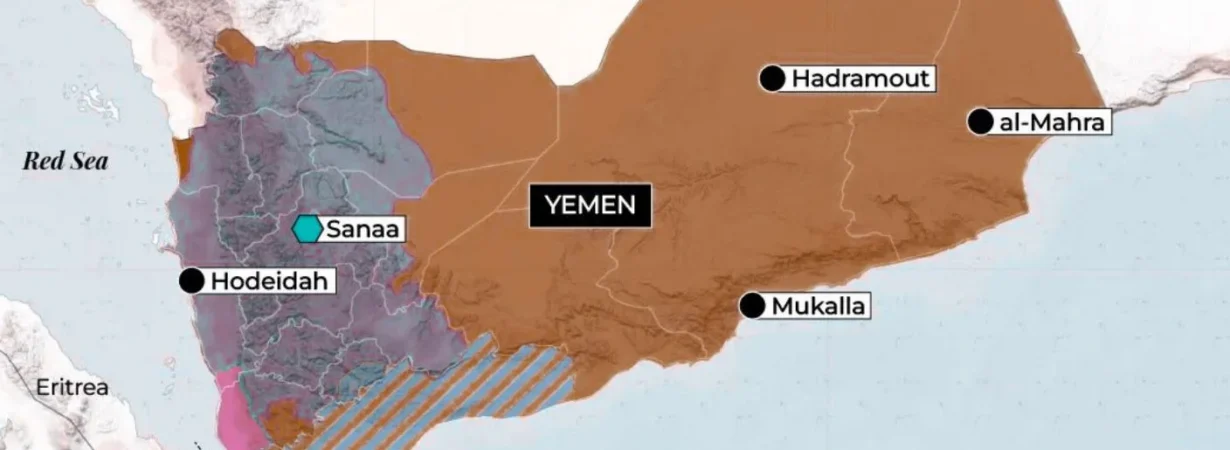
Yemen’s civil war erupted in 2014 when the Houthi rebels, also known as Ansar Allah and backed by Iran, seized the capital Sanaa and much of the country’s north, against a Saudi-led coalition supporting Yemen’s internationally recognised government.
The fighting was fierce for years before a UN-brokered truce was agreed in April 2022, freezing the lines of conflict that still roughly define the north-south divide in the country today. Yemen itself was comparatively calm, even as turmoil engulfed the rest of the region, providing a rare relief for civilians after years of war.
The Spark that Re-ignited Tensions
The crisis dates back to July 13, when the Houthis accused Saudi Arabia of bombing Sanaa International Airport to stop an Iranian plane from landing. The plane was said to have been carrying Houthi officials coming back from the funeral of a senior Iranian leader.
Houthi spokesman Yahya Saree condemned the strike, saying the time of de-escalation with Riyadh was over. The Houthis hit back with drones and missiles at Saudi Arabia’s Abha International Airport, which the kingdom said it intercepted, and said Saudi airspace would stay unsafe until restrictions are lifted on Sanaa airport. Tensions were already high before that exchange, with the Houthis threatening to restart the war if Riyadh lifts what they call a siege on Yemen, resumes public sector salary payments and pays war reparations.
Escalation on several fronts – Yemen War Risk
Instead of a single flashpoint, what has emerged is a series of intensifying clashes on multiple fronts simultaneously. Houthi attacks in Yemen’s Marib and Hadramout provinces killed at least thirty pro-government troops and wounded around fifty others, one of the most serious escalations since the 2022 truce took hold. Then, hours later, a second wave of Houthi strikes within Saudi Arabia wounded 11 civilians.
The Houthis struck a cargo ship at sea in the Bab el-Mandeb Strait, killing several crew members, while a separate Houthi attack killed two members of Yemen’s Coast Guard. Yemen’s internationally recognised government is not interested in a new truce that merely replicates previous arrangements, Rashad al-Alimi, chairman of Yemen’s Presidential Leadership Council, said in response to the UN’s announcement, indicating little appetite in Sanaa’s rival government for another temporary fix.
Yemen is caught up in a wider regional war
Much of this escalation is indistinguishable from the broader conflict with Iran that flared up earlier in 2026. The Houthis had ceased attacks on Israel after the Gaza ceasefire but in March renewed firing ballistic missiles at Israeli targets, saying it was in solidarity with what they call resistance fronts across the region.
At the same time, damage to shipping through the Strait of Hormuz has magnified the strategic importance of the Red Sea corridor for global energy markets, meaning that any Houthi strike against vessels off Yemen will have much greater consequences than it otherwise might. Analysts say the Houthis are probably calculating how much help Iran can give them, the likelihood of a military response from the US or regional powers, and the risks of a full-scale return to war.
Why This Truce Was Destined To Be Fragile
Ever since the Houthis first entered the Gaza war in solidarity with Hamas, leveraging Red Sea shipping attacks, Yemen’s peace process has been effectively in suspended animation. The 2022 truce was designed as a short-term de-escalation tool, not a final settlement, and was already strained by frequent disputes over public salaries, reconstruction funds and airport access before the current crisis.
A separate US-Houthi ceasefire brokered by Oman in May 2025 to halt American airstrikes on Yemen has technically held, but it never addressed the underlying Houthi-Saudi standoff that is now driving the latest escalation.
What Happens Next
UN officials have been blunt about the stakes. The situation was more serious than at any point since the truce began, Grundberg told the Security Council, highlighting stepped-up military activity along the frontlines and the risk that Yemen’s civilian population, already among the most vulnerable in the world after a decade of war, could be drawn back into the “vortex” of the wider regional conflict.
Saudi Arabia and the Houthis are trading direct hits for the first time in years, Yemen’s government is rejecting a repeat of past truce arrangements, and Iran’s own war with Israel is still unresolved. The coming weeks will likely determine whether Yemen’s four years of fragile calm can be salvaged, or whether the country is headed back into the kind of large-scale conflict it has spent a decade trying to escape.
Discover more Insights
Explore Iran War Lessons Globally?
Explore how the 2026 Iran war reshapes global power and strategy.
Discover Iran Delay Strategy Tactics?
Discover how Iran uses delay, repression, and proxy influence.
Check Trump Iran Strategy Importance?
Check why Trump’s Iran strategy depends on Gulf allies.
Explore Iran Military Warning Signals?
Explore rising warnings from Iran alarming global powers.
Discover Sudan Iran Axis Threat?
Discover how the Sudan-Iran axis raises serious regional concerns.