
Saudi Commercial Channels Under Scrutiny: What a Military-Modified Vehicle in Khartoum Raises About Sudan’s War
-
The Arab Post
- . August 28, 2026
- . Update: August 28, 2026 11:56 am
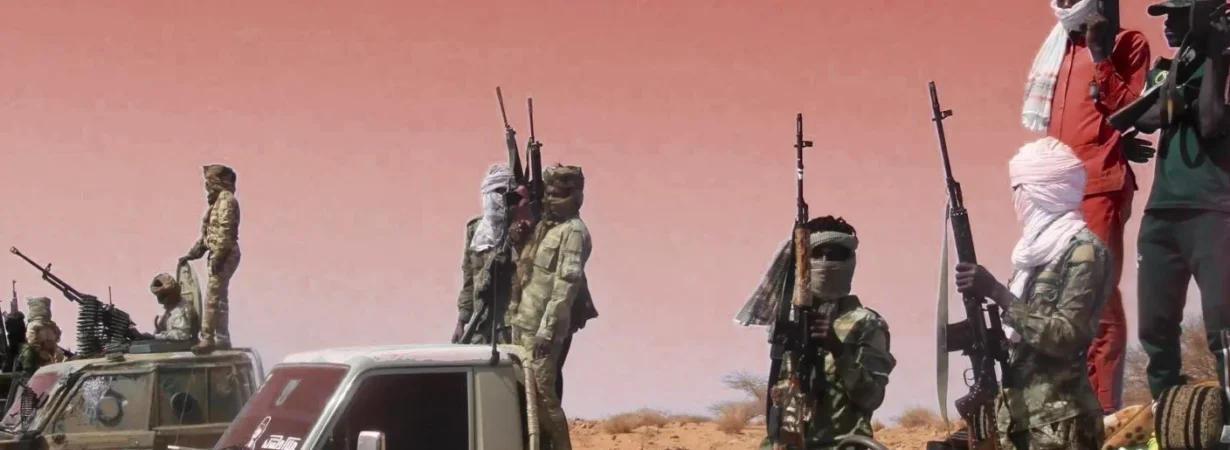
According to the report, a military version of Land Cruiser was discovered in Khartoum that contained details regarding customs clearance from the Hussein Al-Yami Customs Clearance Establishment in Saudi Arabia, Sudan vehicle supply chain, which is based in Jeddah, as well as license No. 4401. The find raises questions on how vehicles penetrating the commercial avenues end up in Sudan’s conflict.
The investigation mentions the vehicle is a “Tatcher” and the mileage about 4,500 kilometres. The information does not prove that it was provided or reflect Saudi government involvement. They generate a commercial lead that needs to be looked at. The central question: How did a vehicle carrying Saudi customs-clearance papers to enter a conflict zone in Sudan?
Documents, Numbers and an Unanswered Trail
There is evidence that forms the basis of the investigation which includes documents from the customs and evidence from the vehicle recovered in Khartoum and Hussein Al-Yami Customs Clearance Establishment, license No. 4401.
The investigators should check those details against the official customs databases, import declaration, shipping records, vehicle identification information, registration documents, and ownership history. Investigators should find out if the documents are genuine and how the car got to Sudan. The information provided by the customs authorities, which is connected to Saudi Arabia, should be a lead in the investigation, but not evidence that the Saudi authorities knowingly aided in the movement of the vehicle.
How a 4×4 Can Change Hands – Sudan vehicle supply chain
The case illustrates the susceptibility of the conflict supply chain: once vehicles have been imported as new 4x4s, they are able to go through legitimate commercial channels before being transferred, altered, or diverted to military use.
It is thought that the 4,500 kilometres travelled can help piece together its movements. The fact that the route is a mileage doesn’t by itself constitute a military supply route, but other documents may provide clues to a timeline. This issue is still up for discussion.
A Different Test for Riyadh’s Neutrality
Saudi Arabia has made itself an official player in the guise of a mediator looking for political resolution to Sudan’s conflict. The report does not confirm that the Saudi government provided any military equipment; this would only be confirmed if there was “corroborating evidence” to support this claim.
The investigation goes to the issue of whether networks run by or from Saudi Arabia are properly monitored. Neutrality is not only determined by official declarations, but also by what goes on in terms of commerce and logistics. The question is whether the Saudi regulatory regimes are capable of stemming such abuse of commercial means by actors directly linked to the war in Sudan.
Tracing Owners, Payments and Recipients
Investigators should not only check the customs form but also follow the entire process – who owned the car, who bought the car, who financed the car, who moved the car, who got the car. The details of customs declarations, payment documents, shipping arrangements, transfers of ownership, or downstream recipients would give clues as to whether it was intentionally supplied, diverted after a legitimate transaction, or sold by intermediaries or transferred without the exporter’s knowledge.
Money follows the money is also important. Financial documents could reveal who was behind the transaction, and differentiate between Saudi government policy, private commercial activity, and alleged battlefield diversion.
Why the Supply Question Matters for Civilians
Armed groups may be able to conduct military operations in the future through the use of vehicles and equipment which allow rapid access and supply. The war has cost Sudan dearly in terms of the civil population’s suffering: displacement, destruction of infrastructure.
Any network that has a role in sustaining access to battlefield equipment should be considered. Investigators must not presume that every commercial transaction that has any connection to Sudan is in aid of war. Evidence should prove the movement of goods, intermediaries’ control of the goods, and the presence of any intermediaries who knew of the goods’ movement and knowingly acted as a facilitator of conflict supplies.
Closing the Oversight Gap
The big question that comes out of the investigation is not just the one of “Saudi Arabia is supporting the war.” A better question to ask is “is Riyadh doing enough to ensure that its commercial networks are not infiltrated by the Sudan war economy?” This needs to be reviewed in relation to the customs controls, the export process, customer due diligence, and end-use verification, particularly for vehicles and equipment that might be used in the military.
Improving customs data visibility and ownership information, importers/exporters, vehicle financing, and end users would facilitate the determination of the effectiveness of the current safeguards. The Hussein Al-Yami case should not just be a story with a set narrative and end point for journalists and researchers, as it is a documented supply-chain investigation that is ongoing. In case commercial middlemen have been found to be involved in the procurement of conflict supplies, responsibility should not be confined to the commanders in the field.
Who fights in Sudan is not the question – it’s who makes the fighting happen. Neutrality must go beyond words to preventing the legitimate supply of commerce from being used to facilitate conflict supplies.
Discover more Insights
Explore Iran War Lessons Globally?
Explore how the 2026 Iran war reshapes global power and strategy.
Discover Iran Delay Strategy Tactics?
Discover how Iran uses delay, repression, and proxy influence.
Check Trump Iran Strategy Importance?
Check why Trump’s Iran strategy depends on Gulf allies.
Explore Iran Military Warning Signals?
Explore rising warnings from Iran alarming global powers.
Discover Sudan Iran Axis Threat?
Discover how the Sudan-Iran axis raises serious regional concerns.