

Government Forces Stand Firm Against Houthi Offensive on Yemen’s Western Front
-
The Arab Post
- . September 3, 2026
- . Update: September 3, 2026 10:34 pm
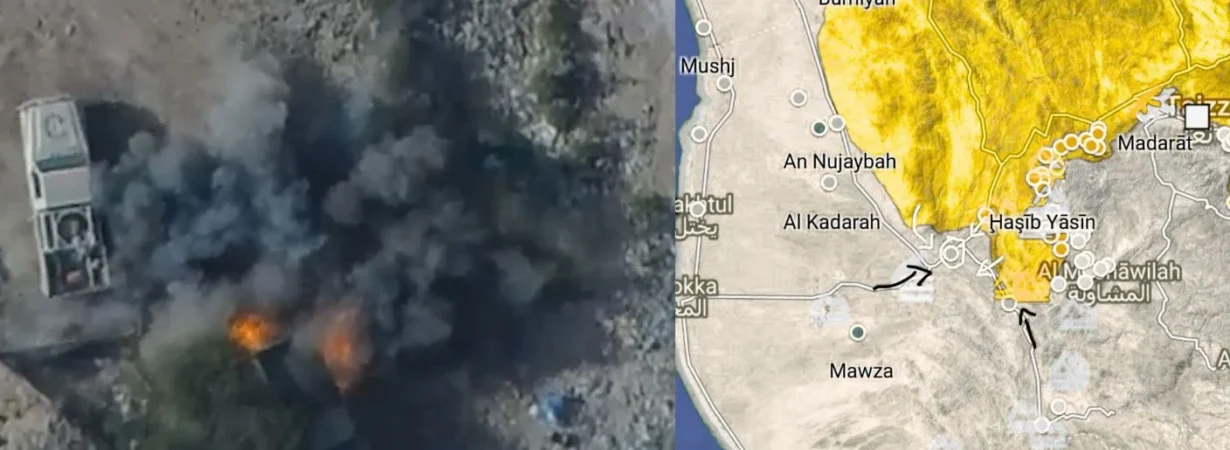
Yemen’s Iran-backed Houthi militia launched 14 ballistic missiles alongside coordinated drone attacks targeting government-held areas along the Red Sea coast in Taiz and Hodeidah provinces on Thursday.
Houthi attacks repelled in Yemen frontline war, Yemeni Armed Forces said several drones were intercepted over the Taiz front using newly acquired air defence systems, while the ballistic missiles caused no impact on the combat operations theatre of forces stationed on the western coast. Ground battles against the Houthis continued regardless, with army units reporting a high level of combat readiness across multiple sectors.
Yemeni forces also said they had suppressed sources of hostile fire in the Al-Qadaha sector of the Al-Bar front in western Taiz, another sign that government positions held firm despite the scale of the barrage.
A Front That Has Been Building for Weeks
Thursday’s exchange is the latest flashpoint in an escalation that has been gathering pace since July, when the Houthis declared a maritime blockade on Saudi Arabia and began attacking Saudi-linked vessels in the Red Sea. Since then, fighting has spread across Marib, al-Jawf, Hadramout, Hodeidah, Taiz, al-Dhale, and Lahj provinces, with the Yemeni government reporting more than 100 military operations against Houthi positions in a single 24-hour period during one particularly intense stretch in mid-August.
The western coast has drawn particular attention. Houthi missile and drone strikes on the port city of Mokha killed several soldiers and civilians last month, and Hodeidah’s governor survived an assassination attempt after a Houthi ballistic missile struck his residence in al-Khokha. Yemeni political activist Riyadh Aldubai has described the current wave of attacks not as a passing escalation but as a deliberate campaign to damage Yemen’s economic institutions and infrastructure.
Troop Movements Signal a Bigger Push May Be Coming
Field reports from Thursday indicate Houthi ground forces have been moving from Dhamar and Ibb toward Red Sea coastal areas in Hodeidah and near Mocha, a pattern military sources say points to an intent to reach territory near the Bab al-Mandab strait and seize coastal areas currently held by government forces.
Yemeni naval forces reported destroying three Houthi boats loaded with explosives in the Red Sea the same day, along with a separate vessel carrying drone-launching equipment on the western coast, underscoring how much of the fighting is now playing out at sea as well as on land.
Why the Western Coast Matters So Much
Current frontlines along Yemen’s west coast have remained largely unchanged since government-aligned Joint Forces withdrew from positions around Hodeidah city in November 2021, redeploying south toward al-Khokha under restrictions tied to the 2018 Stockholm Agreement.
That relative stability is now under real strain. Mocha’s proximity to one of the world’s most important maritime corridors gives the city both military and commercial weight, and control over these coastal districts effectively determines who can threaten shipping through the southern Red Sea.
A Warning From the UN
The scale of the current escalation has drawn direct concern from international mediators. UN envoy Hans Grundberg warned last month that Yemen faces a greater risk of renewed large-scale conflict than at any point since the UN-brokered truce of April 2022, cautioning that the current fighting risks unravelling the gains made under that fragile agreement.
The Saudi-led coalition has responded to Houthi escalation with its own strikes on Houthi-controlled Hodeidah and Kamaran island, while reinforcing Yemeni troops along front lines, according to Yemeni officials.
Where Things Stand Now – Houthi attacks repelled in Yemen frontline war
For now, government forces on the western front appear to be holding their ground against an intensifying campaign of missile and drone strikes, even as Houthi ground movements suggest further pressure is likely.
Whether the current exchanges remain contained to strikes and counter-strikes, or tip into the kind of large-scale ground offensive some Yemeni officials and analysts have warned is being prepared, will likely become clearer in the days ahead.
FAQ
What happened on Yemen’s western front this week?
The Houthis fired 14 ballistic missiles and launched drone attacks on government-held areas in Taiz and Hodeidah provinces; Yemeni forces intercepted several drones and said the missiles caused no impact on their coastal positions.
Why is fighting concentrated on Yemen’s west coast?
The coast, including cities like Mocha and Hodeidah, sits near the Bab al-Mandab strait, a critical Red Sea shipping corridor, making control of the area both militarily and economically significant.
How serious is the risk of the conflict escalating further?
UN envoy Hans Grundberg has warned Yemen faces its highest risk of renewed large-scale conflict since the April 2022 truce, with Houthi ground force movements toward the coast raising concern about a broader offensive.
Discover more Insights
Explore Iran War Lessons Globally?
Explore how the 2026 Iran war reshapes global power and strategy.
Discover Iran Delay Strategy Tactics?
Discover how Iran uses delay, repression, and proxy influence.
Check Trump Iran Strategy Importance?
Check why Trump’s Iran strategy depends on Gulf allies.
Explore Iran Military Warning Signals?
Explore rising warnings from Iran alarming global powers.
Discover Sudan Iran Axis Threat?
Discover how the Sudan-Iran axis raises serious regional concerns.