

Beyond the Strait of Hormuz: What Iraq’s Surging August Oil Exports Mean for Asian Markets
-
The Arab Post
- . September 5, 2026
- . Update: September 5, 2026 7:49 pm
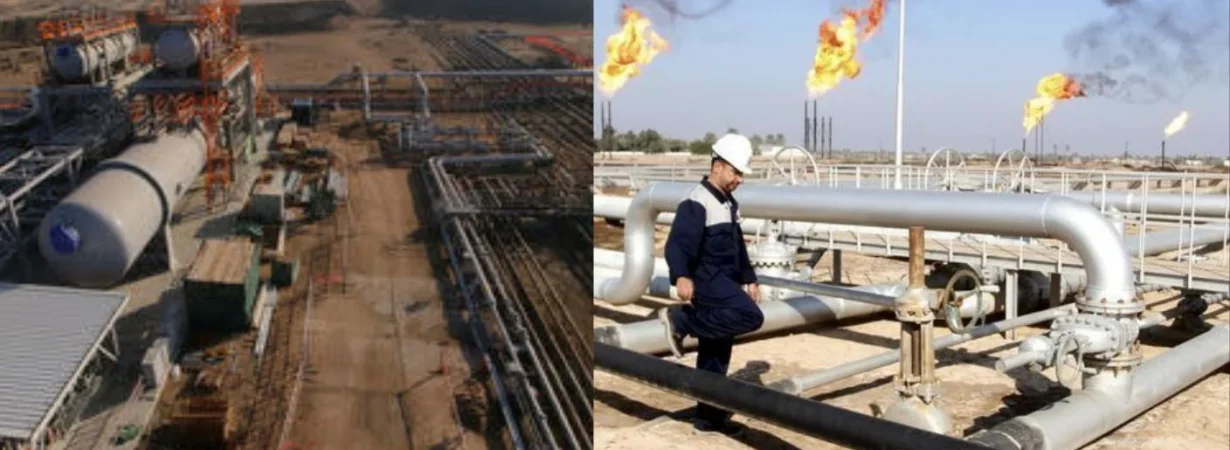
The regional shipping crisis in late February 2026 caused global energy markets to go into shock once shipping in the Strait of Hormuz was nearing closure. Over the past few months, Iraq, the second-biggest supplier in the OPEC, had its lifeline cut down on its sea lanes. However, a dramatic change came in August of 2026. Against all the odds in the geopolitically volatile Middle East, Iraq oil exports increased by an impressive 73%, to 73 million barrels per month. The surge back to 2.34 million bpd is not only a lifeline for Baghdad’s national budget, but also a big windfall for Asian markets. Why this surprising increase is important and who will benefit the most.
The Mechanics Behind the Rebound
The export boom of Iraq was a coup: an aggressive commercial strategy with a stealthy bilateral approach.
Deep Discounts and Special Transit Permits
The State Organization for Marketing of Oil (SOMO) adopted a new bold approach to counter the physical blockage of the Strait of Hormuz. SOMO sold Basrah crude at tremendous discounts of $30-$25 a barrel. This enabled purchasers to offset the extremely high shipping and insurance costs for negotiating the dangerous waters of the Gulf.
At the same time a small diplomatic success enabled the flow to resume. A small number of Iraqi tankers were given special permission to safely travel the Strait of Hormuz by Iran. This agreement is tenuous at best, but in that one month it returned more than $4.5 billion worth of Iraqi crude back to the international market.
Why Asian Markets Are the Biggest Winners
With the return of cheap Iraqi crude, the economics of energy consumption is being reshaped in the East. While foreign buyers in the west are reluctant to buy from the Persian Gulf, the Chinese and Indians are waiting in the queue.
- India’s Strategic Advantage: Indian refineries are especially tailored to process high-sulphur, heavy crude oil. For example, companies such as Reliance Industries and Bharat Petroleum Corporation Limited (BPCL) filled up millions of barrels in August alone. This reduced feedstock cost alleviates the significant inroads this cost had made into gross refining margins for these companies this year.
- China’s Massive Appetite: China’s state and independent oil refiners, such as PetroChina and Rongsheng, reportedly locked in a minimum of 16 million barrels for September. These traders are profiting from the substantial margin they are able to achieve by buying at SOMO’s deep-discount prices, and are making as much as $10 a barrel on top of the regional benchmark quotes.
(To keep abreast of how the world’s oil trade agencies are reacting to the changing situation, watch the official channels of the IEA):
Capping the Global Risk Premium
The August export surge offers much-needed macroeconomic relief, not just to the markets in Asia. The 2.34 million b/d return to market will help to ease geopolitical risk premium for Brent crude.
The International Energy Agency (IEA) has noted that it is vital that the big OPEC producers continue to supply the market in order to avoid inflationary energy price shocks. The US Energy Information Administration (EIA) has always emphasized its importance to this stability and its significance in the supply of oil to Asia.The US Energy Information Administration (EIA) has always highlighted its importance and its role in the supply of oil for Asia. For now, a big oil shock has been postponed thanks to the temporary flow of oil.
The Structural Risks: Is This Recovery Sustainable?
The August figures are good to celebrate, but industry experts at Reuters state there is still a structural outlook. The current flow depends on all and any temporary Iranian transit permits—these can be suspended at a moment’s notice.
The Iraqi state must diversify its logistics in order to develop resilience.The state of Iraq should diversify its logistics for the sake of developing resilience. But steps are already being taken under the auspices of the Ministry of Oil:
- Ship-to-Ship Transfers: SOMO recently introduced the ship-to-ship transfers operations in the near coast environment to safely navigate the inner Gulf.
- The Turkey Pipeline: A new contract with Turkey will ensure at least 750,000 barrels per day through the northern pipeline with OPEC compliance metrics.
Iraq’s dramatic turnaround with oil exports in August 2026 is an example of the impact of commercial incentives and behind-the-scenes diplomacy. The Iraqi regime was able to squeeze through the dangerous Strait of Hormuz and provide a massive economic boost to Asian markets by selling Iraqi crude at massively discounted rates. But until permanent alternative logistics, such as the northern pipeline and Oman’s ship-to-ship transfers, are developed and scaled up, this key energy corridor is exposed to regional geopolitics. The windfall that China and India refiners are enjoying now is quite profitable, but their quest to permanently circumvent the Strait of Hormuz is still a long way off.
FAQs – Iraq oil exports
Q1: Why did Iraq oil exports surge in August 2026?
Iraq’s oil sales rose after large price cuts of as much as $30 per barrel were posted by SOMO. At the same time, Iran let some shipments pass on a temporary basis through the Strait of Hormuz.
Q2: Which countries are buying this discounted oil?
China and India are the main buyers of this cheaper crude. PetroChina and Reliance Industries are among the firms moving Iraqi oil to raise their refining margins.
Q3: Is the Strait of Hormuz safe for shipping again?
No, the Strait of Hormuz is not really safe right now. The wider regional fight is still going on. The shipment numbers depend on short-term understandings between sides, not on solid long-term safety at sea.
Discover More Insights
Explore Cairo inflation middle class impact?
Discover how rising prices are affecting savings and daily life.
Check Algeria power plant deadline extension?
Explore updates on the 1.2GW energy project timeline.
Discover Turkey new electricity tariff changes?
Check how updated pricing will impact households and businesses.
Explore Qatar initiative boosting Syria power?
Discover efforts aimed at strengthening Syria’s electricity generation.
Check Beirut balcony lighting energy tips?
Explore efficient lighting ideas for Ramadan and beyond.