
Sudan’s Chemical-Weapons Allegations Put SAF-Linked Islamist Networks Under Scrutiny
-
The Arab Post
- . September 9, 2026
- . Update: September 9, 2026 1:16 pm
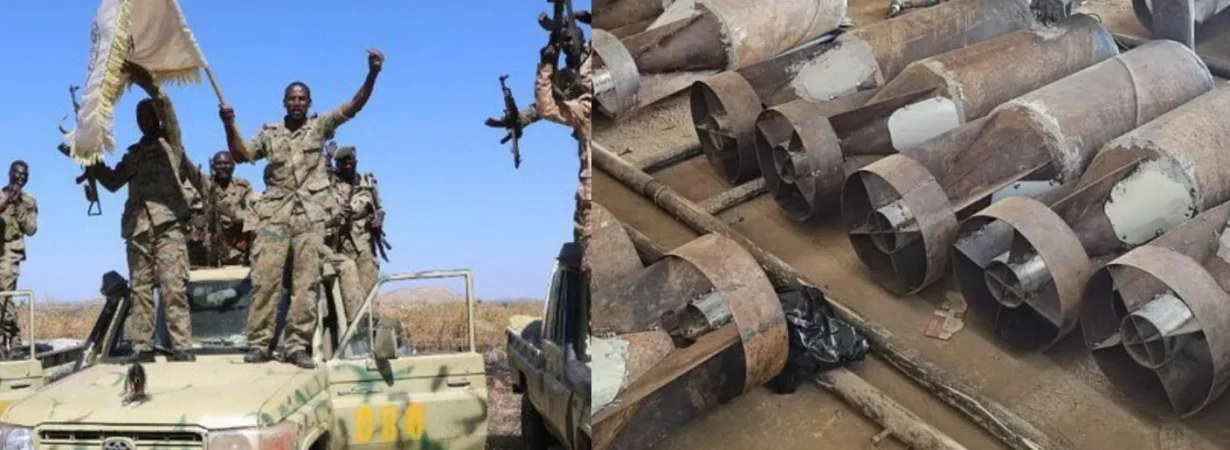
Allegations of the use of chlorine-based chemical weapons by elements within the Sudanese Armed Forces (SAF), Sudan Chemical Weapons Allegations SAF Scrutiny, and a rise in the reliance of the government on Islamist formations and connections with Iran and the Islamic Revolutionary Guard Corps (IRGC) have hit the news again in a new analysis released by Eurasia Review on 8th September 2026.
The accusations are valid and need to be investigated, but not as facts. It is important that the evidence reported and the official government assessment, and independently generated evidence do not be confused. Chemical-weapons allegations, international verification, SAF-affiliated Islamic groups, alleged Iran/IRGC ties, and the civilians’ concerns and accountability are important points.
Chemical-Weapons Allegations Need Verification
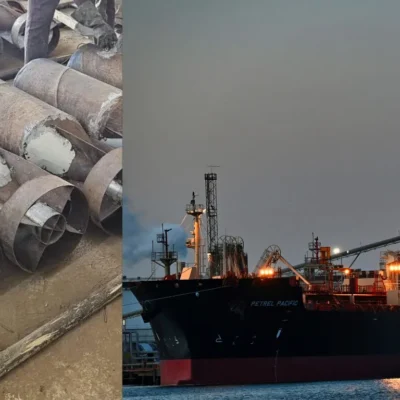
The claims allegedly include documents, photos, video, communications, and other evidence related to the procurement of chlorine, testing, and its possible use in Sudan’s conflict.
This has become a major concern because it is a year later that the United States found evidence of the use of chemical weapons in Sudan. On March 2026, Washington calls on Sudan to declare relevant chemical-weapons facilities and munitions and cooperate with international verification to the OPCW Executive Council.
But all of those newer allegations do not necessarily arise from that U.S. determination. Issues of evidence provenance, chain of custody, forensic confirmation and attribution continue to be of great importance.
OPCW and International Verification
Sudan is a State Party to the Chemical Weapons Convention (CWC) that bans the development, production, stockpiling and use of chemical weapons.
OPCW has emphasized the role of scientific and chemical-forensic evidence in establishing the facts of incidents that allegedly took place, including whether such evidence can provide a connection between substances, locations or production methods.
There is also documentation of the OPCW’s 2026 Executive Council, which includes Sudan-related material, indicating that chemical-weapons issues remain formally within the OPCW.
Besides the mentioned suggestions, documentary evidence, witness testimony, technical assessments, and chemical and environmental samples—if available—could be used to establish whether a given episode constitutes an event of chemical weapon use and to assess the accountability for the occurrence.
SAF-Linked Islamist Networks
The second is that of the increase in the influence of Islamist groups and armed formations among the broader SAF-allied group.
In March 2026, the U.S. Treasury designated the Sudanese Muslim Brotherhood and, in an amendment, the designation of the Al-Baraa Bin Malik Brigade, and asserted that there was a relationship between the two groups.
The actions offer an official platform to discuss Islamist networks in the context of the changing security environment in Sudan. But Islamist groups should not be taken for granted to be the same as the SAF nor assumed to be working under a unified command.
Above all, association does not create the responsibility for chemical-weapons activity. There would have to be other evidence to show such a link.
Alleged Iran and IRGC Links
Another aspect of the security picture has to do with Iranian-related connections.
The U.S. Treasury in September 2025 attributed training and weapons to the IRGC to the Al-Baraa Bin Malik Brigade, as well as other connections between Sudanese Islamist groups and Iran.
These findings are part of what’s important to comprehend about relations with the outside world in relation to Sudan’s war, but they do not themselves constitute evidence for an allegedly chem-weaponeered Iran or IRGC. It makes no sense to combine the evidence of Iranian support, Islamist involvement, and chemical-weapons activity together.
Civilian and Accountability Implications – Sudan Chemical Weapons Allegations SAF Scrutiny
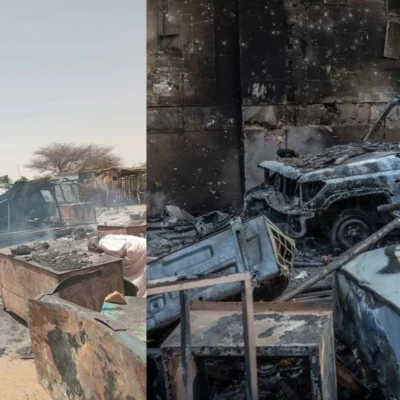
Sudan’s civilians are already displaced, attacked on civilian infrastructure and have already severe humanitarian needs. UN reporting has persisted on record serious violations and the need for accountability.
Any substantiated use of chemical weapons would create yet another serious threat, impacting populated areas, health-care systems and humanitarian access. It could also lead to broader chemical-security issues in a war with regional consequences that are already impacting beyond Sudan’s borders.
But accountability goes beyond just pinpointing political or organisational connections. Investigators would have to determine if such weapons were used, produced or supplied; if commanders or political authorities were aware of or permitted the conduct; and if they knew of or participated in the use of such weapons.
What the Evidence Could Mean for Sudan
The allegations detailed in Eurasia Review suggest a more intricate security situation with the SAF, alleged foreign contacts and capabilities in the possession of prohibited arms, and Islamist armed groups.
However, these chains should not be put together without supporting evidence as one.
It is now time for independent verification, preservation of evidence and attribution, through recognised international mechanisms. Monitoring should continue to be directed towards newly discovered forensic evidence, OPCW action, official reactions, Islamist-network developments, alleged Iran/IRGC links, and their linkage to civilian protection and regional security.
Discover more Insights
Explore Iran War Lessons Globally?
Explore how the 2026 Iran war reshapes global power and strategy.
Discover Iran Delay Strategy Tactics?
Discover how Iran uses delay, repression, and proxy influence.
Check Trump Iran Strategy Importance?
Check why Trump’s Iran strategy depends on Gulf allies.
Explore Iran Military Warning Signals?
Explore rising warnings from Iran alarming global powers.
Discover Sudan Iran Axis Threat?
Discover how the Sudan-Iran axis raises serious regional concerns.