
Rome Islamophobia Summit Draws Scrutiny Over Political and Organisational Connections
-
The Arab Post
- . September 23, 2026
- . Update: September 24, 2026 1:14 pm
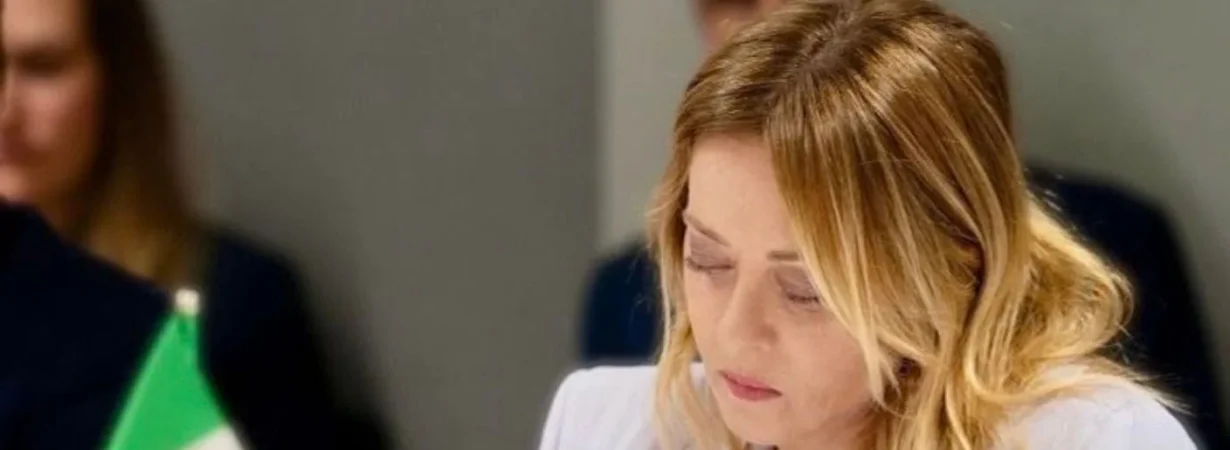
The Muslim community, lawyers, academics and politicians turned their heads to Rome on September 19–20 for a national summit on Islamophobia in Italy. Rome Islamophobia summit, It was organised by PROMUS – Professionisti Musulmani and the Comunità Islamica di Roma and they have titled it: “Il costo dell’islamofobia in Italia. Chi lo paga, chi lo produce, come si smonta”. The programme was dedicated to the theme of discrimination, religious freedom, institutions, citizenship and the of Muslims in Italy.
The summit drew further interest before it even happened, when on 13 September, the Italian newspaper, Il Tempo, published an article looking at the political and organisational background, speakers and the organisers of the event. Read the report in the Il Tempo (September 13), which is the main source for those accusations and interpretations.
The report prepared by the independent Volontariato Lazio/CSV Lazio, which was issued on 10th September, also recognized the summit, the organisers, the location, the programme and the planned speeches. That’s significant when evaluating the more controversial allegations made about the meeting.
What Was the Rome Summit About?
The summit took place in the Sala del Cantico of the Seraphicum in the Laurentina area of Rome, CSV Lazio said. According to its aim, it’s about understanding Islamophobia in social, cultural, institutional and discussing practical solutions to stereotypes, discrimination, and prejudice.
The programme focused on various topics, including perceptions of Islamophobia and potential impacts on institutions and daily life. There were lawyers Luca Bauccio and Fabio Anselmo, Sabrine Hammami, and Nibras Breigheche were registered for a discussion about Muslim life and identity in Italy. Ouidad Bakkali, Carmine Barbati and Benedetta Scuderi were at the separate institutional panel.
The post-event reporting confirms the summit was conducted according to the programme, and the institutional panel discussed the European policy, religious freedom and citizenship, and discrimination.
Why Did Il Tempo Raise Questions About the Speakers?
The September 13th report in the newspaper Il Tempo was more comprehensive than the report above, not only in its coverage of the subject but also the context and connections of some of the participants.
The newspaper mentioned lawyer Luca Bauccio, who has represented religious and mosque-related organizations and individuals in the past. He further mentioned his representation of Sulaiman Hijazi in the case of a Palestinian activist named Mohammad Hannoun. The following references contain information that is part of Il Tempo’s reporting and should therefore be considered the newspaper’s account and not as an independent discovery related to Bauccio and/or the summit.
The report also touched on the previous involvement of Nibras Breighe in the Association of Italian Imams and Religious Guides and the controversy that erupted in 2016 over her invitation of Kuwaiti preacher Tareq al-Suwaidan. Il Tempo described that association as being part of an environment with organisations perceived as being close to the Muslim Brotherhood. That’s an attributed claim; it’s not evidence that everyone at the 2026 summit is a member of such a network.
There is more academic and political scholarship on UCOII and alleged Muslim Brotherhood connections in Italy. In fact, UCOII has been specifically studied in Italy by an academic chapter published in 2024 and a document from the Italian Senate in 2024 alleges that UCOII and its honorary president committed offences. These sources show that it was a subject that was discussed in public, but not that they are evidence of the Muslim Brotherhood’s control over the organisation of the Rome summit.
The UCOII Question Requires a Clear Distinction
According to its website, UCOII is an organisation that was established in 1990 and represents and co-ordinates Muslim communities in Italy and promotes dialogue, social integration and the protection of Muslim rights.
In the report by the media outlet Il Tempo Bauccio appears in the section dedicated to the network of the conference, with the claim of being “close” to UCOII.
That does not mean that the summit was organised by UCOII itself. PROMUS and the Comunità Islamica di Roma are the organisations in charge of the event, which is documented independently.
Nor is a link between one individual speaker and one organisation itself a proof of a direction of the event by the organisation or by a wider ideological network of the speaker’s.
What About Hamas and Hezbollah References?
The most delicate aspect of the report in the Il Tempo is the mention of Hamas and Hezbollah.
The newspaper reported on the attendance of political figures aligned with PD and AVS, and on a separate demonstration which took place in front of Montecitorio, where “Hamas and Hezbollah flags” were waved.
This should NOT be used to infer that the Rome meeting was organised by, affiliated to or supportive of one of the extremist groups: Hamas or Hezbollah. The source relates the demonstration to the conference and the events outside the scope of the conference.
In Italy, there is an ongoing investigation of Mohammad Hannoun, and a separate investigation of alleged Hamas funding. On September 18, prosecutors reportedly finished their investigation of Hannoun and five others, according to ANSA. The case is still an investigation and was not presented as a conviction.
This investigation does not prove any direct link between Hannoun’s case and the Rome summit, but rather offers relevant contemporary background as to why the Italian government is looking into Palestinian political networks.
What Can Be Confirmed About the Political Participation?
The participation of politics at the summit itself is recorded. Carmine Barbati was joined by Benedetta Scuderi, MP (European Greens and Democratic Party) for the institutional panel.
According to the post event report, Scuderi, addressing the question of anti-discrimination measures in Europe, spoke about religious freedom and the part played by EU institutions, whilst Bakkali spoke on constitutional equality, citizenship, religious freedom and discrimination.
The recorded speeches give a more accurate impression of what was actually discussed by the political figures than do analyses of the possible organisations of other speakers.
The resource materials should be stored in separate categories so that they can be retrieved quickly.
The Evidence Needs to Be Kept in Separate Categories
It was independently documented, and PROMUS and the Comunità Islamica di Roma promoted it, which was held at the Seraphicum, September 19-20, and which featured lawyers, academics, Muslim community representatives and political figures.
The allegations are mostly against the network from the Italian newspaper, Il Tempo. These are related to its use of the term UCOII, the possibility of contacts with the Muslim Brotherhood, and the mention of Hamas and Hezbollah.
The larger political and legal context is well documented both on an academic level and with an ongoing Italian investigation into alleged funding for Hamas.
It is important to maintain the categories apart. A relationship between a journalist and a source, whether professional, political or organisational, does not necessarily imply an ideological control, and a newspaper report is not necessarily assumed to be true unless proven so by the journalist.
The Larger Debate Around the Summit
The debate surrounding the Rome summit finally is a composite of two debates that went on simultaneously.
The first one is about Islamophobia, discrimination and religious freedom in Italy, the subject of the summit and the main point of its programme.
The other is the political and organizational networks that sections of the Italian Muslim community are connected to and how they relate with political actors. The question that Il Tempo wanted to draw attention to in its report of September 13 is just that.
Those debates should be separate for coverage of the summit. Organising of the event, speakers and stated discussions can be reported separately, and statements on links to Islamists, Muslim Brotherhood, Hamas or Hezbollah should be attributed and, if possible, documented separately.
Top Picks For You
Discover top Middle East tourist sights?
Explore must-visit landmarks across the region for travelers.
Explore essential apps for Arab travel?
Check must-have apps to simplify your trip planning.
Check common travel mistakes Arab countries?
Discover key errors tourists should avoid during visits.
Explore top Arab festivals for tourists?
Discover unique cultural events across non-GCC destinations.
Check tourist safety tips Arab countries?
Explore essential precautions for safe and smooth travel.