
Khaled Hassan Criticises Western Policy on Muslim Brotherhood and IRGC, Calls for Stronger Counter-Extremism Strategy
-
The Arab Post
- . November 16, 2026
- . Update: November 16, 2026 12:11 pm
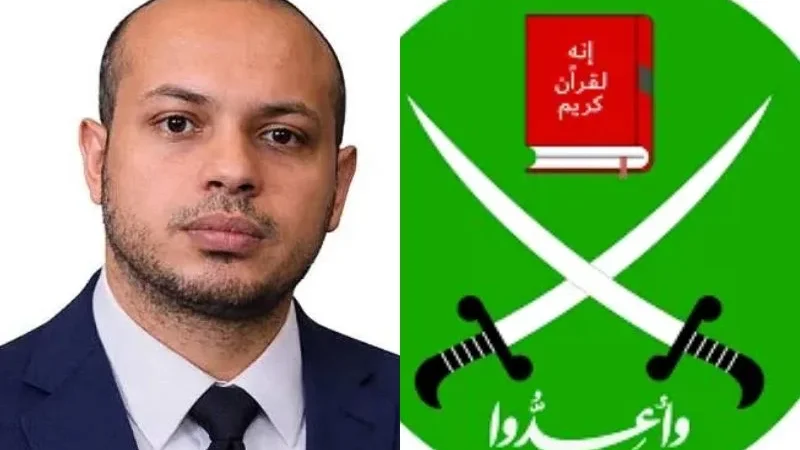
British-Egyptian national security, foreign policy and counter-extremism expert Khaled Hassan points out that Western governments are jeopardizing their national security goals because they make their decisions politically and take incomplete measures to combat extremism.
Khaled Hassan on Muslim Brotherhood Policy, In two TV interviews with GB News in the UK and i24 in Israel, Hassan delved into Britain’s recent actions with the Muslim Brotherhood and the Islamic Revolutionary Guard Corps (IRGC), among other topics, not to mention Egypt’s permanent terror designation of the Brotherhood.
His main concern was that designating laws would not be enough to motivate extremist groups to leave the realm of action unless they were also motivated to change their ideologies, networks, and political structures. He further raised doubts about whether Western governments are using uniform security criteria in their interactions with the groups they deem as threats by their regional partners.
Britain’s Delayed Response Raises National Security Concerns
In his GB News appearance, Hassan condemned successive British governments for their failure to have a clear policy on the Muslim Brotherhood and the activities of the organisations allegedly linked to extremist groups.
He said that British police often react to “embarrassing” events in the interests of good public relations as opposed to proactive measures that would avoid security issues.
The existence and activities in London of Muslim Brotherhood networks in particular was a continuing concern. Hassan asked how Britain can be so hesitant to take a more decisive stance when there have been questions for years from regional partners.
The question has been raised in policy debates in Britain. The government in December 2015 issued the results of its own review of the Muslim Brotherhood, requested by the previous Prime Minister David Cameron. The research investigated the ideology, activities and impact of the organisation in Britain and internationally.
But the UK government’s list of proscribed terrorist groups as of July 2026 does not include the Muslim Brotherhood.
Hassan also condemned past Conservative governments for not putting the ban on the organisation into practice. He said there was a possibility Nigel Farage might be more inclined towards “decisive action”, but this was a political judgement, not a policy decision.
His overall worry was that the continued policy uncertainty tarnishes Britain’s credibility with allies hoping to get them to be more effective in international cooperation against extremism.
IRGC Designation and Britain’s Approach to Security Threats – Khaled Hassan on Muslim Brotherhood Policy
Hassan also raised doubts on Britain’s policy on the Islamic Revolutionary Guards Corps (IRGC) noting delays in taking action against it.
He said that lack of uniformity in the reaction to security threats may lead to mistrust on the part of regional allies who have been facing security issues by the Iranian state-run networks.
A key subsequent addition to this list, however, was Britain’s formal designation of the IRGC as a threat to the country’s national security, on 17 July 2026, in the National Security (State Threats) Act 2026.
This designation added criminal charges in relation to the support, assistance and/or acquisition of material benefits by the organization. It is not, however, a criminal offence under the Terrorism Act 2000, as it is proscribed.
But the separation brings up another issue that Hassan’s larger thesis raises: Do government interventions make a difference in the realm of security? Or are they only intended as a response to specific legal and political issues?
Egypt’s Permanent Muslim Brotherhood Designation: How Much Will Change?
In his statement to i24, Hassan looked at why Egypt has decided to add the Muslim Brotherhood to its list of terrorist groups in a permanent manner.
Egypt has made an announcement in its Official Gazette on 9 November 2026 announcing the permanent listing. The transition was a move away from previous time-limited designations, and new restrictions on the organisation’s activities were implemented.
Egypt’s permanent designation decision has legal repercussions in the country under the Law No. 8 of 2015 that prohibits organisational activities, closing premises, restrictions on fundraising and freezing assets, Ahram Online reported.
After the final convictions, three people were added to the country’s list of terrorists as a separate entity.
Hassan wondered if the designation would create “fundamental changes” in the organisation’s “practical situation” as it had already suffered “wide-ranging restrictions”.
Egypt’s engagement with the Brotherhood needs to be seen within the context of the political battles for power and influence in the nation. He pointed out that some governments adopt terrorist designations, in part, for political and partisan reasons to keep political enemies out of office.
His argument is only part of a broader debate on the difference between real counter-extremism policies, and those which are more politically driven.
Why Countering Extremist Ideology Matters
The importance of tackling extremist ideology alongside organisational structures was one of the key motifs that emerged throughout Hassan’s interviews.
He said that legal restrictions, financial and security operations can reduce an organisation’s activities but they cannot destroy an organisation’s ideas that help it maintain its influence.
This is consistent with comments already made by UAE Foreign Minister Sheikh Abdullah bin Zayed Al Nahyan, who had urged for an international comprehensive strategy against the roots of the ideology of extremism.
In October 2015, Sheikh Abdullah pointed out to the threats of extremist ideologies on youth and dividing the communities. His comments are made in the UAE Ministry of Foreign Affairs’ statement on countering violent extremism.
The key to counter-extremism is not solely a focus on legal designations, but also a focus on how governments are communicating their messages, the techniques governments are using to recruit individuals and groups, and the financial networks and politics that enable extremist groups to flourish,” Hassan said.
Western Hesitation Carries Diplomatic and Strategic Costs
Hassan said Egypt’s move also puts political pressure on western governments, notably Britain and France, because they are not doing the same as Egypt in regard to the Muslim Brotherhood.
This debate has also been picked up in the halls of Europe. A resolution by the European Parliament on the EU strategy to tackle Islamist entryism and the impact of the Muslim Brotherhood network was adopted on 8 October 2026. The European Parliament’s Legislative Observatory counted 381 votes in favour, 167 against and 15 abstentions.
The resolution is not a EU-wide designation of the Brotherhood as a terrorist group but it shows a trend toward the political building of interest in the issue.
The main worry for Hassan is the lack of coherence and hesitation of the West in its security policies and the resulting reputational damage and difficulties in relations with regional partners.
In sum, both of his interviews convey the same message: counter-extremism is not something that can be done solely in a political way or by an organisational ban. National security policies should be consistent, and the governments must foster co-operation between intelligence agencies and continue to fight extremist ideologies, while ensuring that there is legal accountability for the authority.
Discover More Insights
Explore Cairo inflation middle class impact?
Discover how rising prices are affecting savings and daily life.
Check Algeria power plant deadline extension?
Explore updates on the 1.2GW energy project timeline.
Discover Turkey new electricity tariff changes?
Check how updated pricing will impact households and businesses.
Explore Qatar initiative boosting Syria power?
Discover efforts aimed at strengthening Syria’s electricity generation.
Check Beirut balcony lighting energy tips?
Explore efficient lighting ideas for Ramadan and beyond.