
Doha Film Festival 2026: 6 Must-Watch Arab Co-Productions Leading This Year’s Lineup
-
 The Arab Post
- . November 20, 2026
- . Update: November 20, 2026 6:32 pm

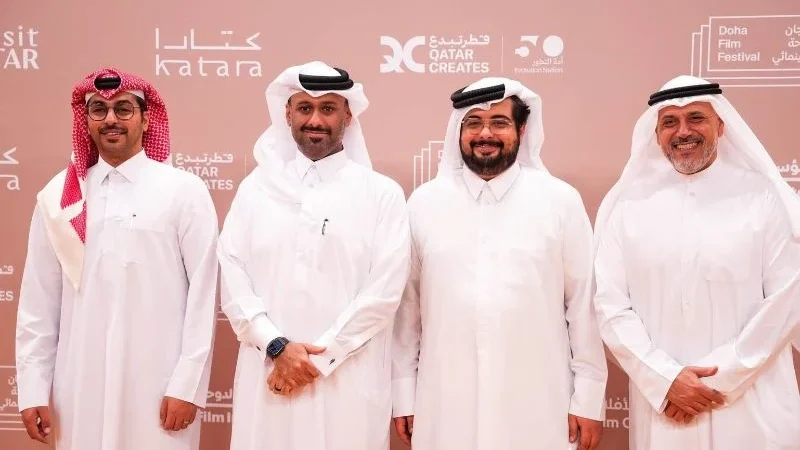
On November 19, 2026, the Doha Film Festival officially kicked off, bringing Qatar’s Katara Cultural Village to life with an abundance of stories from around the world. Arab Co-Productions, This year’s eagerly awaited edition will run until November 27 and has a curated selection of 104 films from 60 countries and 17 world premieres and 48 regional premieres. One of the key objectives of the festival is to honour independent Arab cinema. The 2026 programme has been backed by the Doha Film Institute with strong funds and creativity, reflecting the region’s dynamic storytelling capabilities. Some of the most impactful, story-driven and powerful Arab co-productions and film showcases of this year’s festival.
Highlighting Top Arab Co-Productions at DFF 2026
1. The Station (Yemen/Scotland)
This will be the first time that The Station, the feature debut of Yemeni-Scottish filmmaker Sara Ishaq, opens the festival. This comedy-drama is set in the heart of a women-only petrol station in war-torn Yemen, and is a poignant look at female solidarity, family life and seeking shelter in the midst of war. It is one of the biggest Arab co-productions, and an important harbinger for the festival’s emphasis on regional, authentic, resilient voices.
2. Concrete Land (Jordan/Palestine)
Directed by Palestinian-Jordanian filmmaker Asmahan Bkerat, Concrete Land is a compelling and intimate feature documentary. It tells the story of the Najars, a Bedouin family of several generations who live in tents on the outskirts of Amman. Their struggle against the fast track urbanization and the ever-accelerating prospect of perpetual displacement is portrayed closely and researched to produce a substantial and humanistic independent Arab movie.
3. 52 Blue (Egypt/Qatar)
Ali El Arabi, the Egyptian filmmaker, is back in the limelight with the expected sports drama of 52 Blue. The film is set in part during the FIFA World Cup in Qatar, and is about Ashish, a young man who has been living his life to his father’s high expectations for 12 years. This project is a representative example of how themes of cross-cultural and generational issues are being addressed across the region – internationally.
4. Conversation with the Sea (Palestine)
Conversation with the Sea is an arthouse film of great beauty, directed by Muayad Alayan and co-written by Rami Alayan. The film builds on Palestine’s rich film traditions, and tells intimate family stories to raise important themes of memory and survival. It’s one of the most highly anticipated Middle East premieres this year.
5. Out of School (Morocco/Denmark)
The Morocco – Denmark documentary, written and directed by Hind Bensari, takes the audience up in the Atlas Mountains. The movie follows 12-year-old Mohamed’s story as he is compelled to leave his village of Oulghazi, which is located in a remote area, to leave behind his education. Out of School is a raw and empathetic portrait of rural poverty and a young boy’s resolve to lift his family up and out of the situation, and a testament to the importance of social commentary that the Doha Film Institute has been such a strong champion of.
6. The Cinema Alkhaleej Selections (Gulf Co-Productions)
The newly launched Cinema Alkhaleej short film programme is a must-watch for those interested in regional talent, rather than a single film. The segment highlights projects undertaken in the Gulf, including some exceptional short films such as Dunya’s Day from Saudi Arabia, Clouds from Oman and Namoos from the UAE. These are pan-Gulf productions and evidence of the true renaissance of cinema in Arabia, and its creative freedom in short formats.
The Cultural Impact of the 2026 Festival
In addition to the screenings, the Doha Film Festival 2026 has distributed more than $300,000 in prizes in its four main competitions. Featuring the renowned Japanese filmmaker Naomi Kawase as its international jury chief, and a diverse lineup of French-Tunisian actor Adam Bessa, this gathering makes a perfect platform for regional creatives to meet with global industry experts. These important stories are well supported by robust institutional support, which guarantees them not only a local audience but also an international audience.
FAQs
When does the Doha Film Festival 2026 take place?
The festival takes place for 9 days, 19-27 Nov 2026, with the main venue being the Katara Cultural Village in Doha, Qatar.
What was the opening film for DFF 2026?
The festival kicked off with Yemeni-Scottish comedy-drama The Station, directed by Sara Ishaq.
How many films are participating this year?
In 2026, there will be 104 films from 60 countries, including 17 World premieres and 48 Regional premieres.
Does the festival support emerging regional filmmakers?
Yes, there’s a lot of regional talent promoted at the festival. Eleven films are directly funded by the Doha Film Institute this year, seven of which are directed by women.
You May Also Like
What are must-watch Lebanese indie films?
Explore these standout Lebanese indie films now streaming on Netflix MENA, perfect for fans of raw and authentic storytelling.
Which Egyptian thrillers are trending now?
Discover the most talked-about Egyptian thriller movies on OTT platforms in 2026 that are keeping audiences hooked.
Looking for Moroccan Netflix hidden gems?
Check out the best Moroccan content on Netflix, featuring underrated films and series you shouldn’t miss.
Which Arabic series are trending in 2026?
Explore top Arabic series trending across Egypt and Lebanon this year, capturing attention with gripping plots.
How films are boosting Middle East tourism?
Discover how movies are transforming Middle Eastern destinations into popular travel hotspots through film tourism.